

An online customer receives a notification that their parcel is out for delivery.
The order has been processed, packed, dispatched, and assigned to a courier. Everything appears to be moving according to schedule.
But when the driver reaches the address, nobody is available to receive it.
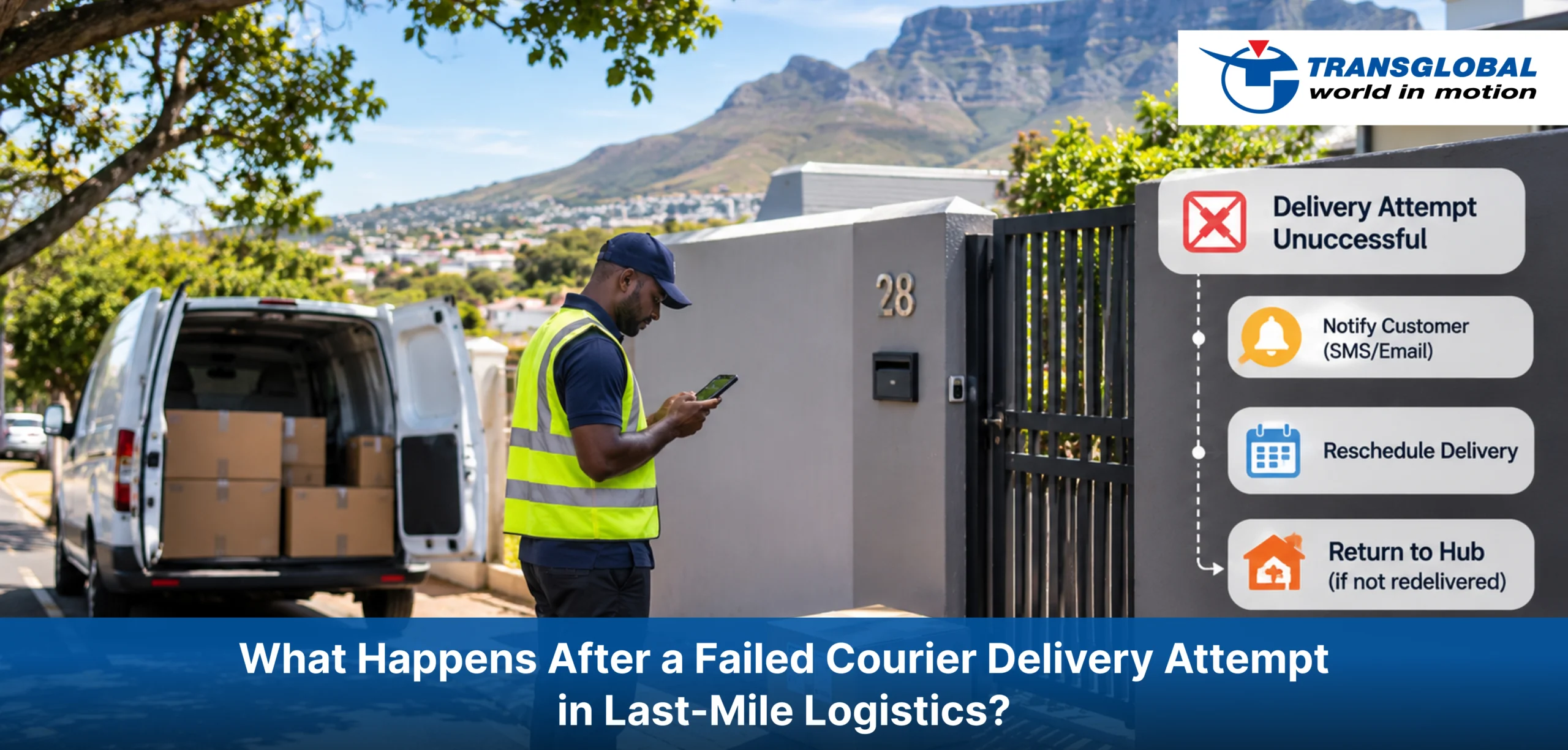
A few minutes later, the tracking status changes to Delivery Attempt Failed.
For the customer, the immediate question is simple: What happens to the parcel now?
For the retailer and delivery provider, however, the unsuccessful attempt creates another stage of work.
The parcel must be accounted for, the reason for non-delivery recorded, and the next action determined. Depending on the delivery arrangement, it may be returned to a depot, scheduled for redelivery, redirected to a collection point, or eventually returned to the sender.
This is where last-mile logistics becomes more than transporting an order to an address.
Understanding what happens after a failed courier delivery attempt helps e-commerce businesses manage delivery exceptions, reduce unnecessary transport costs, and maintain a reliable customer experience.
What Happens Immediately After a Courier Delivery Attempt Fails?
When a courier cannot complete a delivery, the first operational step is to record the unsuccessful attempt.
The driver may select a reason such as customer unavailable, no access to the premises, incorrect address, or delivery refused.
This information matters because different reasons require different responses.
For example, an unavailable customer may simply need another delivery window. An incorrect address requires clarification before the parcel is dispatched again.
The courier’s tracking system may update the shipment status to indicate that delivery was attempted but not completed.
This is commonly recorded as a delivery exception.
The parcel remains within the courier’s custody, and its next movement depends on the delivery provider’s procedures and the service selected by the retailer.
For businesses managing last-mile delivery, accurate exception records help establish what happened at the destination and what action is required.
A failed delivery status should therefore provide useful information rather than simply indicate that the parcel has not arrived.
It becomes the starting point for recovering the delivery.
Where Does the Parcel Go After an Unsuccessful Delivery?
A parcel does not necessarily return to the seller immediately after the first failed attempt.
In many courier networks, undelivered parcels return to a local depot or delivery hub at the end of the route.
The package may be scanned back into the facility and held temporarily while the next delivery instruction is confirmed.
This stage requires careful handling.
The depot must maintain an accurate record of the parcel’s location, delivery status, and any restrictions affecting its release.
A package awaiting redelivery should remain identifiable and separate from consignments already marked for return.
For e-commerce businesses managing large order volumes, these movements can create additional warehouse and depot activity.
A single missed delivery may appear minor. Hundreds of unsuccessful attempts during a busy sales period can increase sorting, storage, and administrative work.
Suitable warehousing arrangements support inventory handling, parcel identification, and the movement of consignments through distribution facilities.
However, not every courier offers the same holding period or depot collection options.
Customers and retailers should refer to the applicable delivery terms to understand how long an undelivered parcel can remain in the network.
How is Redelivery Arranged When the Customer is Unavailable?
Once the failed attempt is recorded, the next step may involve contacting the customer or providing instructions through the courier’s tracking platform.
Some delivery services automatically schedule another attempt. Others require the customer to select a new date or confirm updated delivery details.
The available options depend on the courier, service level, delivery location, and retailer’s agreement.
For example, a customer who missed a residential delivery may request another attempt when someone will be home.
A business receiving a parcel may need to confirm its operating hours or provide the details of an authorised receiving employee.
In some networks, customers may also be able to redirect eligible parcels to an approved collection point.
These arrangements are important because repeating the same delivery without resolving the original issue can produce another failed attempt.
For e-commerce operators, improving last-mile delivery involves making receiving instructions and delivery expectations clear before a vehicle is dispatched.
A successful redelivery depends on knowing what prevented the original handover and whether those circumstances have changed.
The aim is to complete the outstanding delivery without creating another unnecessary journey.
When Does a Failed Delivery Become a Return to Sender?
Not every missed delivery ends with a successful redelivery.
A parcel may eventually be returned to the retailer when the permitted delivery attempts have been exhausted, the holding period has expired, the customer refuses the shipment, or the delivery information cannot be corrected.
This process is generally known as return to sender.
Once authorised, the parcel moves back through the delivery network towards the seller, fulfilment centre, or designated returns facility.
For the retailer, the order may then require a separate decision.
Should the item be returned to available stock? Does the customer want another shipment? Is a refund required under the applicable sales terms?
The answers depend on the reason for return, product condition, retailer policy, and consumer rights.
The physical parcel must also be checked when it arrives back at the warehouse.
An undelivered product may still be suitable for resale, but its condition, packaging, and order status should be verified before it is made available again.
This is where reverse logistics becomes part of e-commerce fulfillment.
Transglobal’s insights into last-mile delivery failures explain the operational conditions that can prevent orders from reaching customers in South Africa.
Once an attempt has failed, the priority shifts from preventing the original problem to deciding whether the order can still be delivered or must enter the returns process.
Why Do Failed Delivery Attempts Increase E-commerce Operating Costs?
An unsuccessful courier delivery does not erase the cost of the first journey.
The vehicle has travelled to the destination, the driver has spent time attempting delivery, and the parcel has occupied space within the distribution network.
If another attempt is required, the order may generate additional sorting, transport, and handling activity.
Return-to-sender movements can create further costs.
These expenses may be absorbed by the courier, charged to the retailer, or passed on according to the agreed service terms.
The commercial effect becomes more significant when failed attempts occur repeatedly.
For example, an online retailer handling hundreds of daily orders may need additional depot capacity and customer service support if a substantial number of parcels require redelivery.
Customer experience is also affected.
A buyer who expected delivery on a particular day may need to rearrange their schedule, contact customer support, or wait for a revised delivery date.
This makes failed delivery performance an important operational measure.
Retailers can monitor the reasons for unsuccessful attempts, the percentage successfully recovered through redelivery, and the number eventually returned to sender.
These insights help distinguish occasional customer unavailability from recurring problems with delivery arrangements.
A clear recovery process reduces uncertainty and helps businesses manage the additional work created when the first delivery attempt does not succeed.
Conclusion: Failed Delivery is Another Stage of Last-Mile Logistics
A failed courier delivery attempt does not always mean the order has been cancelled or lost.
In many cases, the parcel remains within the courier network while the delivery provider determines the next step.
The process may involve recording the exception, returning the parcel to a local depot, contacting the customer, arranging redelivery, or initiating a return to sender.
Each stage requires accurate information and clear responsibility.
For e-commerce businesses, the important consideration is how efficiently an unsuccessful attempt can be resolved without unnecessary handling, repeated journeys, or prolonged customer uncertainty.
Effective last-mile logistics therefore includes a practical process for managing orders that cannot be handed over on the first attempt.
Planning e-commerce distribution or looking to improve the handling of missed deliveries?
Contact us to discuss your last-mile delivery requirements, receiving arrangements, and delivery exception processes.
Support your e-commerce distribution with leading freight forwarders who understand last-mile logistics, delivery coordination, and the challenges of completing the final handover.
Frequently Asked Questions
Will a courier automatically attempt delivery again?
Not always. Some courier services automatically schedule another attempt, while others require the customer to confirm a new delivery date. The process depends on the provider's delivery policy.
Can I collect a parcel after a failed delivery attempt?
Some couriers allow customers to collect undelivered parcels from an authorised depot or collection point. Availability depends on the courier's service options and collection requirements.
How long will a courier hold an undelivered parcel?
The holding period varies by courier and service agreement. If the parcel remains uncollected or cannot be delivered within the permitted period, it may be returned to the sender.


Comments