

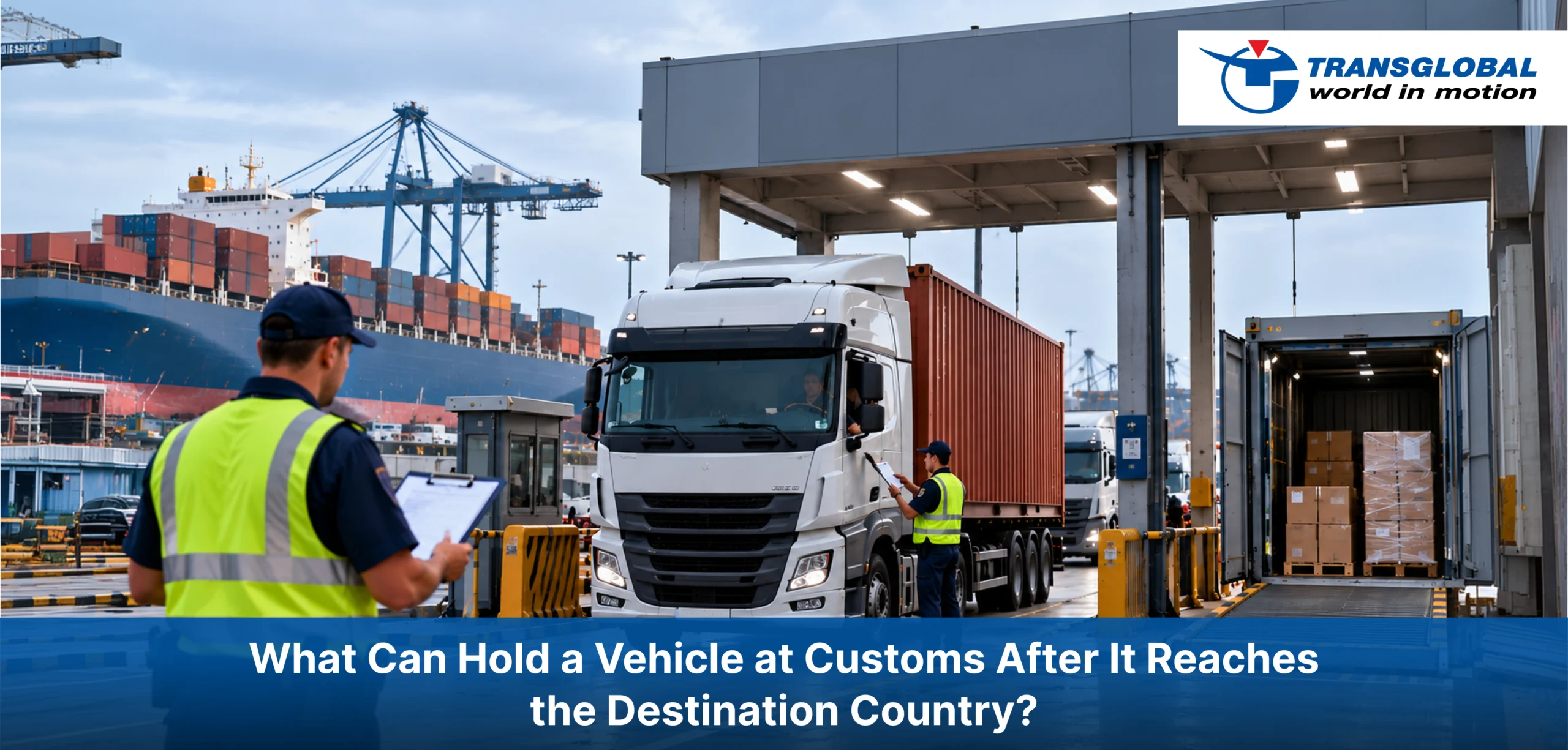
A vehicle can reach the destination country and still remain out of reach.
The vessel may have arrived. The container may be discharged. The RoRo unit may be parked at the terminal. The buyer may already be preparing for collection or final delivery.
But customs release is a separate stage.
This is where vehicle importers often face unexpected pressure.
The vehicle has completed the international movement, but the destination file still needs to prove that the unit can legally enter the country, be assessed correctly, and be released to the right party.
A customs hold can happen because of missing documents, unclear ownership, valuation questions, import eligibility, inspection requirements, identity checks, unpaid destination charges, or incomplete release instructions.
Vehicle customs clearance is therefore not only about arrival.
It is about proving that the vehicle, documents, value, ownership, import purpose, and receiver details all support the same clearance file.
That is why car import clearance should be prepared before the vehicle leaves origin, not after it reaches the destination port.
Why Customs Clearance Starts Before the Vehicle Arrives?
Vehicle customs clearance should begin before the shipment reaches the destination country.
Once the vehicle arrives, the timeline becomes tighter.
Customs officers, port authorities, terminal operators, shipping lines, clearing agents, and receivers may all need accurate information before the vehicle can leave the port.
The shipment file should clearly show what the vehicle is, who owns it, who bought it, where it came from, how it was shipped, and what import rules apply.
For vehicle imports, customs brokerage helps align the clearance file, import requirements, valuation details, and release steps before the vehicle reaches a delay point.
This matters because the port process does not wait for the importer to start collecting missing information.
If the file is incomplete after arrival, the vehicle may remain at the terminal while the issue is checked, corrected, or escalated.
A vehicle may be physically present in the country.
But customs release depends on whether the import file is ready.
How Missing or Incorrect Documents Delay Vehicle Import Clearance?
Vehicle imports depend on clean documentation.
If one document is missing, unclear, inconsistent, or issued with incorrect details, the clearance process can slow down.
The shipment file may need a commercial invoice, bill of lading, export document, purchase proof, ownership paper, vehicle title, registration record, chassis number, engine number, year of manufacture, and consignee information.
These details must support the same vehicle.
If the invoice shows one model, the title shows another, the chassis number is incomplete, or the bill of lading does not match the consignee, customs may raise a query before release.
For international vehicle movement, accurate customs documents help keep the vehicle description, shipment references, ownership records, and release details aligned.
This is especially important for used vehicles, collector cars, commercial vehicles, trailers, modified units, and vehicles moving after repair, auction, or private sale.
The vehicle may be ready for collection.
But if the documents do not prove the import clearly, the release process can stop until the file is corrected.
Why Valuation and Duty Questions Can Hold the Vehicle?
Customs may hold a vehicle when the declared value needs review.
The declared value affects duty, tax, and other import charges.
If customs believes the value is incomplete, unsupported, or lower than expected, they may ask for more proof before completing the assessment.
This can happen when the vehicle was bought at auction, purchased privately, repaired before shipping, modified, discounted, or shipped with spare parts and accessories.
The importer may need to provide the purchase invoice, payment proof, auction record, valuation support, freight charges, insurance details, or repair documents.
A valuation review can also happen when parts, tools, accessories, or loose items inside the vehicle are not declared clearly.
For the importer, the issue is not only the amount payable.
The issue is whether the declared value can be supported with proper records.
When the value is unclear, customs may open a review before the vehicle can move to the next release step.
That is why value checks should happen before shipment, not after the vehicle reaches destination.
How Import Rules and Vehicle Eligibility Affect Release?
Not every vehicle that arrives can automatically be imported.
Each destination country may have its own rules for used vehicles, age limits, emissions, safety requirements, roadworthiness, left-hand or right-hand drive restrictions, homologation, temporary import, returning resident rules, or special permits.
If the vehicle does not meet the destination country’s import rules, customs clearance can become more complicated.
The vehicle may need additional approval, inspection, authority review, or supporting documents before release.
This is where importers can face unexpected delays.
The vehicle may have been accepted for shipping, but that does not mean it has automatically been accepted for import.
For wider vehicle movement planning, RoRo or container shipping should be considered together with destination import rules, not separately from them.
The shipping method gets the vehicle to the country.
Import eligibility decides whether it can be released.
Both should be checked before the vehicle moves.
Why Inspection and Identity Checks Can Delay Release?
Customs may hold a vehicle when the physical unit needs to be checked.
This is not always about suspicion.
Sometimes, authorities need to confirm that the vehicle in front of them matches the import file.
They may check the chassis number, VIN, engine number, make, model, year, mileage, modifications, accessories, or visible condition.
If the identity details are unclear, damaged, altered, incomplete, or different from the documents, the vehicle may need further verification before release.
For containerised vehicles, this can involve seal checks, unpacking, and confirmation of any items loaded with the unit.
For RoRo vehicles, the inspection may happen during terminal processing or before final release.
For classic cars, modified vehicles, specialist units, or premium vehicle imports, high-value cargo planning helps strengthen identity checks, condition records, and release confidence before the vehicle reaches destination.
This is why photos, condition notes, title details, and vehicle identification records matter before loading.
Customs release becomes easier when the vehicle can be matched clearly to the import file.
How Port Charges and Release Instructions Add More Delays?
A vehicle can clear customs and still remain at the port.
Customs approval is only one part of the destination release process.
The vehicle may also need shipping line release, terminal release, port charge settlement, delivery order processing, storage payment, demurrage review, transport booking, and receiver confirmation.
If any of these steps are missed, the vehicle may stay at the terminal longer than expected.
This can create extra cost.
Storage charges, demurrage, port handling fees, and delayed inland movement can add pressure quickly.
For vehicles moving beyond the port, road freight helps connect the destination terminal with dealerships, private receivers, warehouses, project sites, or final delivery points.
The release plan should therefore include what happens after customs approval.
A vehicle is only ready to leave the port when customs, shipping line, terminal, payment, receiver, and transport instructions are all aligned.
Conclusion: Vehicle Customs Clearance Depends on the Whole Import File
A vehicle can be held at customs after arrival for several reasons.
The issue may be missing documents, unclear ownership, valuation questions, import eligibility, inspection requirements, identity checks, unpaid destination charges, or incomplete release instructions.
That is why vehicle customs clearance should be planned before the vehicle leaves origin.
The import file must show what the vehicle is, who owns it, what it is worth, whether it can be imported, how it was shipped, and who is authorised to receive it.
When those details are clear, the destination process becomes easier to manage.
When they are unclear, the vehicle may reach the country but still wait at the port.
Planning a vehicle import or car import clearance? Contact us to review the customs documents, ownership details, valuation records, import requirements, and final release process before the vehicle moves.
Move vehicle imports with leading freight forwarders who understand vehicle customs clearance, customs delays, car import clearance, and destination release planning.
Frequently Asked Questions
Why can a vehicle be held at customs after arrival?
A vehicle can be held when customs cannot confirm the import details clearly. The delay may relate to the vehicle’s documents, declared value, ownership record, identity, or import approval.
Why is the chassis number important in vehicle customs clearance?
The chassis number helps customs confirm that the imported vehicle matches the documents submitted. If the number is missing, unclear, or inconsistent, release may wait until the vehicle identity is verified.
Why should vehicle import documents be checked before shipping?
Vehicle import documents should be checked before shipping because destination clearance depends on them. Early review helps identify missing details before the vehicle arrives and port storage charges begin.

Comments