

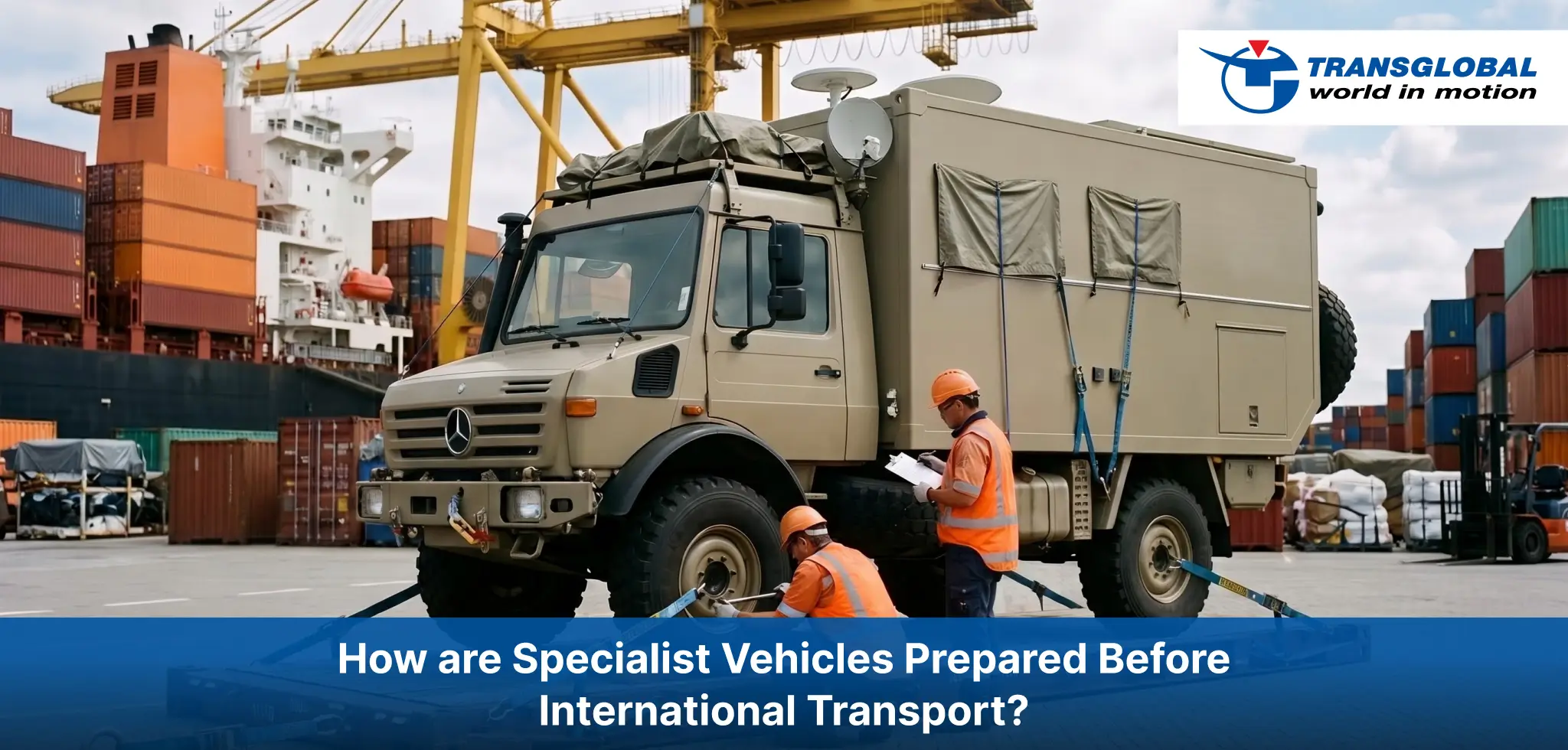
A specialist vehicle needs more preparation than a standard cargo booking.
It may be a luxury car, classic vehicle, race unit, prototype, mining support vehicle, military vehicle, chassis, or specialised commercial unit.
The value may be high. The ground clearance may be low. The bodywork may be sensitive. The vehicle may not be running, or it may need to arrive in a condition suitable for display, assembly, testing, resale, or operational use.
That is why preparation matters before international transport begins.
The vehicle must be identified, cleaned, inspected, photographed, documented, secured, and matched with the right shipping method. Keys, accessories, batteries, fluids, loading points, and handover records also need attention.
Specialist vehicle transport is not only about moving an asset from one country to another. It is about protecting the vehicle, supporting customs and carrier requirements, and giving every handling point the right information before the vehicle is collected.
Why Vehicle Details must be Confirmed Before Collection?
Preparation starts with knowing exactly what type of vehicle is being moved.
A sports car, armoured vehicle, rolling chassis, rally car, collector’s item, and non-running unit will not need the same handling plan.
The logistics team should confirm the make, model, year, VIN or chassis number, engine number where required, dimensions, weight, ground clearance, running condition, and declared value before collection is arranged.
These details help decide how the vehicle should be collected, loaded, shipped, secured, insured, and delivered.
Low-clearance vehicles may need special ramps. Non-runners may need winching or lifting. Chassis units may need crating, blocking, or support points. High-value vehicles may need enclosed handling and tighter handover control.
Photos are also part of the preparation.
A clear photo record of the exterior, interior, dashboard, tyres, underside where possible, accessories, and visible marks helps create a condition reference before the vehicle enters the shipping process.
That record protects the cargo owner, transporter, and receiving party because everyone starts with the same vehicle information.
How Cleaning and Condition Reports Support Smooth Vehicle Shipping?
A vehicle can look ready for export, but condition checks often reveal details that matter during shipping.
Cleaning is one of the first steps.
Vehicles used on farms, mines, construction sites, rallies, outdoor projects, or industrial locations may carry soil, plant material, dust, grease, or residue. Destination authorities may inspect vehicles closely for biosecurity or quarantine reasons.
A clean vehicle is easier to inspect and easier to document.
It also makes the condition report more accurate.
Before shipping, the vehicle should be checked for visible marks, loose parts, leaks, tyre condition, battery status, fluid levels, alarms, immobilisers, keys, tools, and spare accessories.
The condition report should not be treated as a formality.
It is the reference document used at collection, loading, port handover, destination release, and final delivery.
For vehicle shipments moving by container or vessel, the same attention given to sea freight documents helps connect the vehicle record with the wider export and import process.
When the vehicle is clean and properly inspected, every party can see what is being shipped and how it should be handled.
Why Vehicle Documents must Match the Asset Being Shipped?
Specialist vehicles depend on accurate paperwork.
The documents must identify the vehicle clearly and support customs, carrier, insurance, and destination requirements.
The VIN or chassis number should match the invoice, ownership record, export documents, shipping instructions, and customs entry. The vehicle description should also be specific enough to explain what is being transported.
A completed vehicle, rolling chassis, prototype, race car, collector’s vehicle, or commercial unit may each need a different document set.
Common records may include the invoice, ownership proof, registration papers, export permit, import permit, carnet, technical specification, packing list, authority approval, and insurance details.
For international vehicle movements, clearance checks become important because the value, HS code, origin, destination, and supporting documents must match the actual asset.
The same principle applies to regulated cargo checks, especially when the vehicle is high-value, controlled, modified, temporarily exported, or linked to industrial, defence, mining, or project use.
When the documents describe the vehicle properly, the shipment becomes easier to process at each stage.
How the Right Shipping Method Protects the Vehicle?
The shipping method should fit the vehicle, not the other way around.
Some specialist vehicles are suitable for container shipping. Others may move by RoRo, enclosed road transport, flat rack, low-bed trailer, or a customised loading arrangement.
The decision depends on value, dimensions, clearance, condition, route, destination, and handling sensitivity.
A luxury vehicle may need enclosed protection. A classic car may need careful lashing and limited handling. A non-running unit may need winching support. A chassis may need blocking, bracing, or crate-style protection.
For vehicle exports moving by vessel, sea freight should consider container suitability, RoRo acceptance, loading instructions, securing requirements, port handling, and destination release.
Fuel level, battery condition, alarm settings, and keys must also be controlled before handover.
For RoRo shipments, the vehicle may need to be driveable and accepted under carrier rules. For containerised movements, lashing points, tyre protection, underbody clearance, and loading angle should be checked before the vehicle is placed inside.
The right method reduces unnecessary handling and gives the vehicle better protection during each stage of the journey.
Why Handover Control is Important From Origin to Delivery?
Specialist vehicles pass through several hands before reaching the final receiver.
A vehicle may be collected from a private address, showroom, factory, warehouse, port, race site, mine, or assembly facility.
At each point, the handover record matters.
Keys, documents, accessories, spare parts, chargers, tools, and removable fittings should be listed and controlled. The odometer reading, fuel level, battery status, seal details where applicable, and condition photos should be recorded.
This helps avoid uncertainty later.
The loading team also needs the right instructions. They should know whether the vehicle can be driven, pushed, winched, lifted, or only moved using approved points.
For cross-border vehicle shipments, early overseas shipping documents help keep the handover process connected to customs, carrier, and destination requirements.
Final delivery needs the same level of planning.
The receiving site should be ready with access, unloading equipment, authorised personnel, and inspection space. A specialist vehicle should not arrive before the site is prepared to receive it correctly.
Careful handover control helps protect the vehicle’s condition, records, and delivery experience.
Conclusion: Specialist Vehicle Preparation Protects the Asset Before it Travels
Specialist vehicles need preparation that matches their value, condition, and handling requirements.
The vehicle must be cleaned, inspected, photographed, documented, and prepared for the right shipping method. VIN or chassis details, keys, accessories, batteries, fluids, lashing points, ground clearance, and delivery access must also be considered before collection.
This preparation gives the vehicle a better start before it enters the international shipping process.
It also supports customs checks, carrier acceptance, insurance records, and final handover at destination.
A specialist vehicle may be rare, high-value, time-sensitive, or technically sensitive. Treating it like general cargo can create unnecessary handling pressure.
Preparing a specialist vehicle for international transport? Contact us before collection to review the vehicle details, documents, loading requirements, and shipping plan.
Move specialist vehicles with specialist freight forwarders who understand vehicle preparation, international shipping, customs coordination, and controlled delivery planning.
Frequently Asked Questions
What should be checked before shipping a specialist vehicle?
The VIN or chassis number, condition, dimensions, weight, ground clearance, running status, keys, accessories, battery, fluids, and loading requirements should be checked before collection.
Why is a condition report important before vehicle transport?
It records the vehicle’s condition before shipping and supports inspection, handover, insurance, and delivery checks.
Which shipping method is suitable for specialist vehicles?
The right method depends on the vehicle type, value, clearance, running condition, dimensions, destination, and handling requirements.


Comments