

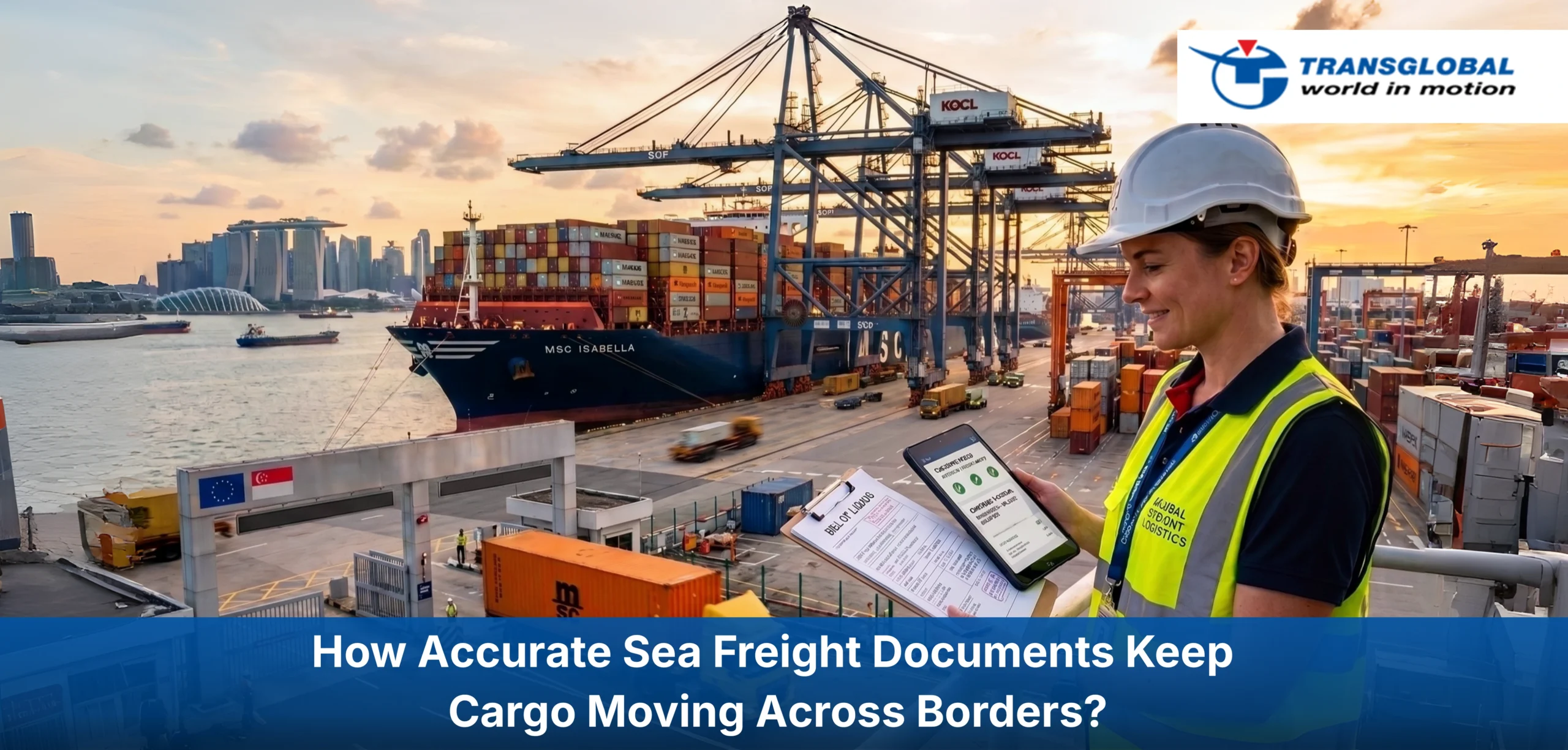
Sea freight can look simple once the container is ready.
The goods are packed. The booking is confirmed. The vessel schedule is known. The exporter may feel the difficult part is already complete.
But before cargo can move smoothly across borders, the documents must do their job.
They must explain the cargo clearly, support the customs entry, match the carrier’s records, satisfy destination requirements, and help the consignee receive the goods without interruption.
When one detail is not aligned, the impact does not stay on paper.
A mismatched consignee name can affect release. An unclear cargo description can raise customs questions. A certificate that has not been provided can affect destination clearance. An incorrect container or seal number can create additional checks during handover.
Accurate sea freight documents are what connect the physical shipment with the legal, commercial, and operational requirements behind it.
Good documentation is not background paperwork. It is one of the controls that keeps cargo moving across borders.
Why Sea Freight Documents must Tell One Clear Shipment Story?
Every sea freight shipment carries more than cargo.
It carries information.
The commercial invoice shows what was sold. The packing list explains how the goods are packed. The bill of lading confirms the shipment details. Certificates, permits, and declarations provide support where the cargo or destination requires it.
Different parties use these documents at different stages.
The shipping line uses them for the booking and bill of lading. Customs uses them to assess the goods. The consignee uses them for clearance and release. Banks, insurers, and port teams may also depend on the same information.
That is why the documents must speak the same language.
If the invoice describes the goods one way, the packing list uses another description, and the bill of lading carries different weight or package details, the shipment becomes harder to process.
Accurate sea freight documentation helps every party understand the same cargo in the same way.
A clear document set gives the shipment a stronger path from origin to destination.
How Small Document Gaps can Affect Cargo at Borders?
A documentation gap may look small when the shipment is still being prepared.
One digit may need correction. One name may need to be aligned. One product description may need more detail. One value may need to match the supporting records more closely.
But once the container enters the sea freight process, that detail can travel with the cargo.
By the time the issue is found, the vessel may have sailed. The manifest may have been submitted. Destination customs may already be checking the entry.
At that point, correction takes more coordination.
The shipping line may need amended instructions. Customs may request clarification. The consignee may have to wait for revised documents before release can continue.
This can affect customs brokerage, transport planning, warehouse arrangements, and customer delivery commitments.
Border delays are often not caused by the container itself.
They are caused by information that does not fully support the container.
Document checks work best before the cargo moves, while there is still time to correct the details properly.
Why Cargo Type and Destination Rules Decide Which Documents are Needed?
There is no single document set that works for every sea freight shipment.
A standard commercial shipment may need an invoice, packing list, bill of lading, and customs declaration.
Other cargo may need more.
Food products may require health or phytosanitary certificates. Machinery may need technical specifications. Hazardous cargo may require a dangerous goods declaration and safety data sheet. Controlled goods may need permits or approvals before export or import.
The destination country also changes the requirement.
Some countries need original documents. Some require certificates in a specific format. Others may ask for importer licences, product approvals, pre-shipment inspection, or additional customs support.
This is where many exporters get caught.
The documents may be acceptable at the origin, but not enough for the destination border.
For regulated or specialised goods, document planning should begin before the cargo is packed. The export team should know what the destination authority, carrier, consignee, and customs broker will need before the container is sealed.
When the right documents are ready early, the shipment has fewer points of friction later.
Why Bills of Lading and Shipping Instructions Affect Cargo Release?
The bill of lading is not just another shipping document.
It is one of the key documents used to control cargo release.
It confirms the shipper, consignee, notify party, vessel, voyage, container number, seal number, cargo description, package count, weight, and freight terms.
If the bill of lading is not aligned with the shipment records, the issue can follow the cargo all the way to the destination.
A consignee name that does not match the import documents can affect release. Incorrect freight terms can create payment clarification. Container or seal details that do not match the records can raise questions during handover.
That is why shipping instructions need careful review before the final bill of lading is issued.
The details should match the commercial invoice, packing list, booking confirmation, container records, and agreed Incoterms.
An experienced freight forwarding partner can help review these details before they become final.
That review is especially important when cargo is moving through several countries, banks, agents, and receiving teams before it reaches the final buyer.
Once the bill of lading is correct, the destination release process has a stronger foundation.
How Accurate Documents Help Control Border Costs and Delivery Timelines?
Inaccurate documentation not only affect cargo movement.
It can also affect cost.
A container held at the port may attract storage. A later release may lead to demurrage or detention. A truck may need to be rescheduled. A warehouse receiving slot may need to be adjusted.
For the cargo owner, the cost of one document gap can become much larger than expected.
It can affect production schedules, project timelines, customer commitments, and cash flow.
Accurate shipping documentation and compliance give every party a clearer basis for action.
Customs can review the entry with fewer questions. The carrier can process the shipment correctly. The consignee can prepare for release. The transport team can plan delivery with more confidence.
Well-prepared documents give each party fewer reasons to pause, question, or recheck the shipment.
They help the cargo move from one border, port, or handling point to the next with fewer interruptions.
Conclusion: Strong Documents Give Sea Freight a Smoother Cross-Border Journey
Sea freight does not depend only on the container being ready.
It depends on whether the documents are strong enough to support the cargo at every stage.
The invoice, packing list, bill of lading, certificates, permits, and declarations must all connect. They must match the cargo, support the customs entry, satisfy destination rules, and help the consignee receive the shipment without confusion.
When documents are prepared carefully, the cargo has a smoother path forward.
When they are prepared without enough review, the shipment may face extra checks, corrections, port charges, and delivery timeline changes that could have been avoided.
For exporters and importers, accurate documentation is one of the simplest ways to protect the movement of the cargo reaches a border.
Preparing a sea freight shipment? Contact us before the cargo moves to review the documents and compliance requirements.
Move cargo across borders with specialist freight forwarders who understand sea freight documentation, customs coordination, and practical shipment control.
Frequently Asked Questions
Why are accurate sea freight documents important?
They help customs, carriers, ports, and consignees understand, accept, clear, release, and deliver the shipment correctly.
Which documents are commonly used in sea freight?
Common documents include the commercial invoice, packing list, bill of lading, customs declaration, certificates, permits, and cargo-specific declarations.
When should sea freight documents be checked?
They should be checked before the cargo moves so details can be aligned before loading, customs clearance, or destination release.

Comments