

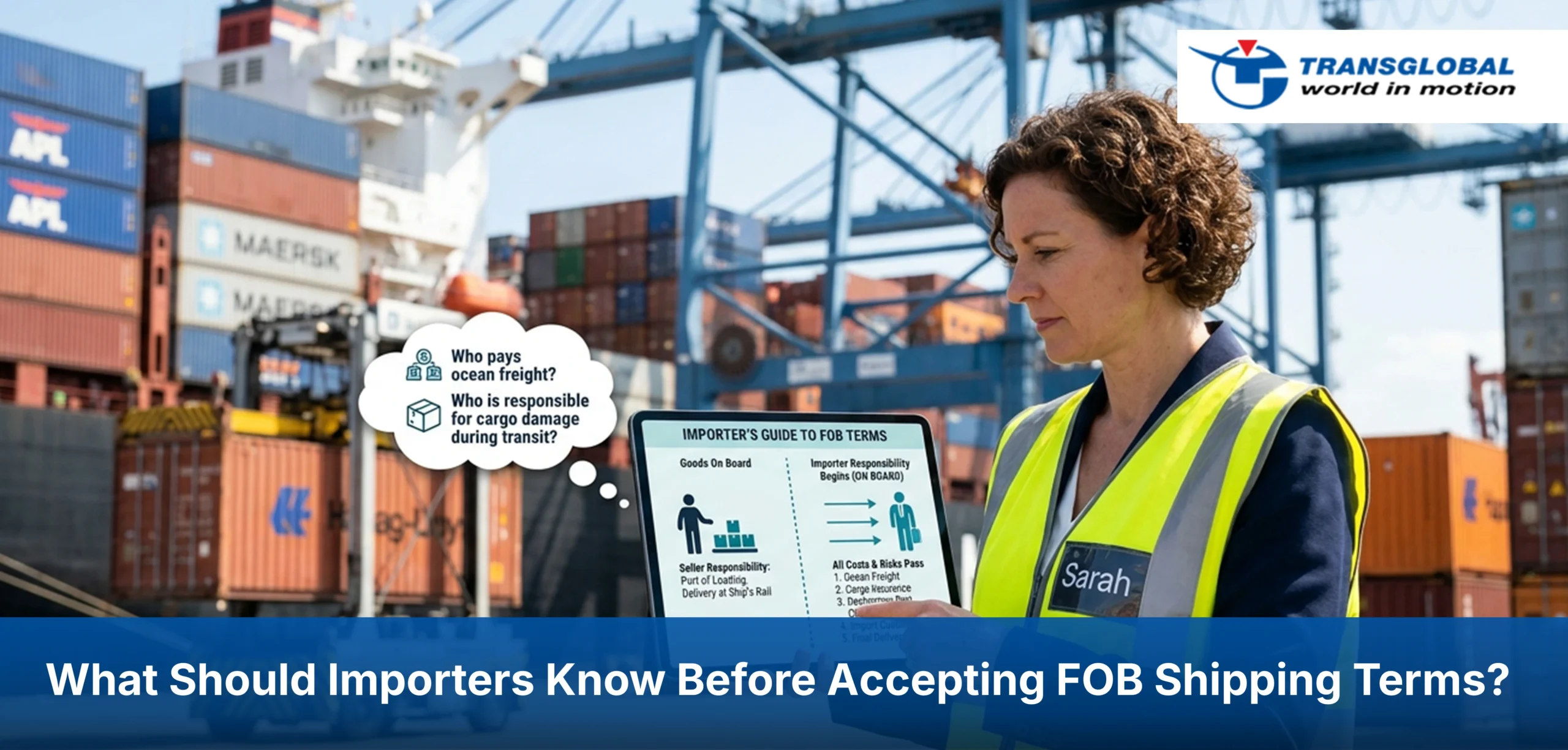
The quotation looked straightforward. The supplier confirmed the order, shared the pricing, and added three simple letters beside the shipment terms: FOB.
For many importers, especially businesses sourcing internationally for the first time, that detail is often overlooked. But in global shipping, those three letters can determine who controls the cargo, who carries the risk, who pays unexpected costs, and even whether your shipment moves smoothly or turns into an expensive logistics problem.
FOB is not just a shipping term. It is a responsibility line.
And in today’s supply chain environment, where freight rates fluctuate, port congestion continues, and compliance pressure is increasing, understanding FOB matters more than ever.
What does FOB Actually Mean in International Shipping?
FOB stands for Free On Board, one of the most commonly used Incoterms in global trade.
Under FOB terms, the supplier is responsible for the cargo until it is loaded onto the vessel at the origin port. Once the cargo is officially onboard, responsibility transfers to the buyer.
This means the buyer becomes responsible for:
- Ocean freight costs
- Marine insurance
- Destination customs clearance
- Port charges at the destination
- Inland transportation after arrival
At first glance, FOB may seem simple. But many businesses misunderstand where responsibilities truly begin, and where risks start increasing.
Why FOB has a Bigger Impact than Most Importers Realize?
The moment cargo crosses the ship’s rail, the shipment effectively becomes your responsibility.
If there are delays at sea, unexpected freight surcharges, insurance complications, customs issues, or destination charges, these costs often fall on the importer.
This becomes especially important in today’s logistics market, where shipping conditions remain volatile due to:
- Global port congestion
- Carrier schedule disruptions
- Fuel and surcharge fluctuations
- Geopolitical instability
- Customs and compliance delays
Under FOB terms, your logistics planning becomes just as important as your supplier relationship.
Why Many Suppliers Prefer Quoting FOB?
Suppliers often quote FOB because it limits their involvement after export handling at the origin.
Once cargo is loaded onboard, the operational and financial responsibility shifts to the buyer. For suppliers, this creates a cleaner transaction and reduces exposure to international freight complications.
For buyers, however, this means they now need to manage freight coordination, insurance, customs processes, and delivery planning, either internally or through a freight forwarder.
This is why FOB works best when importers have strong logistics support in place.
How FOB Impacts Freight Costs and Landed Cost Calculations?
One of the biggest mistakes businesses make is focusing only on the supplier’s quoted product price.
Under FOB, the final landed cost includes much more than the cargo value itself.
Importers must also account for:
- Ocean freight charges
- Terminal handling charges
- Customs duties and taxes
- Marine insurance
- Documentation fees
- Inland transport costs
- Potential demurrage or storage fees
Without proper planning, shipments that initially appear cost-effective can quickly become expensive.
In volatile shipping markets, freight rates can also change rapidly between booking and sailing, impacting profitability and budgeting.
Why FOB Requires Strong Freight Coordination?
FOB shipments place greater logistics responsibility on the buyer, which means freight coordination becomes critical.
This includes:
- Booking vessel space
- Managing container schedules
- Coordinating customs clearance
- Tracking cargo movement
- Handling destination delivery
- Managing shipping documentation
If communication between the supplier, freight forwarder, shipping line, and customs broker is not aligned, delays and additional charges can occur quickly.
This is particularly important for businesses importing into Africa or moving cargo through congested trade routes.
What Risks Importers Often Overlook Under FOB Terms?
Many businesses assume risk begins only after the vessel departs. In reality, operational risks often begin much earlier.
For example, if documentation is incomplete before loading, the shipment may still face delays or customs issues later in the process.
Cargo visibility can also become limited if freight coordination is weak. Without proper tracking and communication, importers may struggle to respond quickly to disruptions.
Another commonly overlooked area is insurance.
Under FOB terms, the buyer is typically responsible for marine insurance once the cargo is onboard. Without adequate coverage, businesses may face significant financial exposure during transit disruptions or cargo damage incidents.
Why FOB Matters Even More for Specialized Cargo?
For standard cargo, FOB management is already important. But for specialized shipments such as dangerous goods, hazardous materials, explosives, project cargo, defence equipment, or armaments logistics, the stakes become significantly higher.
These shipments involve:
- Strict compliance requirements
- Specialized documentation
- Dangerous goods declarations
- Security protocols
- Regulatory approvals
- Multi-modal coordination across sea, air, and road freight
A small oversight under FOB terms can lead to shipment rejection, compliance penalties, or major operational delays.
This is why businesses handling sensitive cargo need experienced freight forwarding support from the beginning, not after problems arise.
Transglobal’s Role Goes Beyond Moving Cargo
FOB shipments require more than transportation execution. They require logistics control, visibility, and strategic coordination.
At Transglobal, the focus is on helping businesses manage the full complexity of international shipping after supplier handover.
Whether handling sea freight, air freight, or road freight, the team supports clients through every stage of the shipment process, from freight booking and customs coordination to final delivery.
For high-risk and specialized cargo such as dangerous goods, explosives, hazardous materials, military logistics, and defence shipments, compliance and operational planning become even more critical.
Transglobal helps businesses:
- Coordinate supplier and carrier communication
- Manage shipping documentation accurately
- Improve shipment visibility
- Handle customs and compliance requirements
- Reduce operational and cost risk across global trade routes
This ensures clients maintain control over shipments even in volatile logistics conditions.
Why Choosing the Right Freight Forwarder Matters Under FOB Terms?
Under FOB, the freight forwarder becomes one of the most important parts of your supply chain.
A strong logistics partner helps businesses:
- Understand true landed costs
- Reduce delays and unexpected charges
- Maintain compliance across borders
- Improve cargo visibility
- Handle disruptions proactively
In today’s shipping environment, this level of support is no longer optional, it is essential for maintaining supply chain reliability.
Conclusion
When a supplier quotes FOB, they are not just sharing a pricing structure. They are defining where responsibility transfers, and where your logistics exposure begins.
Businesses that understand FOB properly are better equipped to manage freight costs, reduce risk, and maintain smoother international operations.
Those who underestimate it often face unexpected charges, delays, and operational frustration.If your business imports cargo globally and operates under FOB terms, partner with a freight forwarder that can manage every stage of the journey with precision, compliance, and visibility. Contact our team, which goes beyond booking freight and helps protect your supply chain from origin to final delivery.
Frequently Asked Questions
What does FOB mean in shipping?
FOB (Free On Board) means the supplier is responsible until the cargo is loaded onto the vessel, after which responsibility transfers to the buyer.
Who pays freight costs under FOB terms?
Under FOB, the buyer usually pays ocean freight, insurance, customs clearance, and destination delivery costs.
Why is FOB important in international trade?
FOB determines responsibility, risk transfer, and cost allocation between the supplier and the buyer during shipping.
Comments