

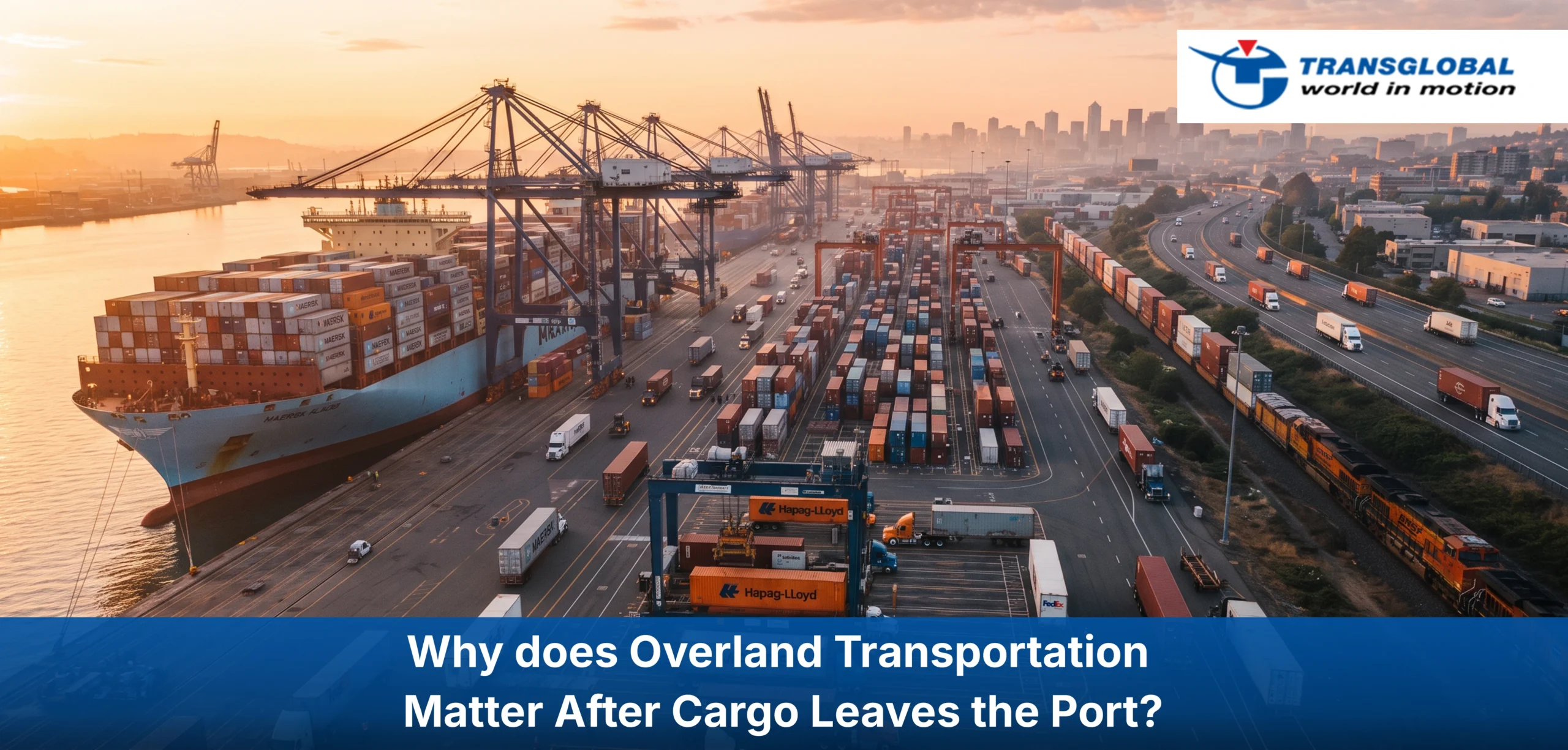
A vessel may have completed its voyage, but the shipment has not completed its journey.
The container may still be waiting for customs release, terminal collection, inland transport, warehousing, or final delivery. A factory may be expecting raw materials, a project site may be waiting for equipment, or a distribution centre may already have labour scheduled.
Until the cargo reaches the place where it is actually needed, the delivery remains incomplete.
This is why overland transportation matters after cargo leaves the port. It connects international shipping with warehouses, factories, mines, project sites, retail networks, and final customers.
When this stage is planned well, cargo continues moving with fewer interruptions. When it is overlooked, port arrival can quickly turn into storage charges, missed delivery windows, and operational disruption.
Why Overland Transportation Determines? How Quickly Port Cargo Reaches its Final Destination?
Cargo does not usually become available for inland delivery the moment a vessel arrives.
The container may still need to be discharged, cleared through customs, released by the shipping line, processed by the terminal, and assigned a collection slot. Each activity affects when a truck can begin the inland journey.
If transport is arranged too early, the vehicle may wait while the cargo remains under customs or terminal control. If it is arranged too late, the container may remain at the port longer than necessary.
This is why inland transport and customs brokerage should be coordinated as part of the same delivery plan.
Good coordination helps the container move from discharge to collection without an unnecessary gap. It also reduces the risk of storage, demurrage, and vehicle waiting costs.
How Overland Transportation Connects Ports with Warehouses, Factories, and Project Sites?
The port is only one point in the shipment journey.
Cargo may still need to travel hundreds of kilometres before it reaches a warehouse, manufacturing plant, mine, construction site, or regional distribution centre.
A manufacturer may need components delivered to production, while a project team may need heavy equipment moved to a remote location.
Warehouses may operate through fixed receiving appointments. Factories may need cargo within a production window. Mining and project sites may have restricted access, difficult road conditions, or specific unloading arrangements.
The transport plan must consider where the cargo is going, when the site can accept it, what equipment is available, and whether the location is ready.
When the port, transporter, and consignee work from one clear plan, the cargo is more likely to arrive without unnecessary waiting or repeated handling.
Why the Right Vehicle and Route Matter After Cargo Leaves the Port?
Not every cargo movement can use the same vehicle or follow the same road.
The right transport option depends on cargo weight, dimensions, container type, handling needs, destination, road access, security risk, and delivery conditions.
A standard container moving to a city warehouse may be straightforward. Oversized cargo travelling to a project site may require specialised trailers, route surveys, lifting arrangements, or permits.
The shortest road may not be the right route. It may involve poor infrastructure, restricted access, security concerns, or delivery limitations. Regional movements may also involve border posts, cross-border documents, and different operating conditions.
This is why route planning should consider more than distance.
The right vehicle and route protect the cargo and help the delivery remain within a realistic schedule. They also reduce the risk of changing equipment or rerouting the shipment after it has already left the port.
How Overland Transportation Keeps Cargo Moving When Direct Delivery is not Possible?
Direct port-to-customer delivery is not always practical.
The receiving warehouse may be full. A construction site may not be ready. A container may need to be unpacked, inspected, sorted, palletised, or divided into smaller deliveries.
In these situations, overland transportation must work together with warehousing support.
This prevents containers from remaining at the terminal simply because the consignee is not ready. It can also support phased distribution where one shipment needs to supply several branches, customers, or project locations.
Warehousing provides greater control over unpacking, short-term storage, order preparation, and onward delivery.
When transport and warehousing are planned together, businesses can respond more effectively to changes in receiving capacity, project schedules, or customer requirements.
Instead of allowing the journey to stop, cargo can continue moving through a controlled inland network until final delivery becomes possible.
Why Shipment Control Must Continue Until Inland Delivery is Complete?
Shipment visibility should not end when the vessel reaches the port.
Cargo managers still need to know when customs release is completed, when terminal collection takes place, whether the truck remains on schedule, and when delivery is confirmed.
Without clear updates, the consignee may prepare labour and equipment at the wrong time. A warehouse may hold receiving space unnecessarily. A project site may expect cargo that is still waiting at the terminal.
If the collection is delayed, the delivery window can be changed. If temporary storage is needed, the warehouse plan can be activated early.
An experienced freight forwarding partner helps connect the shipping line, customs team, terminal, transporter, warehouse, and consignee.
The movement is only complete when the cargo reaches the agreed destination and delivery has been confirmed.
That is why control must continue beyond vessel arrival and throughout the entire inland journey.
Conclusion: Overland Transportation Turns Port Arrival into Completed Delivery
Port arrival is an important milestone, but it does not place the cargo inside the customer’s warehouse, factory, mine, or project site.
Overland transportation completes that remaining journey.
It brings together customs release, terminal collection, vehicle planning, inland routing, warehousing where required, receiving-site coordination, and final delivery.
When these activities are planned separately, delays and additional costs become more likely. When they are managed as one connected movement, businesses gain better control over delivery timing and cargo flow.
Post-port movements require coordinated customs clearance, road freight planning, warehousing, route management, and delivery visibility across South Africa and neighbouring markets.
To discuss the inland delivery requirements of an upcoming shipment, contact us before the vessel arrives.
Complete the port-to-door journey with specialist freight forwarders who understand how overland transportation keeps cargo moving beyond the port.
Frequently Asked Questions
What is overland transportation in logistics?
It is the inland movement of cargo by road or rail between ports, warehouses, factories, project sites, and final destinations.
Why should overland transportation be arranged before port arrival?
Early planning aligns customs release, terminal collection, vehicle availability, route requirements, and the consignee’s delivery schedule.
Can overland transportation support regional deliveries?
Yes. It can connect South African ports with inland and cross-border destinations through coordinated transport and customs planning.

Comments