

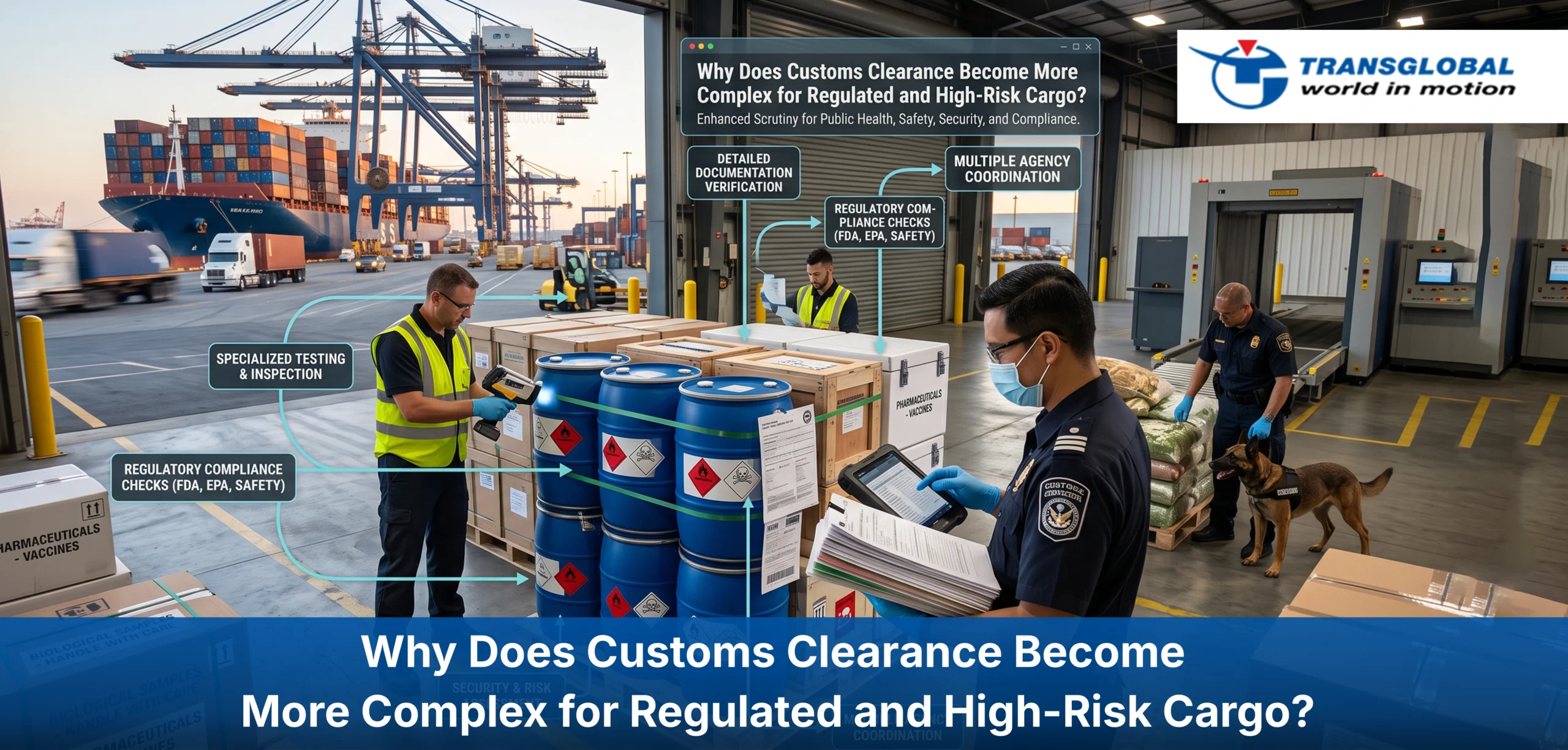
Some cargo moves through customs with a standard set of documents.
Other shipments demand much more.
A permit may need to be checked against the exact product. Technical details may need to support the declaration. The goods may fall under a controlled category, involve another authority, or require inspection under specific safety conditions.
That is where customs brokerage becomes more demanding.
For regulated and high-risk cargo, customs is not only confirming value, origin, and tariff classification. Authorities must also determine whether the goods are legally permitted, correctly identified, safely prepared, and suitable for the intended route.
This applies to explosives, hazardous chemicals, defence equipment, batteries, pharmaceutical products, controlled machinery, and specialised industrial materials.
Why Regulated Cargo Needs More than Standard Customs Documents
A commercial invoice and packing list may begin the customs process for ordinary freight.
Regulated cargo usually requires additional proof.
Depending on the goods, the shipment may need:
- Import or export permits
- Safety data sheets
- Dangerous goods declarations
- End-user certificates
- Technical product specifications
- Certificates of origin
- Approvals from relevant authorities
These documents must support one another.
If a permit describes a different quantity, the safety data sheet uses another product name, or the end-user information does not match the declaration, customs may stop the shipment for clarification.
For regulated and specialised cargo, customs clearance is not a single filing exercise. It is a process of proving that the commercial, legal, and safety information is complete and consistent.
One missing document can affect the entire release process.
Why Classification Carries Greater Risk for High-Risk Shipments?
Classification is important for every shipment, but mistakes carry greater consequences for regulated cargo.
The tariff code affects duties, taxes, restrictions, and reporting. For dangerous goods, the UN number, hazard class, proper shipping name, and packing group influence handling and transport.
A broad or inaccurate description can create several problems at once.
A chemical may fall under the wrong tariff heading. A battery shipment may be declared as general equipment despite transport restrictions. A controlled industrial product may need a permit that was not identified during booking.
Customs officers need the declaration to reflect the actual goods.
Businesses moving hazardous materials should also understand the 9 classes of dangerous goods because customs and transport classifications must support the same cargo description.
When the invoice, permit, tariff code, technical data, and dangerous goods information do not align, customs may request amendments, supporting evidence, or inspection.
For high-risk cargo, classification helps determine whether the shipment can move legally and safely.
Why Several Authorities May Need to Approve the Same Shipment?
Customs is not always the only authority involved in releasing regulated goods.
Explosives, chemicals, defence equipment, pharmaceuticals, agricultural goods, and controlled machinery may each fall under separate controls.
This means one shipment can depend on several approval points.
Customs may be ready to process the declaration, while another department still needs to verify a permit. A technical regulator may require a certificate. End-user confirmation may also be needed before controlled goods can be released.
The process becomes more complex when the shipment moves through several countries. An approval issued at origin may not satisfy the transit or destination country.
Before departure, businesses should confirm:
- Which authorities are involved
- Which permits apply to the exact cargo
- Whether approvals cover the full quantity
- How long each authorisation remains valid
- Whether transit countries impose additional controls
Discovering these requirements after arrival can leave the shipment waiting while approvals are corrected or obtained.
Why do Inspections Need More Planning for High-Risk Cargo?
Any shipment can be inspected, but high-risk cargo cannot always be handled like general freight.
Customs officers may need technical documents, approved inspection areas, trained personnel, secure handling, or specialist equipment.
Hazardous materials may require controlled handling. Explosives may involve strict safety and security procedures. Oversized machinery may need lifting equipment before customs can inspect it properly.
An inspection can affect:
- Terminal arrangements
- Vehicle bookings
- Warehouse access
- Safety personnel
- Delivery appointments
- Final logistics cost
Good preparation does not prevent customs from selecting the cargo. It ensures the shipment can be presented safely and correctly when inspection is required.
For high-risk cargo, inspection readiness should form part of the clearance plan, not an emergency response after the goods are held.
Why Digital Customs Processing Still Needs Human Expertise?
Electronic customs systems have made declarations and document submission faster.
But speed does not replace accuracy.
A digital system will not correct an incorrect tariff code, identify a missing permit, or explain why a product description conflicts with technical documents.
It only processes the information submitted.
Digital customs submissions work best when shipment details have already been reviewed by someone who understands the cargo.
Technology moves information faster.
Expertise helps ensure that information is correct.
For regulated and high-risk shipments, that difference matters. An incorrect declaration submitted quickly can still lead to queries, amendments, inspections, and additional costs.
An experienced freight forwarding partner can compare commercial documents, permits, technical data, and transport requirements before customs receives the entry.
This gives authorities a clearer picture of the shipment from the start.
Conclusion: High-Risk Cargo Needs a Stronger Customs Strategy
Regulated cargo cannot be cleared successfully through speed alone.
The shipment must be understood in detail.
Its classification must be accurate. Permits must apply to the exact goods and quantity. Technical documents must support the declaration. The right authorities must approve the movement, and inspection arrangements must reflect the cargo risk.
When these requirements are addressed early, customs clearance becomes more controlled and predictable.
When they are left until arrival, the cargo may face queries, inspection delays, storage charges, and missed delivery commitments.
For businesses preparing regulated or high-risk shipments, contact us to review the customs, permit, and handling requirements before departure.
Build a stronger clearance plan with experienced freight forwarders who understand the regulatory details behind complex cargo.
Frequently Asked Questions
Why does regulated cargo take longer to clear?
It may require additional permits, technical documents, inspections, safety controls, and approvals from several authorities.
What documents may be needed for high-risk cargo?
Requirements may include permits, safety data sheets, dangerous goods declarations, technical specifications, certificates, and end-user details.
When should customs planning begin?
Planning should begin before departure so classification, permits, documents, and inspection requirements can be confirmed early.

Comments