

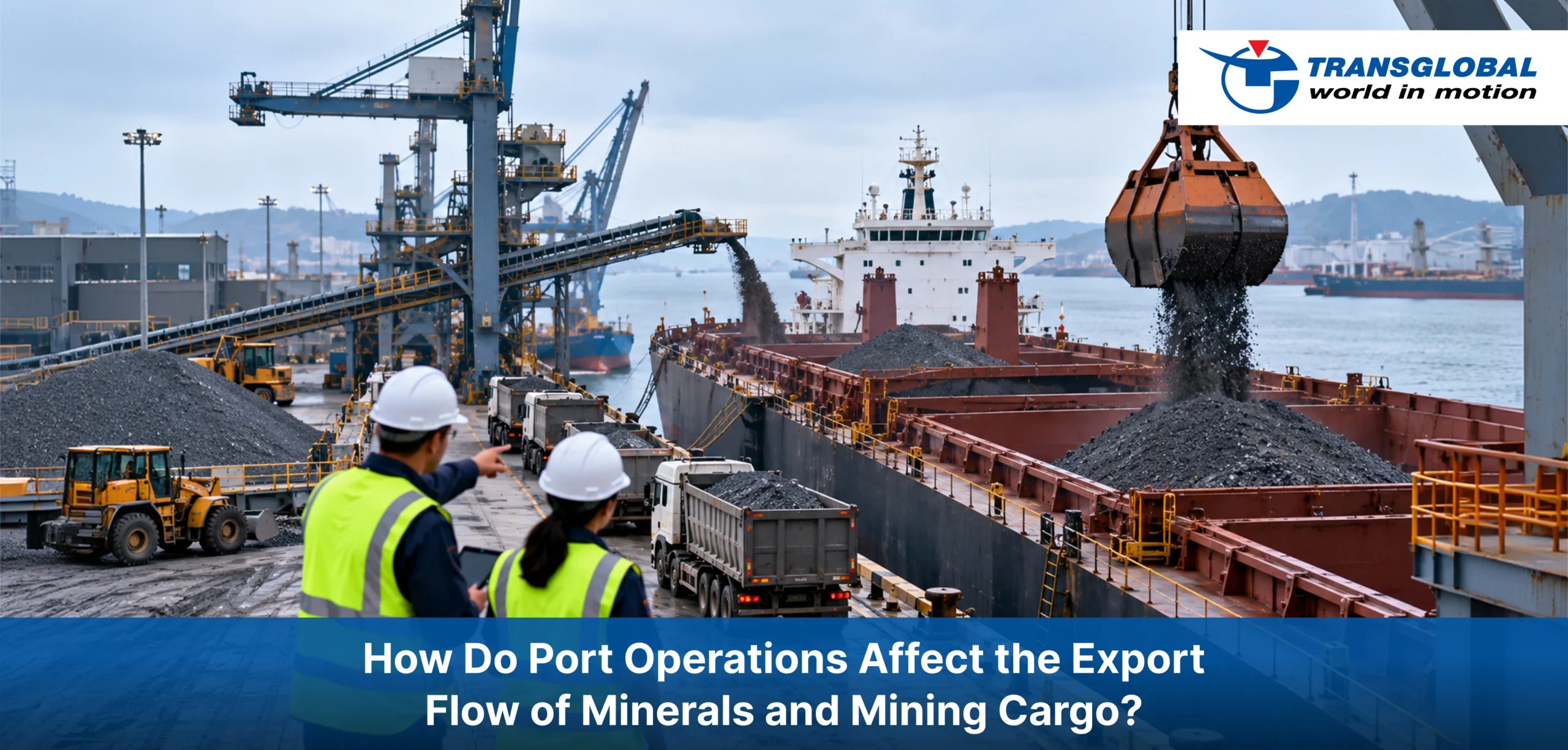
A mine may have thousands of tonnes of minerals ready for export, with an overseas buyer waiting and a vessel scheduled to collect the shipment.
But production readiness does not automatically mean export readiness.
The minerals must reach a suitable port, enter the correct terminal, meet handling and quality requirements, and be available when the vessel is ready to load.
A disruption at any of these stages can affect the shipment.
For South Africa’s mining industry, ports are a critical connection between inland mineral production and international markets. Iron ore moves through Saldanha, coal exports are closely associated with Richards Bay, and manganese uses established bulk export corridors.
These movements depend on more than vessel availability.
Mining export logistics must account for terminal capacity, stockpile management, cargo handling equipment, berth allocation, and loading performance.
Understanding how port operations work helps mining companies plan mineral exports around the conditions that determine when cargo can actually leave the country.
How Does Port Infrastructure Determine Where Minerals Can Be Exported?
Not every port is equipped to handle every mineral commodity.
A terminal designed for containerised freight operates differently from one handling millions of tonnes of loose iron ore or coal.
Bulk mineral exports may require dedicated rail connections, stockyards, conveyors, shiploaders, and berths capable of accommodating large bulk carriers.
South Africa provides clear examples.
Saldanha is a major iron ore export gateway, while Richards Bay supports coal and other mineral movements. Facilities serving manganese exports include terminals in the Eastern Cape and Saldanha.
Each location has different infrastructure, operating arrangements, and cargo-handling capabilities.
This means port selection depends on the commodity, shipment volume, available transport corridor, terminal access, and intended vessel.
For mining companies, choosing an export route without considering terminal capabilities can create operational complications.
A mineral shipment may be commercially ready but unsuitable for the handling facilities available at the selected port.
Through its mining logistics services, Transglobal supports the coordination of mineral products, mining equipment, and export consignments across suitable transport connections.
The objective is to establish a workable route between the production site and the international shipping service.
Why Does Cargo Arrival at the Port Not Guarantee Immediate Loading?
Consider a shipment of chrome ore travelling from an inland mining operation to an export terminal.
The material reaches the port, but the vessel is not yet ready to receive it.
Depending on the terminal arrangement, the cargo may need to enter an allocated stockpile, holding area, or other approved handling facility.
This stage is particularly important for bulk cargo.
Different mineral grades, suppliers, and shipment lots may need to remain identifiable or segregated according to contractual and terminal requirements.
Poor stockpile planning can complicate cargo reconciliation, sampling, and loading preparation.
The timing of inland deliveries also matters.
If too much cargo arrives before terminal capacity is available, receiving operations can become congested. If insufficient cargo reaches the terminal, the planned vessel parcel may not be ready when loading begins.
Mining freight therefore requires coordination between production output, inland transport, terminal receiving capacity, and shipment quantities.
For suitable road-based movements, road freight can connect mines, processing facilities, storage locations, and export points.
However, large-volume mineral corridors often depend heavily on rail infrastructure.
The transport method must match the commodity volume and the terminal’s receiving arrangements.
How Do Berth Availability and Shiploading Equipment Influence Export Schedules?
A vessel arriving at port still needs an available berth and the required loading facilities.
For mineral exports, this is a significant operational consideration.
Bulk carriers may depend on specialised shiploaders, conveyor systems, loading equipment, and terminal personnel to transfer thousands of tonnes from shore to vessel.
The loading operation must also follow an approved sequence that considers the vessel’s stability, cargo distribution, and operational requirements.
If a berth remains occupied longer than planned, the next vessel may have to wait.
Equipment breakdowns, maintenance activities, weather restrictions, and changes to vessel schedules can also influence loading performance.
These conditions affect more than the immediate port operation.
A delayed vessel may disrupt subsequent shipping commitments, while exporters may face additional waiting costs under their charter arrangements.
For mining companies shipping large parcels, loading performance can have a direct commercial impact.
This is why sea freight operations must be understood alongside the terminal processes that support vessel turnaround.
A confirmed shipping arrangement is important, but exporters also need visibility into berth planning and cargo readiness.
Why Do Mineral Quality and Export Documentation Matter at the Terminal?
Mineral exports are often sold against defined quality specifications.
A buyer may require a particular grade, moisture level, particle size, or chemical composition.
Before loading, the shipment may be subject to sampling, weighing, testing, or independent inspection, depending on the commodity and sales contract.
These checks help establish whether the cargo meets the agreed requirements.
For example, a shipment of manganese ore may need supporting quality certificates, while certain bulk cargoes require moisture-related safety assessments under applicable maritime rules.
The results can affect cargo acceptance, shipping documentation, and the quantity or quality recorded for commercial settlement.
Export declarations and supporting documents must also reflect the actual shipment.
Discrepancies between the declared commodity, certified weight, contractual description, and shipping records can require clarification before export procedures are completed.
For mining exporters, documentation is therefore closely connected to the physical cargo.
The information recorded at the terminal must support what is being loaded onto the vessel.
Early coordination between the mine, testing provider, terminal, clearing agent, and shipping parties helps keep the export file consistent with the consignment.
How Do Port Disruptions Affect Mining Export Costs and Commitments?
A port delay can create financial consequences far beyond the terminal.
Imagine a mining exporter with a confirmed overseas order and a bulk vessel scheduled to load.
The cargo is ready, but the vessel cannot berth as planned.
The exporter may need to adjust inland deliveries, hold additional stock, revise loading instructions, and communicate a changed shipment date to the buyer.
Depending on the shipping contract, vessel waiting time may result in demurrage.
Additional storage, handling, or transport costs may also arise.
For mining operations working against production and export targets, these interruptions can affect cash flow and future shipment planning.
Port tariffs and terminal charges are another consideration. Changes in applicable charges can influence the overall cost of moving mineral products through South African ports.
The wider effect of port tariff changes is particularly relevant when exporters assess the cost of international freight movements.
This makes operational visibility important.
Mining companies benefit from knowing whether cargo has reached the terminal, whether the planned parcel is complete, when the vessel is expected to berth, and whether loading has progressed as scheduled.
These updates help commercial and logistics teams make decisions before a disruption affects the next shipment.
Conclusion: Port Operations Shape the Reliability of Mineral Exports
Mining export logistics connects production with international demand, but ports determine how efficiently that connection works.
Terminal infrastructure influences which commodities can be handled. Stockpile arrangements affect cargo readiness. Berth availability and loading equipment determine vessel turnaround, while quality verification and export procedures support shipment acceptance.
Each stage has a different purpose, and each can influence the final export schedule.
For South African mining companies, effective planning means understanding the operational requirements of the chosen port and preparing inland movements around them.
A successful mineral export depends on the cargo being available, accepted, and loaded under the required conditions.
Planning mineral exports or specialist mining cargo movements? Contact us to discuss cargo characteristics, inland transport requirements, export documentation, and international shipping arrangements.
Connect your mining operations to global markets with leading freight forwarders who understand mining export logistics, mineral freight, and the coordination required for international cargo movements.
Frequently Asked Questions
Why are stockpiles important in mineral export logistics?
Stockpiles allow terminals to hold mineral cargo before vessel loading. They help manage shipment quantities and, where required, maintain separation between different grades or consignments.
What causes demurrage during bulk mineral exports?
Demurrage may arise when a vessel exceeds the loading time allowed under its charter agreement. The amount and responsibility depend on the contractual terms and the circumstances of the delay.
Why are mineral samples tested before export?
Mineral samples may be tested to verify that the cargo meets the buyer's agreed quality specifications. Testing can also support relevant shipping safety requirements and commercial settlement.
Comments