

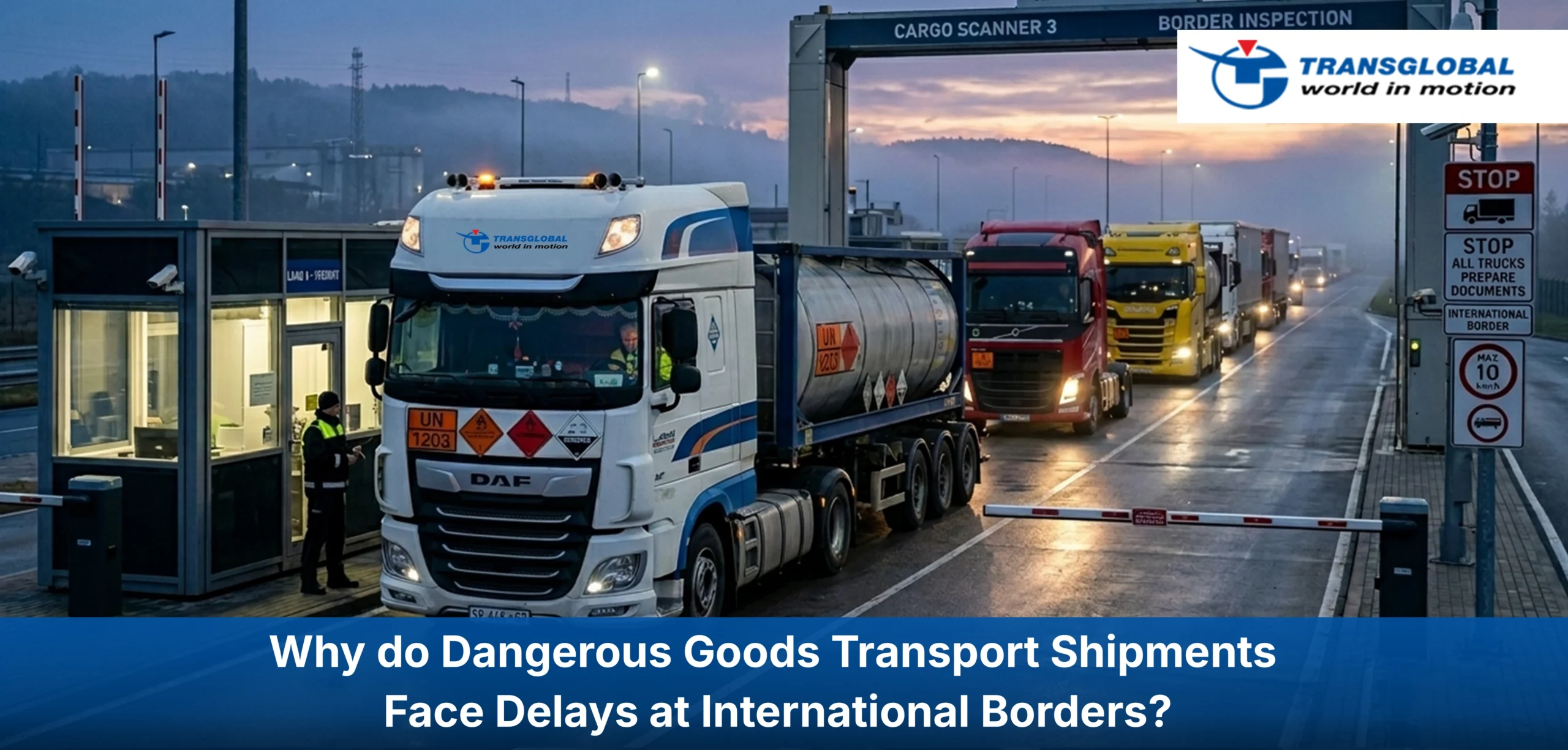
A truck can reach the border with everything looking ready.
The cargo is packed. The documents are submitted. The delivery timeline has already been promised.
Then one detail stops the movement.
The MSDS does not match the invoice description. A permit reference is missing. The UN number needs verification. For dangerous goods, a small mismatch can quickly become a shipment hold.
For cargo managers, importers, exporters, mining companies, chemical suppliers, manufacturers, defence contractors and project teams, delays in dangerous goods transport can affect schedules, costs and customer commitments.
Border authorities will not clear dangerous goods based on urgency alone. They need proof that the shipment is correctly classified, legally permitted, safely packed, and suitable to move through every country involved in the route.
Why do Dangerous Goods Transport More Sensitive at Borders?
Dangerous goods are not treated like normal freight because the risk is higher.
These shipments may include flammable liquids, corrosive materials, gases, chemicals, batteries, explosives, or other regulated cargo that can create safety, environmental, fire, health, or handling risks if moved incorrectly.
That is why customs officials, border teams, carriers, transport operators, and handling facilities apply stricter checks before allowing the cargo to continue.
Authorities need to understand how the cargo has been classified, packed, labelled, declared, approved, and routed.
At the border, uncertainty creates delay. If officials cannot clearly understand the cargo risk, the shipment may be held until the details are verified.
This is why dangerous goods transport needs more preparation than standard freight. The shipment must prove it is safe, compliant, and ready before it moves further.
When Documentation does not Match the Cargo?
Documentation is one of the most common reasons dangerous goods shipments face border delays.
The cargo may be physically ready, but if the documents do not tell the same story, the shipment is not ready from a compliance point of view.
Common issues include incorrect UN numbers, missing dangerous goods declarations, outdated MSDS documents, wrong product descriptions, incomplete consignee details, missing emergency contacts, incorrect weight details, or permit references that do not match the transport documents.
If the invoice uses one product name, the packing list shows another description, and the MSDS refers to a different technical name, border officials may stop the shipment for clarification.
This is why accurate shipping documentation and compliance should be handled before dispatch, not when the shipment is already waiting at the border.
With dangerous goods, paperwork is more than admin. It is proof of safe movement.
Why Classification, Packaging, and Labelling Mistakes Create Delays?
Dangerous goods classification is the basis of the entire shipment.
The correct UN number, proper shipping name, hazard class, packing group, and handling requirement decide how the cargo should be packed, marked, labelled, stored, transported, and declared.
When classification is wrong, every other part of the shipment becomes questionable.
A cargo item may look harmless to a non-specialist, but from a transport compliance perspective, it may fall under a regulated category. This is common with chemicals, aerosols, lithium batteries, flammable liquids, corrosive products, and industrial materials.
Labels, placards, package marks, and handling instructions must match the declaration and cargo documents. If the hazard label is missing, unclear, damaged, or inconsistent with the paperwork, the shipment may be held for inspection.
For businesses moving regulated cargo types, understanding the 9 classes of dangerous goods helps reduce confusion before shipments are prepared.
Correct classification and labelling do not just support compliance. They help every party understand how the cargo must be handled.
Why Permits, Border Rules, and Route Restrictions Slow Shipments Down?
Many dangerous goods shipments require permits, approvals or authorisations before they can move across borders.
This is especially important for explosives, hazardous chemicals, defence-related cargo, controlled goods, mining materials and other high-risk shipments.
Approvals are not always immediate. They may depend on the cargo type, origin, destination, transit country, transport operator, vehicle type, route, consignee, end-user, and regulatory authority involved.
When a shipment moves from South Africa into neighbouring countries, each border may involve different customs procedures, transport rules, permit checks, and authority expectations.
Carrier restrictions can also slow down movement. Not every carrier accepts every type of dangerous goods. Some cargo may be restricted by airline rules, shipping line policies, road transport requirements, or port handling limits.
For explosives and high-risk road freight, controlled routing and correct approvals can affect whether the shipment moves smoothly or faces border delays.
The fastest route is not always the best route. For dangerous goods, the right route is the one that is safe, compliant, and accepted.
Why Poor Coordination Creates Delays Before the Shipment Reaches the Border?
Many dangerous goods delays do not actually start at the border.
They start earlier when the shipper, freight forwarder, customs broker, carrier, transporter, warehouse, and consignee are not working from the same information.
If one party uses outdated cargo details, the whole shipment can be affected. Cargo details, documents, permits, packaging, route plans, carrier acceptance, customs requirements, and border expectations should be checked before dispatch.
Once the shipment reaches the border, corrections become slower and more expensive. Delays can lead to truck standing costs, storage charges, missed connections, project disruption, customer penalties, and reputational damage.
An experienced freight forwarding partner helps bring these moving parts together before the shipment is exposed to risk.
In dangerous goods transport, the best border delay is the one prevented before the cargo moves.
Conclusion: How the Right Freight Forwarder Helps Reduce Border Delays?
Dangerous goods transport delays may appear to happen at international borders, but the real problem often starts earlier.
It starts when classification is not checked, documents are prepared too late, permits are missing, packaging is unsuitable, route restrictions are overlooked, or the parties involved are not aligned.
For businesses moving hazardous cargo, explosives, chemicals, defence cargo, project cargo, or other regulated goods, the right freight forwarder can make a major difference.
To discuss the requirements of an upcoming shipment, contact us before the cargo moves.
At Transglobal Cargo, dangerous goods transport is approached with careful planning, compliance support, documentation coordination, customs guidance, route planning, and specialized cargo handling.
Reduce border delays by working with a specialist freight forwarder who understands dangerous goods compliance and cross-border movement.
Frequently Asked Questions
Why do dangerous goods transport shipments get delayed at borders?
Most delays happen because of documentation errors, incorrect classification, missing permits, packaging issues, or customs verification.
What documents are needed for dangerous goods transport?
Common documents include the MSDS, dangerous goods declaration, invoice, packing list, transport documents, permits, and emergency details.
How can a freight forwarder help reduce dangerous goods delays?
A specialist freight forwarder helps check documents, coordinate permits, plan routes, confirm carrier acceptance, and manage customs requirements.

How Chemical Logistics Connects Plants and Customers?
3d[…] regulated chemical cargo, dangerous goods transport depends on the classification, documents, packaging, and border requirements being aligned before […]