

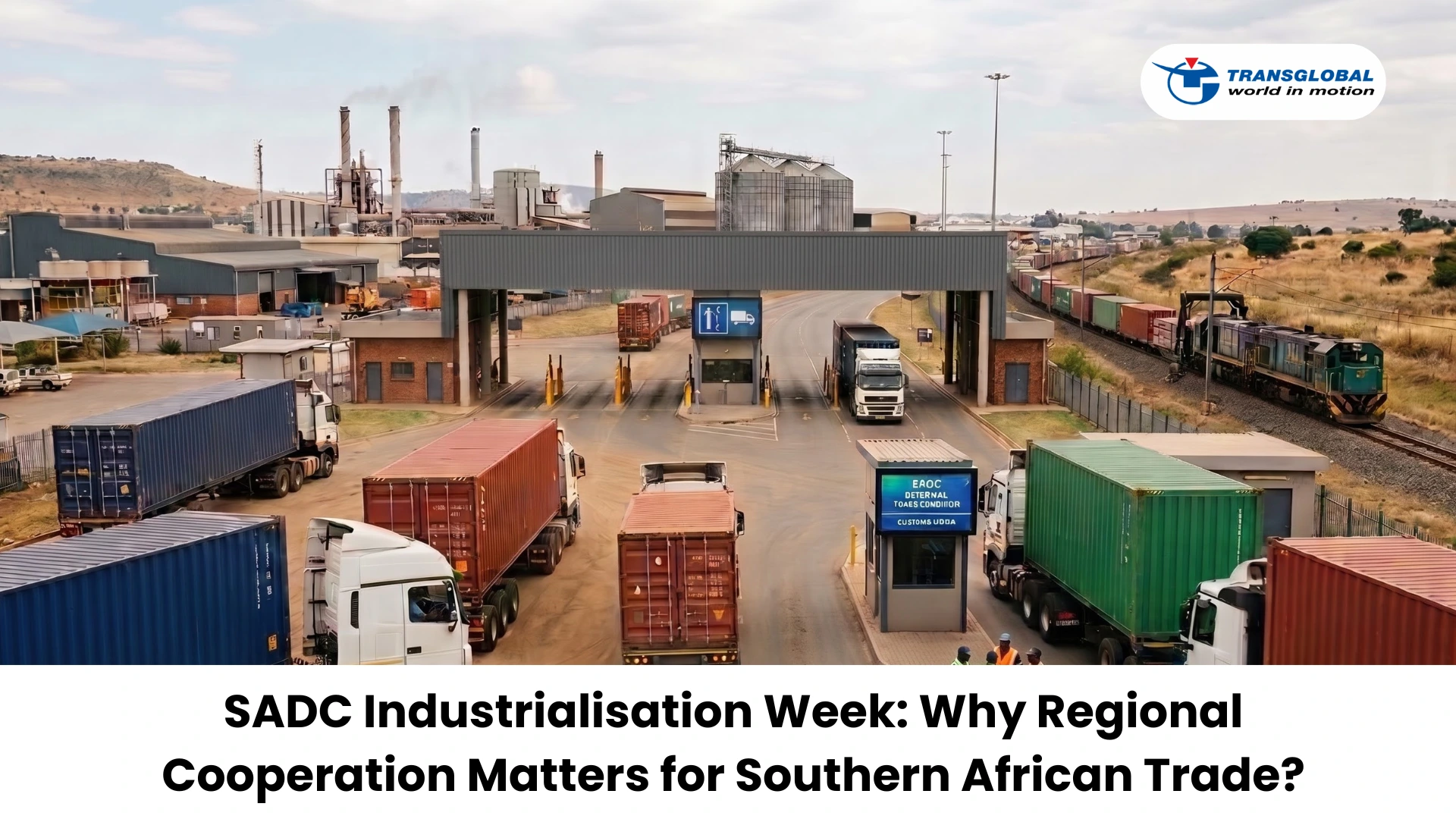
The 9th Southern African Development Community Industrialisation Week has placed regional cooperation back at the centre of Southern Africa’s growth agenda.
Held at the Durban International Convention Centre from 27 July to 31 July 2026, the event brought together government representatives, the SADC Business Council, the SADC Secretariat, private sector leaders, development partners, and regional stakeholders.
The discussions focused on a major question for the region:
How can Southern Africa build stronger industries, create jobs, attract investment, and improve competitiveness through deeper cooperation?
According to the Department of Trade, Industry and Competition, the event renewed collective commitment to the SADC Industrialisation Strategy and Roadmap, which runs from 2015 to 2063.
This strategy is built on three core pillars:
- Industrialisation
- Competitiveness
- Regional integration
👉 Southern Africa’s growth will not depend only on individual countries. It will depend on how effectively the region builds connected industries, infrastructure, and trade corridors together.
🌍 Regional Cooperation is Becoming More Important
Industrialisation is not only about building factories.
It is about creating an environment where businesses can produce, process, move, and export goods more competitively.
For SADC countries, this requires cooperation across borders.
Many regional value chains depend on raw materials from one country, processing capacity in another, transport corridors across several territories, and final markets across the continent or overseas.
This is why regional integration matters.
When countries work together, they can reduce duplication, improve market access, strengthen infrastructure planning, and create larger commercial opportunities for businesses.
The closing message from SADC leaders was practical: discussions must now become programmes, bankable projects, and measurable results.
🚛 Infrastructure will Decide How Far Industrialisation can Go
The theme of this year’s Industrialisation Week placed strong emphasis on infrastructure development, agricultural transformation, critical minerals, and inclusive industrial growth.
These areas are closely connected.
Factories need reliable energy.
Agricultural processors need cold chains, storage, and distribution networks.
Critical mineral projects need roads, rail, ports, equipment, and export systems.
Regional manufacturers need dependable road freight, border movement, and final delivery networks.
Without infrastructure, industrialisation remains limited.
A product may be manufactured successfully, but if it cannot move efficiently to market, the commercial opportunity weakens.
This is especially important for Southern Africa, where inland countries depend heavily on transport corridors, ports, customs systems, and logistics providers to connect with regional and global markets.
📦 Value Addition can Strengthen Regional Trade
One of the major outcomes from the event was the commitment to promote beneficiation and local processing.
This applies particularly to critical minerals and agricultural products.
For Southern Africa, this is an important shift.
Instead of exporting only raw materials, the region has an opportunity to retain more value by processing, packaging, assembling, and manufacturing closer to source.
This can support job creation, skills development, supplier networks, and stronger regional industries.
Agricultural products can move beyond primary exports into processed foods.
Critical minerals can support manufacturing, energy transition projects, and industrial supply chains.
However, value addition depends on more than production capacity.
It also requires warehousing, cargo handling, compliance, transport planning, and reliable access to markets.
⚖️ Regional Value Chains Need Practical Trade Support
The meeting also highlighted the importance of strengthening regional industrial value chains.
This means increasing production, improving value addition, growing intra-SADC trade, and making regional industries more competitive.
For businesses, this creates opportunity.
A manufacturer in South Africa may source inputs from Zambia, export finished goods to Mozambique, and rely on transport routes through Zimbabwe or Botswana.
A mining project may depend on equipment, chemicals, spare parts, and specialist cargo movement across several countries.
These flows require strong coordination.
They also depend on accurate documentation, border readiness, duties, permits, and customs brokerage.
When these systems work smoothly, regional trade becomes faster and more predictable.
When they do not, delays increase costs and weaken competitiveness.
Understanding key border crossings is therefore essential for companies moving goods across Southern Africa.
🏭 Public and Private Investment Must Work Together
A strong point raised during the event was that sustainable industrial development cannot be achieved by governments alone.
Private sector participation is essential.
So are development finance institutions, research bodies, academia, and regional partners.
Industrialisation requires investment in energy, transport, logistics, digital connectivity, industrial parks, manufacturing capacity, and skills development.
It also requires confidence.
Businesses are more likely to invest when infrastructure is reliable, regulations are clear, corridors are efficient, and regional markets are accessible.
This is why cooperation must move beyond policy statements.
It must result in practical projects that improve how goods are produced, moved, stored, cleared, and delivered.
📈 The Opportunity Ahead for Southern Africa
The real success of SADC Industrialisation Week will be measured by implementation.
The region has strong potential in agriculture, mining, manufacturing, energy, logistics, and trade.
But potential alone is not enough.
The next step is to translate commitments into action that expands industries, creates jobs, improves regional corridors, and supports businesses of all sizes.
If SADC countries can strengthen infrastructure, reduce trade friction, and build connected value chains, the region can become more competitive in African and global markets.
🚚 Conclusion: Industrial Growth Needs Connected Logistics
SADC Industrialisation Week showed that regional cooperation is no longer only a policy discussion.
It is a practical requirement for economic growth.
Southern Africa needs stronger industries, better infrastructure, deeper value chains, and smoother trade routes.
For businesses, this means logistics will remain central to regional competitiveness.
Working with the best freight forwarders helps companies manage cross-border movement, customs requirements, warehousing, transport planning, and supply chain complexity with greater confidence.
Because industrialisation does not end at the factory gate.
👉 It succeeds when goods can move efficiently across the region and reach the markets that need them.
Comments