

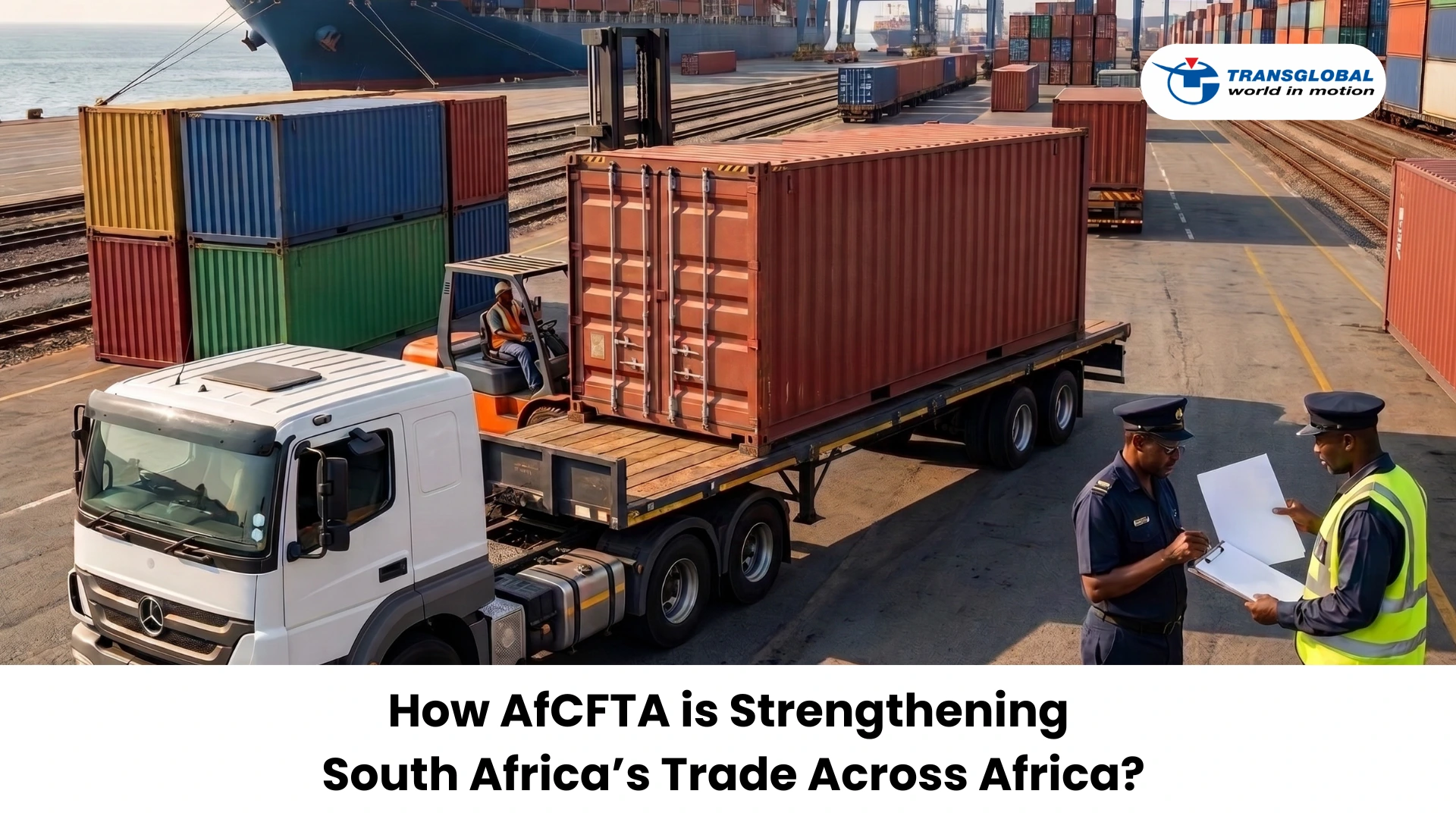
Africa’s trade landscape is changing, and South Africa is already seeing the impact.
The African Continental Free Trade Area is designed to bring together all 55 African Union member states into a common market, creating a stronger platform for trade, investment, and industrial growth across the continent.
For South Africa, this presents a major opportunity.
It opens access to new preferential markets in East, West, Central, and North Africa, while supporting smoother trade with neighbouring economies and key regional partners.
According to a recent Cabinet statement, total trade under AfCFTA preferential terms reached R2.6 billion between January 2024 and February 2026.
This includes exports and imports across mining equipment, appliances, food products, apparel, plastics, electrical machinery, and other industrial goods.
The message is clear.
👉 Intra-African trade is no longer only a long-term ambition. It is becoming a practical growth opportunity for South African businesses.
🌍 AfCFTA is Opening New Trade Opportunities for South Africa
For many years, African countries traded more with markets outside the continent than with each other.
Intra-African trade has historically remained relatively low compared with regions such as Europe and North America.
The AfCFTA is working to change that by reducing trade barriers, improving market access, and encouraging African countries to build stronger commercial relationships with one another.
For South Africa, this matters because the country already has a diversified industrial base, established manufacturing capacity, regional logistics links, and strong export potential.
Machinery, vehicles, electrical equipment, processed food products, chemicals, and industrial materials are all important categories in South Africa’s trade with the rest of Africa.
As demand grows across the continent, South African exporters have an opportunity to serve new markets with higher-value goods.
🚛 Why Logistics will Decide How Much Trade can Grow?
Trade agreements create opportunities, but logistics determines whether those opportunities can be delivered.
Moving goods across Africa requires more than a signed agreement or preferential tariff.
It depends on transport planning, customs brokerage, documentation accuracy, border coordination, warehousing, cargo security, and reliable delivery networks.
This is especially important when goods move across multiple countries before reaching the final buyer.
A shipment from South Africa into Zambia, Zimbabwe, Mozambique, Kenya, Nigeria, or other African markets may involve different road corridors, border posts, permits, documents, and regulatory checks.
If logistics systems are slow or fragmented, the benefits of preferential trade can be reduced.
That is why efficient road freight and cross-border planning are central to making AfCFTA trade commercially successful.
📦 What South Africa is Exporting Under AfCFTA?
The growth in AfCFTA trade is being supported by a diverse mix of products.
These include:
- Mining equipment
- Electrical machinery
- Appliances
- Processed foods
- Plastics
- Chemicals
- Apparel
- Industrial goods
This range shows that South Africa is not only exporting raw materials.
It is also using the agreement to strengthen value-added trade.
That is important for industrial growth because higher-value exports support manufacturing, skilled employment, supplier networks, and regional value chains.
The African Trade Report 2026 also noted that South Africa is deepening trade relationships with major African economies such as Nigeria, Egypt, Kenya, Algeria, and Ethiopia.
These markets represent important opportunities for South African businesses that can manage quality, pricing, documentation, and delivery performance consistently.
⚖️ Why Rules of Origin are Important?
One of the most important parts of AfCFTA implementation is the continued work on rules of origin.
Rules of origin determine whether a product qualifies for preferential treatment under the agreement.
This is especially important for sectors such as automotive, clothing, textiles, machinery, processed foods, and chemicals.
If rules are unclear or documentation is incomplete, exporters may struggle to access the intended benefits of preferential trade.
For logistics teams, this means documentation accuracy becomes even more important.
The practical difference between a smooth shipment and a delayed one may depend on whether product classification, origin documentation, invoices, permits, and customs declarations are properly aligned.
This is why customs compliance remains a critical part of cross-border trade growth.
🏭 Why Regional Supply Chains Need Stronger Support?
South Africa’s trade potential under AfCFTA also depends on stronger regional supply chains.
Neighbouring economies such as Zambia, Zimbabwe, and Mozambique are important because they serve as suppliers of raw materials, intermediate goods, and regional market access.
For businesses, this creates two-way trade opportunities.
South African companies can export finished goods while also sourcing inputs from neighbouring countries.
However, this depends on reliable corridors, efficient border movement, and stronger logistics infrastructure.
The role of strategic warehousing also becomes more important as businesses manage stock, consolidation, distribution, and regional delivery planning.
When warehousing, road transport, customs clearance, and cargo handling work together, companies can respond faster to market demand across Africa.
📈 The Opportunity Ahead for South African Exporters
AfCFTA is still developing, but South Africa’s early progress shows that the agreement is already creating practical trade value.
Moving from pilot shipments into more regularised preferential trade is an important step.
It shows that businesses are beginning to use the framework commercially, not just theoretically.
However, further growth will depend on more than policy.
It will require stronger industrial linkages, deeper cross-border investment, better market access for small and medium enterprises, and improved logistics performance across African trade corridors.
Understanding key border crossings is also important as more businesses explore regional export opportunities.
🚚 Conclusion: AfCFTA Growth Needs Reliable Logistics
The R2.6 billion in trade under AfCFTA preferential terms is a positive signal for South Africa.
It shows that intra-African trade can create real commercial opportunities when policy, demand, and business readiness align.
But to unlock the full value of AfCFTA, businesses need more than access to new markets.
They need dependable logistics, accurate documentation, efficient customs processes, and strong regional delivery networks.
Working with experienced freight forwarders helps businesses manage cross-border movement, customs requirements, warehousing, and regional transport planning with greater confidence.
Because AfCFTA can open the door to new African markets.
👉 But logistics will determine how successfully South African businesses move through that door.
Comments