

Fine art and museum cargo cannot be treated like ordinary freight.
A painting, sculpture, antique, cultural artefact, collector’s item, exhibition piece, or museum loan may have financial value, historical value, cultural value, or personal significance that cannot be replaced if something goes wrong.
The cargo may not be heavy. It may not look complicated from the outside. But the handling risk can be much higher than a standard shipment.
A small vibration, poor packing method, sudden temperature change, incorrect lifting point, weak crate, rough handover, or missing condition record can affect the item before it reaches the next gallery, museum, collector, auction house, or exhibition venue.
That is why fine art logistics are different.
It is not only about moving valuable cargo from one place to another. It is about protecting condition, provenance, security, documentation, timing, and accountability throughout the full journey.
Museum logistics, art transport, and specialist logistics all depend on a more controlled process than general cargo movement.
Why Fine Art Logistics Starts with the Item, Not the Route
General cargo often starts with basic shipment details.
Weight, dimensions, origin, destination, and delivery date may be enough to begin planning.
Fine art logistics start differently.
The first question is what the item is and how it must be protected.
A framed painting, bronze sculpture, ceramic piece, antique furniture item, textile, manuscript, installation piece, or museum object will not need the same packing or handling plan.
The logistics team should understand the material, age, size, fragility, value, surface sensitivity, mounting method, lifting points, and display requirements before transport is arranged.
This early assessment helps decide the crate design, packing material, handling team, vehicle type, storage conditions, insurance review, and delivery method.
For high-value and culturally sensitive cargo, high-value cargo planning helps explain why valuable items need more than standard transport arrangements.
The route matters, but it should never be chosen before the cargo is understood.
Fine art movement begins with the object itself.
How Packing and Crating Protect Fragile Artworks?
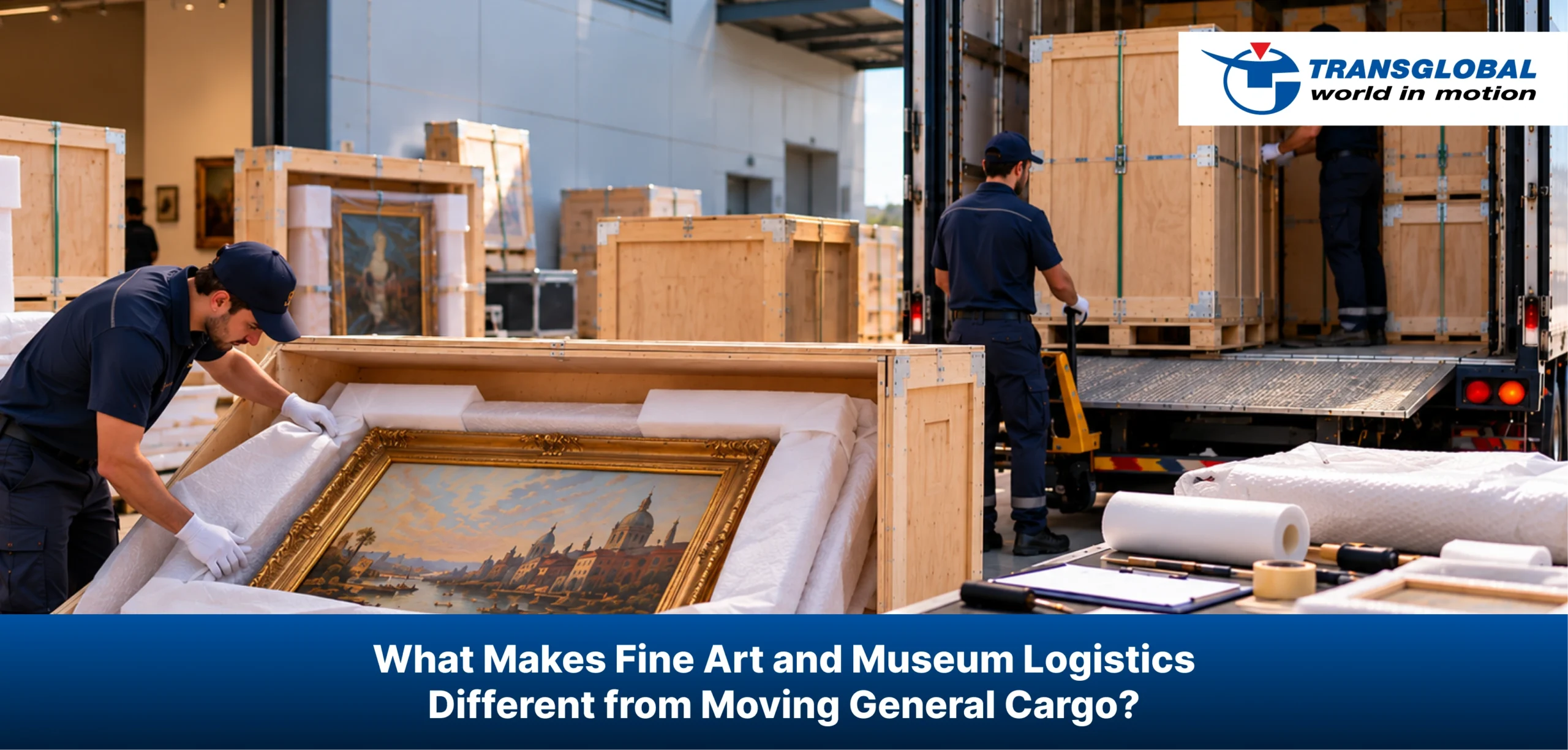
Packing is one of the most important differences between fine art logistics and general cargo.
A normal carton or pallet may be suitable for commercial goods, but artworks often need purpose-built protection.
The packing method should respond to the item’s shape, surface, age, weight, fragility, and sensitivity to movement.
A framed artwork may need corner protection, glass protection, soft wrapping, and a fitted crate. A sculpture may need internal supports and vibration control. A textile may need rolling, wrapping, or flat packing. A delicate artefact may need foam inserts and a controlled handling method.
A proper art crate is not only a box.
It is designed to reduce movement, support the item safely, and protect it during lifting, loading, transit, storage, inspection, and delivery.
Crate planning may include:
- internal cushioning,
- vibration reduction,
- moisture protection,
- handling marks,
- orientation control,
- lifting access, and
- unpacking instructions.
For museum-grade cargo, packing should also support condition checks before and after movement.
The aim is to keep the item stable from the moment it is packed until it is safely unpacked at the receiving location.
Why Condition Reports and Chain of Custody Matter?
Fine art logistics depend heavily on records.
Before an artwork or museum object moves, its condition should be documented properly.
This may include written condition notes, photographs, existing marks, surface details, frame condition, crate condition, packing method, and handover signatures.
A condition report helps protect all parties because it records the state of the item before movement begins.
Chain of custody is also important.
This means keeping a clear record of who handled the item, when it was collected, where it was stored, when it changed hands, and who received it at destination.
For fine art and museum logistics, this is not a small administrative detail.
It is part of protecting trust.
Museums, galleries, collectors, auction houses, lenders, and insurers may all need confidence that the item was handled correctly from collection to delivery.
For fine art and museum shipments, accurate shipping documentation helps keep item descriptions, values, permits, packing records, and movement instructions aligned.
General cargo may move with a delivery note.
Fine art often needs a full movement record.
How Climate, Security, and Storage Change the Logistics Plan?
Fine art and museum cargo may need controlled conditions during storage and transport.
Some items are sensitive to heat, cold, humidity, dust, light, vibration, or sudden environmental changes.
A painting may react differently from a sculpture. A paper-based item may need different protection from a metal object. A textile may need different care from an antique wooden item.
This means the logistics plan must consider where the item will wait, how long it will be stored, and what conditions it may face before delivery.
Security is another difference.
Fine art cargo may need restricted access, discreet handling, controlled storage, sealed crates, route confidentiality, or monitored movement depending on the value and sensitivity of the item.
For items that need temporary holding before exhibition, delivery, or re-export, warehousing can help manage controlled storage, cargo segregation, handling records, and dispatch preparation.
Storage should never be treated as empty waiting time.
For fine art cargo, the holding point is part of the protection plan.
Why Customs and Temporary Movement Need Specialist Review?
Fine art and museum cargo often moves for exhibitions, loans, private sales, auctions, restoration, or cultural exchange.
That can make customs planning more detailed than ordinary commercial freight.
Some artworks may be temporarily imported and later re-exported. Others may move under sale, loan, restoration, or exhibition arrangements.
The customs documents should explain the purpose of the movement clearly.
The shipment file may include invoices, valuation documents, loan agreements, exhibition letters, packing lists, permits, certificates, ownership records, insurance details, and temporary import or export references where applicable.
For fine art and museum shipments, customs brokerage helps align cargo descriptions, values, import purpose, permits, and release requirements.
This is important because the value of artwork may not always be simple to declare.
A museum object may be priceless. A collector’s item may have specialist valuation. An artwork may be moving temporarily, not being sold.
For specialist cargo, choosing the right customs broker can help avoid errors in classification, valuation, document submission, and clearance timing.
Customs handling must match the reason for the movement, not just the physical shipment.
Why Delivery and Installation Need Careful Handover?
Fine art logistics does not finish when the vehicle arrives.
The final handover may be one of the most sensitive parts of the movement.
A gallery, museum, private collection, auction house, restoration studio, or exhibition venue may have specific receiving rules.
The delivery team may need to follow access instructions, security procedures, unpacking rules, lift restrictions, delivery time slots, and room-specific placement instructions.
Some items may require specialist handlers. Others may need the presence of a curator, registrar, collector representative, or conservator during unpacking.
The delivery process may include:
- crate inspection,
- seal check,
- condition comparison,
- unpacking control,
- placement support,
- receipt confirmation, and
- handover documentation.
This is where fine art logistics separates itself from ordinary delivery.
The item must not only arrive.
It must arrive in a condition that can be accepted, displayed, stored, restored, or handed over with confidence.
Conclusion: Fine Art Logistics Protects More Than Cargo
Fine art and museum logistics is different from moving general cargo because the value is not only commercial.
The shipment may carry cultural, historical, artistic, personal, or institutional importance.
That changes the way the movement must be planned.
The item must be assessed before transport. Packing and crating must suit the object. Condition reports must be prepared. Chain of custody must be maintained. Storage conditions must be controlled. Customs documents must match the purpose of movement, and final handover must be handled carefully.
General cargo logistics focuses on moving goods efficiently.
Fine art logistics focuses on protecting condition, identity, value, and trust throughout the journey.
That is what makes the movement different.
Planning to move fine art, museum pieces, or valuable cargo? Contact us to review the item details, packing needs, documents, storage, customs process, and delivery requirements.
Move valuable cultural cargo with specialist freight forwarders who understand fine art logistics, museum logistics, art transport, and specialist logistics.
Frequently Asked Questions
What is fine art logistics?
Fine art logistics is the specialist handling, packing, transport, storage, documentation, customs coordination, and delivery of artworks, antiques, cultural objects, and museum pieces.
Why is museum logistics different from general cargo?
Museum logistics needs more control because items may be fragile, irreplaceable, culturally important, climate-sensitive, high-value, or subject to loan, exhibition, and customs requirements.
What should be checked before moving fine art?
The item type, value, condition, fragility, crate design, climate sensitivity, insurance needs, customs documents, collection point, delivery access, and handover process should be checked before movement.


Comments