

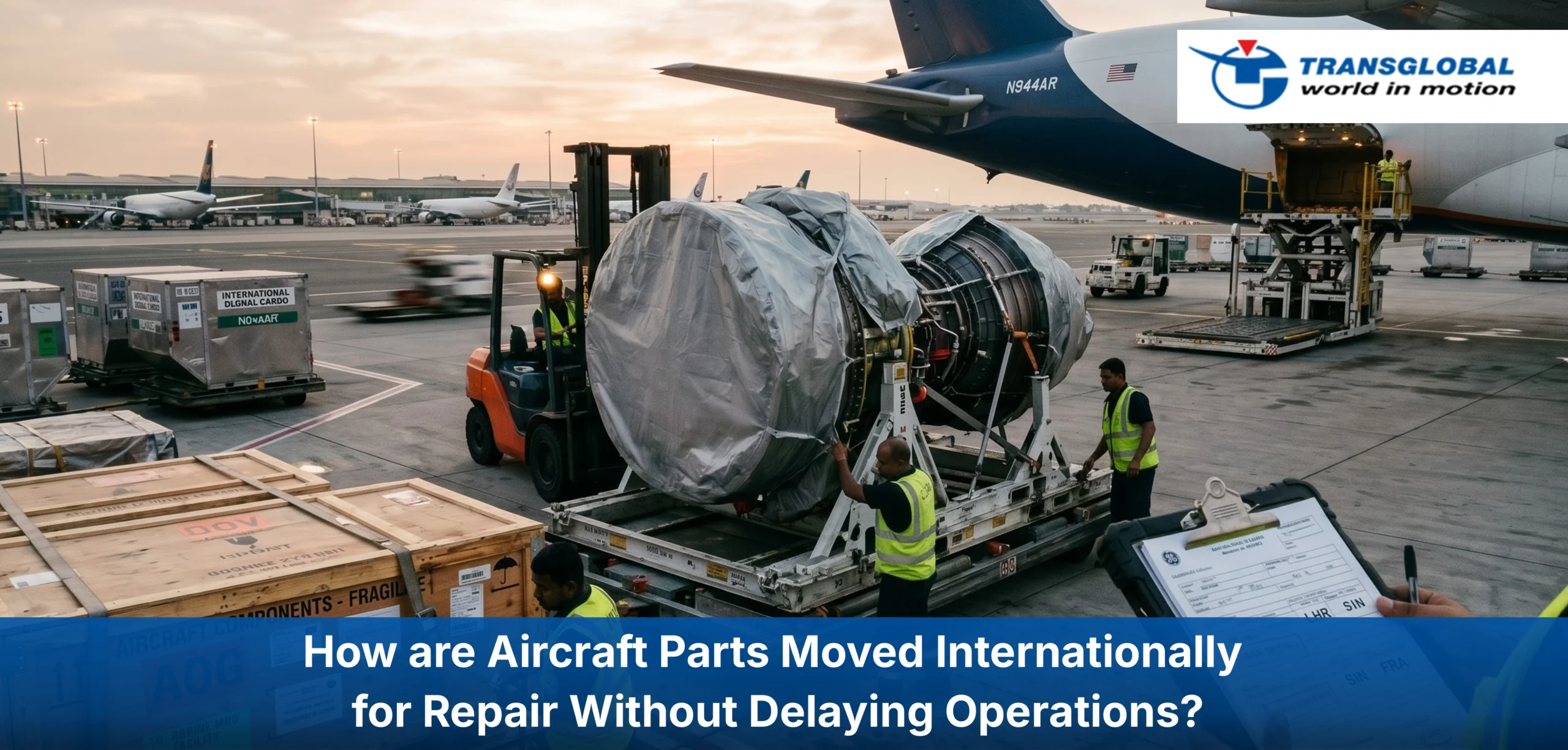
Aircraft parts are not always shipped because a new aircraft is being built.
Sometimes, a component has to leave the aircraft, move overseas for repair, and return before the operational schedule is affected further.
The part may be small. The impact may be large.
A sensor, wheel assembly, avionics unit, engine component, panel, actuator, landing gear part, or specialist aircraft item can affect maintenance planning, aircraft availability, customer commitments, and engineering timelines.
Once the part is removed, the transport process has to move with control.
The part must be identified, packed, documented, cleared, shipped, tracked, repaired, certified, and returned with the right records.
This is where aircraft parts transport becomes different from a standard air cargo booking.
The movement is not only about speed. It is about making sure the part reaches the repair facility correctly and returns with the paperwork needed for acceptance.
Why Aircraft Part Details must be Confirmed Before Dispatch?
Aircraft part movement starts with correct identification.
The logistics team needs to know exactly what is being shipped before the repair movement is arranged.
The part name, part number, serial number, manufacturer, condition, value, weight, dimensions, and repair destination should be confirmed early.
These details help the carrier, customs team, repair facility, insurer, and receiving engineer understand the shipment.
A part removed from service may also need supporting records.
These may include removal notes, condition reports, photos, repair instructions, certificate references, warranty details, or engineering documents.
The part may be urgent, but urgency does not replace accuracy.
If the serial number, part number, or description is unclear, the repair facility may need clarification before intake. Customs may also need to understand whether the item is being sold, temporarily exported, repaired, or returned.
For time-sensitive aviation movements, air freight planning helps match the shipment with the right carrier, route, transit time, and handling requirement.
When the part is identified properly before dispatch, the repair movement begins with fewer avoidable questions.
How Packing Protects the Part During International Movement?
Aircraft parts can be sensitive outside their normal operating environment.
A component built for aircraft use may still need careful protection when it is removed, handled, packed, and shipped.
The packing method should match the part.
Avionics may need anti-static protection. Instruments may need cushioning. Engine components may need strong external support. Panels may need surface protection. Wheels, brakes, sensors, actuators, and interior components may each need a different packing method.
The part should be protected from vibration, moisture, pressure, impact, and handling contact.
Some items may need foam inserts, sealed bags, moisture barriers, desiccants, reinforced cartons, crates, or custom supports.
Photos before and after packing can also support the shipment record.
For aircraft parts moving internationally, packing is not only about appearance. It helps protect the repair timeline, technical condition, and receiving process.
If the part arrives in a condition suitable for inspection, the repair facility can move faster into assessment, repair, testing, or certification.
Good packing helps the shipment support the maintenance schedule instead of adding pressure to it.
Why Repair Documents must Support the Full Journey?
A repair shipment is different from a normal export.
The part may leave the country temporarily, move to an approved repair facility, and return after repair, overhaul, calibration, testing, or warranty work.
The documents should explain that full journey.
The invoice or pro forma invoice, packing list, airway bill, repair instruction, part number, serial number, value declaration, export reason, and return plan should all support the same purpose.
If the movement is repair and return, the documents should show that clearly.
This helps customs, carriers, repair teams, and receiving engineers understand that the part is not simply being sold as a normal commercial export.
Accurate shipping documents help connect the physical part with the commercial and technical records behind it.
For aviation items, serial numbers are especially important.
They help confirm that the same component sent for repair is the component being returned.
A clear document trail supports the shipment from removal to dispatch, repair facility intake, return booking, customs clearance, and final delivery.
How Customs Review Affects Repair and Return Movements?
Aircraft parts may be reviewed by customs at both export and return stages.
The shipment may leave one country, enter another for repair, and come back after the work is completed.
Each stage may require the correct classification, value, reason for export, repair evidence, and supporting documents.
For repair shipments, clearance review must show whether the part is being repaired, returned, temporarily moved, replaced, or handled under warranty.
The declared value also needs care.
Even when the part is not being sold, customs may still require a value for assessment, insurance, or statistical purposes.
Some aircraft parts may also be controlled depending on their use, material, origin, technology, or destination.
This is why early review matters before dispatch.
The cargo owner should confirm whether technical descriptions, permits, repair confirmations, or end-use details are needed.
For parts linked to defence, tactical, or sensitive aviation use, defence cargo requirements may also influence documentation, routing, security, and approval checks.
A well-prepared customs file helps the repair shipment move through each border point with better control.
Why Return Planning Starts Before the Part Leaves?
The repair movement does not end when the part reaches the overseas facility.
The return should be planned before the first shipment leaves origin.
The repair facility may need to issue repair reports, test certificates, release notes, calibration records, repair invoices, or return packing details.
If the part is returned after repair, the return documents should connect back to the original export record.
This may include the original airway bill, export entry, serial number, repair reference, and value details.
If the part is replaced, modified, recalibrated, or upgraded, the return record may need to explain that change.
For aircraft parts that are dangerous goods, such as certain batteries or components with restricted contents, cargo aircraft rules may also affect carrier acceptance and routing.
Return planning helps prevent the repair process from becoming disconnected from the logistics process.
It gives the cargo owner, repair facility, customs team, and receiving engineer a clearer plan for bringing the part back into the operation.
Conclusion: Aircraft Repair Shipments Need Planning From Removal to Return
Aircraft parts sent overseas for repair need more than a fast booking.
The part must be identified correctly, packed safely, documented clearly, cleared properly, delivered to the repair facility, and returned with the right records.
Each stage affects the next.
If the part number is unclear, the repair facility may need clarification. If the document trail is incomplete, customs may ask for more information. If the return plan is not prepared early, the repaired part may take longer to come back into use.
For aviation teams, the goal is to protect both the component and the operational timeline behind it.
Planning to send aircraft parts overseas for repair? Contact us to review the part details, packing needs, customs process, and return movement before dispatch.
Move aviation components with expert freight forwarders who understand aircraft parts transport, repair shipments, customs coordination, and return logistics.
Frequently Asked Questions
What details are needed before shipping aircraft parts?
The part name, part number, serial number, value, dimensions, weight, repair destination, condition, and technical records should be confirmed before dispatch.
Why is documentation important for repair shipments?
Documentation explains whether the part is being exported for repair, returned after repair, temporarily moved, replaced, or handled under warranty.
How should aircraft parts be packed?
Aircraft parts should be packed based on sensitivity, value, moisture risk, vibration exposure, handling needs, and repair facility requirements.



Comments