

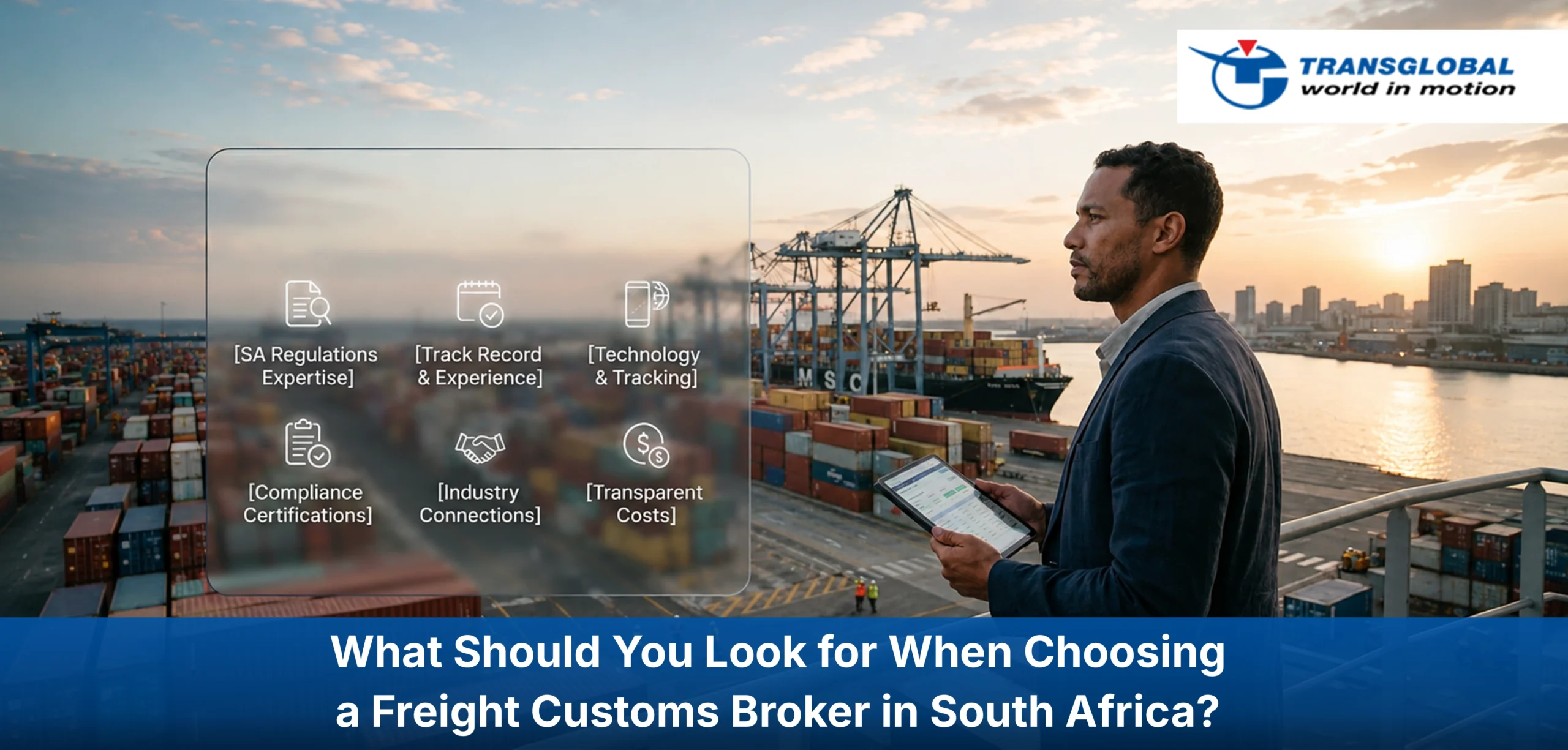
A shipment can travel thousands of kilometers across sea, air, and road networks without a problem, only to get stuck at customs because of one incorrect declaration.
That is the reality many importers and exporters face every day.
In South Africa, customs clearance is no longer just a paperwork process. It has become a critical operational checkpoint that directly affects cargo movement, delivery timelines, compliance exposure, and overall supply chain cost.
For businesses moving cargo internationally, choosing the right freight customs broker is no longer optional. It is one of the most important logistics decisions you can make.
Because the difference between smooth customs clearance and expensive cargo delays often comes down to the expertise of the broker handling your shipment.
Why Customs Brokerage Matters More than Ever in South Africa?
South Africa remains one of Africa’s most important trade gateways, connecting regional and global supply chains through major ports, airports, and road freight corridors.
But customs operations are becoming increasingly complex.
Importers today are dealing with:
- Stricter customs verification systems
- Increased compliance checks
- Changing trade regulations
- Rising inspections for high-risk cargo
- Greater scrutiny on valuations and HS codes
- Delays caused by incomplete documentation
At the same time, customs authorities are using more digital verification tools, making declaration accuracy more important than ever before.
This means businesses need customs brokers who do more than simply submit entries. They need logistics partners who understand compliance, cargo classification, and operational risk management.
Why Experience Matters in Customs Clearance?
One of the first things businesses should evaluate is the broker’s industry experience.
Customs clearance is not standardized across every cargo type. Different commodities come with different requirements, duties, permits, and regulatory expectations.
For example, clearing:
- Standard consumer goods
is very different from handling - Dangerous goods
- Hazardous materials
- Explosives
- Military cargo
- Defence equipment
- Armaments logistics
- Specialized project cargo
A broker without experience in regulated cargo may overlook critical compliance requirements, creating delays, penalties, or cargo holds.
Experienced customs brokers understand how to manage both documentation accuracy and operational coordination across complex shipments.
Why Customs Compliance Expertise Is Critical?
Modern customs brokerage is heavily compliance-driven.
Authorities expect brokers to manage:
- Accurate HS code classification
- Proper customs valuation
- Duty and tax calculations
- Import permits and certificates
- Dangerous goods declarations
- Country-of-origin verification
- Trade agreement compliance
Even small declaration errors can trigger inspections or shipment rejection.
This is particularly important in South Africa, where customs authorities are placing greater focus on fraud prevention, undervaluation checks, and high-risk cargo monitoring.
Businesses should therefore choose brokers with strong compliance processes rather than focusing only on speed or pricing.
Why Multi-Modal Logistics Knowledge Makes a Difference?
Today’s shipments rarely move through one transport mode only.
Cargo may move through:
- Sea freight
- Air freight
- Road freight
- Cross-border inland transport
A strong customs broker understands how documentation and compliance requirements differ across these logistics environments.
For example:
- Air freight requires rapid customs coordination due to tight timelines
- Sea freight involves port handling, container management, and longer customs cycles
- Road freight across African borders often requires regional compliance coordination
Without an integrated logistics understanding, customs delays can quickly impact the entire shipment journey.
Why Visibility and Communication are Essential?
Many importers only discover customs issues after the cargo has already been delayed.
That usually happens when communication between the customs broker, freight forwarder, shipping line, and importer is weak.
A reliable customs broker should provide:
- Real-time shipment updates
- Early identification of compliance issues
- Proactive customs planning
- Clear documentation guidance
- Transparency around duties and charges
Businesses today need visibility, not surprises.
This becomes even more important when moving time-sensitive cargo or operating under strict inventory schedules.
How Technology is Changing Customs Brokerage?
Customs clearance is becoming increasingly digital.
Modern customs brokers now rely on systems that support:
- Digital customs submissions
- Automated compliance checks
- Cargo visibility tracking
- Electronic document management
- Shipment status monitoring
Technology improves speed, but it also increases the importance of data accuracy.
Incorrect digital declarations can trigger customs holds immediately through automated verification systems.
Businesses should therefore work with brokers who combine strong digital systems with real operational expertise.
Why Specialized Cargo Requires Specialized Customs Expertise?
Certain cargo categories require much higher levels of customs and compliance management.
This includes:
- Dangerous goods
- Hazardous materials
- Explosives logistics
- Military and defence cargo
- Armaments transport
- Oversized project cargo
These shipments often require:
- Additional permits
- Security approvals
- Specialized declarations
- Regulatory coordination
- Strict packaging and labeling compliance
Choosing a customs broker without specialized cargo expertise can create major operational and legal risk.
Why Cost Alone should Not Determine Your Broker Choice?
Many businesses choose customs brokers based purely on low clearing fees.
But customs mistakes often cost significantly more than broker service charges.
Poor customs management can lead to:
- Cargo storage costs
- Port demurrage
- Customs penalties
- Shipment delays
- Supply chain disruption
- Lost customer commitments
The cheapest customs solution often becomes the most expensive operationally.
This is why businesses increasingly prioritize reliability, compliance expertise, and operational visibility over low-cost processing alone.
Transglobal’s Role Goes Beyond Customs Clearance
At Transglobal, customs brokerage is treated as part of a larger logistics strategy, not just document submission.
Whether supporting sea freight, air freight, or road freight operations, the focus remains on helping businesses move cargo smoothly while reducing compliance risk.
The team works proactively to:
- Review customs documentation thoroughly
- Ensure accurate cargo classification
- Coordinate permits and compliance requirements
- Align customs processes with freight operations
- Reduce customs delays and operational exposure
For specialized cargo such as dangerous goods, hazardous materials, explosives, military logistics, defence cargo, and armaments transport, this level of planning becomes even more critical.
Every shipment is managed with strong attention to compliance, visibility, operational coordination, and risk reduction across the supply chain.
Why the Right Customs Broker Creates Long-Term Business Value?
Customs clearance affects much more than shipment release.
It directly impacts:
- Delivery timelines
- Freight cost control
- Inventory availability
- Customer satisfaction
- Supply chain reliability
Businesses that work with experienced customs brokers reduce operational disruption and improve logistics performance over time.
In today’s environment, customs expertise is becoming a competitive advantage.
Conclusion
Modern customs brokerage requires far more than processing paperwork.
It requires compliance expertise, operational coordination, visibility, and the ability to manage increasingly complex global trade requirements.
For businesses importing into or exporting from South Africa, choosing the right customs broker can significantly affect supply chain performance, cargo reliability, and long-term logistics success.If your business requires reliable customs clearance across sea freight, air freight, road freight, or specialized cargo movements, partner with a freight and customs expert who understands logistics beyond documentation. Contact our team that delivers secure, compliant, and strategically managed logistics solutions across every stage of global trade.
Frequently Asked Questions
What does a freight customs broker do?
A customs broker manages customs declarations, compliance documentation, duty calculations, and cargo clearance processes for imports and exports.
Why is customs compliance important in South Africa?
Incorrect declarations or missing documentation can cause delays, penalties, cargo holds, and operational disruption.
Should I use a customs broker for dangerous goods or defence cargo?
Yes. Specialized cargo such as dangerous goods, explosives, and defence equipment requires experienced customs and compliance expertise.
Comments