

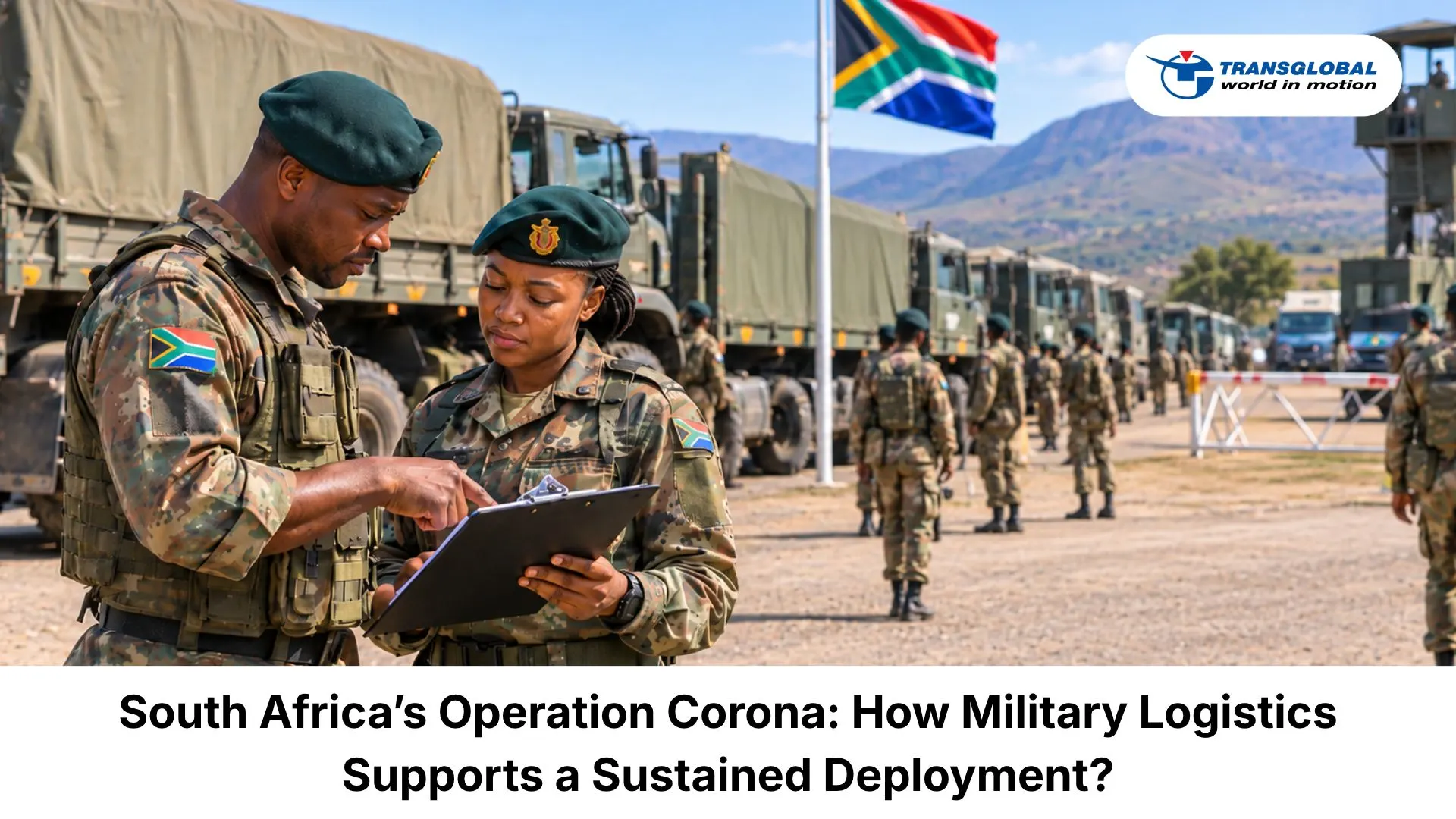
The South African National Defence Force’s October update on Operation Corona reported the recovery of stolen vehicles worth approximately R3.9 million during border safeguarding activities. The update offers a starting point for a wider look at the work that supports a deployment over time.
DefenceWeb published the figures on 10 November. The report covered October’s border safeguarding activity, including the seizure of contraband valued at approximately R9 million.
In military logistics, that work is called sustainment. It covers the supplies, maintenance and services needed to keep people and equipment supported for the duration of an operation. It begins with planning and continues as equipment is used, serviced and returned to service.
👉 The first delivery gets equipment into use. The supply chain behind it helps keep it available.
What Sustainment Means for a Long-Running Deployment?
An initial deployment has a defined starting point. Sustainment continues through a series of handovers between the organisations that hold stock, move freight, maintain equipment and receive supplies.
Over time, equipment needs servicing, consumables need replacing and some items have to be repaired or returned. Each requirement has a different lead time, depending on whether stock is available locally or must come from a supplier elsewhere.
This is why logistics coordination matters across the life of a deployment. A supplier may confirm that a part is ready for dispatch, while the receiving team still needs to know when it will arrive and whether it can be put into use on receipt.
🔧 A Replacement Part has a Journey of its Own
A replacement part can be physically small and still take several organisations to deliver. The supplier needs to identify the right item, the transport team needs to know how it can be carried, and the receiving team needs to match it to the maintenance requirement.
Some components also travel in the opposite direction. An item sent away for repair may have to be collected from a workshop and returned to the organisation that owns it. In aircraft parts transport, for example, the outbound and return movements are part of the same maintenance cycle.
That cycle continues after delivery. A part may still need to be inspected, fitted or entered into stock records before the maintenance team can use it.
🚚 Transport Choices Follow the Cargo and Its Deadline
Transport planning brings together two questions. When is the item needed, and which freight option can accommodate it?
For some time-sensitive components, air freight can shorten the international transport leg. Larger consignments may suit an ocean service where the schedule allows, while road transport often connects suppliers, terminals, storage facilities and the final receiving point.
The useful comparison is the time from collection to handover. Carrier acceptance, handling, customs processing where applicable and inland delivery can all affect the arrival date. A shorter flight or sailing therefore tells only part of the story.
📋 Documentation Matters at Every Handover
A consignment can pass between suppliers, carriers, storage providers and receiving teams. Each needs accurate information about what it contains and who should receive it.
For international shipments, customs clearance depends on the commercial and transport records for the goods being moved. Some items have additional handling or approval requirements, depending on their classification and the countries involved.
A procurement team may track an item by order number, a carrier by shipment reference and a workshop by part number. Linking those records gives each team a common way to confirm which item has arrived.
The same care matters on receipt. A clear handover record helps the receiving team reconcile the delivery with the purchase or repair order and identify any discrepancies while the information is still easy to verify.
📦 Delivery Ends With Equipment or Stock Ready for Use
A freight update may show that a consignment has arrived. For the team waiting for it, the next question is whether the item is ready to issue, install or return to stock.
That makes visibility useful after transport ends. A delivery can be recorded while an item is still waiting for inspection. A returned component may arrive at a warehouse while the workshop that requested it is expecting it elsewhere. Clear ownership at each handover helps teams distinguish these statuses and know who is responsible for the next step.
For freight teams, the same distinction applies to repair returns and other specialist shipments.
🚚 Conclusion: Sustainment Continues Between Deliveries
Operation Corona’s October update offers a South African starting point for understanding the long-term work behind a deployment. Sustainment connects procurement, freight, inventory and maintenance so that equipment and supplies can be used when required.
For organisations moving specialised equipment, specialist freight forwarders can help coordinate the transport, documentation and handovers that connect suppliers with receiving teams. The measure of a well-coordinated shipment is what the receiving team can do with it once it arrives.

Comments