

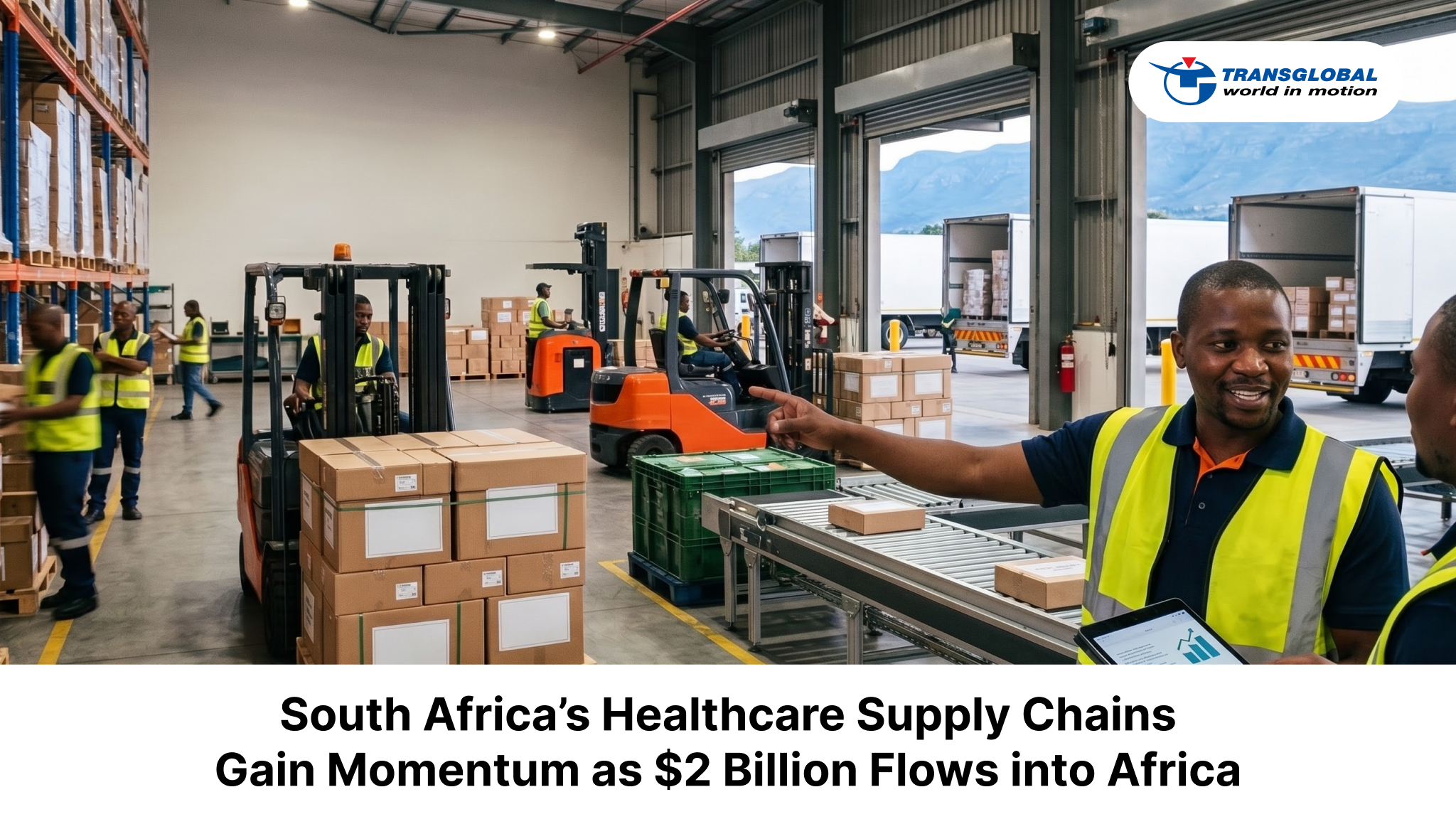
Africa’s healthcare trade is entering a new phase, and South Africa is becoming an important part of that shift.
With more than R33 billion, or around USD 2 billion, in new healthcare investment flowing into African markets, demand for reliable medical manufacturing, distribution, procurement, and logistics capacity is growing across the continent.
At the same time, the African Continental Free Trade Area is reshaping how African countries buy, move, and distribute essential healthcare products.
The African Pooled Procurement Mechanism is also moving from policy discussion to practical implementation, creating a stronger framework for African countries to buy priority health products through coordinated demand and long-term supply planning.
For South African manufacturers, distributors, healthcare suppliers, and logistics providers, this creates a major opportunity.
The message is clear.
👉 Healthcare supply chains are no longer only about product availability. They are becoming central to Africa’s health security, trade growth, and regional industrial development.
🌍 Africa is Building Stronger Healthcare Procurement Systems
The African Pooled Procurement Mechanism is designed to help African countries buy essential healthcare products more efficiently.
Instead of each country purchasing separately, pooled procurement allows demand to be combined across multiple markets.
This can support better pricing, stronger supplier planning, and more predictable access to critical products.
In 2026, the APPM moved further into implementation, with the Africa CDC completing its first tender across 10 African Union member states.
The results showed the potential of coordinated buying, with lower prices reported across several products and African manufacturers involved in half of the tendered categories.
This is important because healthcare procurement is not only about buying products.
It is about building reliable systems that can support hospitals, laboratories, clinics, distributors, and patients across the continent.
🏭 South Africa’s Manufacturing Role is becoming More Strategic
South Africa already plays a strong role in Africa’s healthcare economy.
The country has established manufacturers, distributors, medical device suppliers, private hospital networks, public procurement systems, and regulatory experience.
This gives South Africa an advantage as African countries look for suppliers that can support healthcare needs at scale.
Under AfCFTA and the AfCFTA-anchored Pharmaceutical Initiative, African health spending is being directed more strongly towards local and regional supply chains.
This supports the idea of buying from African-based manufacturers and distributors where possible.
For South Africa, this creates opportunities in medical devices, diagnostics, laboratory products, healthcare equipment, consumables, pharmaceuticals, and related services.
However, manufacturing strength alone is not enough.
To serve African markets effectively, products must also move through reliable transport, storage, documentation, and delivery networks.
🚛 Logistics will Decide How Healthcare Trade Performs
Healthcare products often move across long and complex supply chains.
They may pass through manufacturers, distributors, ports, customs authorities, warehouses, hospitals, laboratories, and regional buyers before reaching the final user.
Each stage matters.
A delay, documentation error, storage failure, or distribution breakdown can affect product availability and patient care.
That is why logistics must be treated as part of healthcare performance, not just a supporting service.
Cross-border movement depends on accurate customs brokerage, correct product classification, compliant documentation, and efficient release processes.
For regional distribution into SADC and beyond, dependable road freight also becomes essential.
If healthcare products cannot move reliably from South Africa into neighbouring and continental markets, the full value of AfCFTA and pooled procurement will be harder to realise.
📦 Warehousing Supports Healthcare Supply Chain Reliability
Healthcare supply chains also depend heavily on proper storage and stock control.
Medical devices, diagnostics, laboratory products, consumables, and healthcare equipment must be stored, handled, and released carefully.
For some products, the requirements may include security, traceability, segregation, temperature awareness, documentation control, and careful inventory planning.
This is where warehousing becomes more than storage space.
It becomes part of supply chain reliability.
Strong warehousing supports stock visibility, product protection, order readiness, consolidation, and timely distribution.
For hospitals and laboratories, this can influence whether essential products are available when needed.
As South Africa’s role in African healthcare trade expands, warehouse standards and distribution planning will become increasingly important.
⚖️ Regulation and Quality Standards cannot be Ignored
Healthcare trade requires trust.
African facilities buying from African-based manufacturers and distributors need confidence that products meet the right regulatory, safety, and quality standards.
This is especially important for medical devices, diagnostics, laboratory products, pharmaceuticals, and other regulated healthcare cargo.
AfCFTA, the African Medicines Agency, and APPM are all part of a wider effort to improve health sovereignty, reduce costs, and strengthen reliable African supply.
However, stronger trade frameworks must be supported by practical compliance.
Products must be correctly documented, safely handled, traceable, and moved through credible supply chains.
The same principle applies across other regulated cargo sectors, where customs compliance can directly affect clearance, delivery, and supply continuity.
For healthcare products, compliance is not only about avoiding delays.
It is about protecting quality, safety, and access.
🌐 Johannesburg’s Role as a Healthcare Supply Chain Hub
Johannesburg is positioned as one of Southern Africa’s key centres for healthcare procurement, finance, manufacturing coordination, and distribution.
The city connects major business headquarters, distributors, logistics providers, healthcare buyers, and investment decision-makers.
This gives South Africa a practical role as a gateway for healthcare trade into Southern Africa and wider African markets.
Its value lies not only in import volume.
It lies in the combination of regulation, procurement systems, distribution networks, logistics expertise, engineering support, warehousing capacity, and regional connectivity.
As healthcare investment grows, this ecosystem can help African buyers access products, technical support, after-sales service, and cross-border distribution more effectively.
🚚 Conclusion: Healthcare Growth Depends on Reliable Movement
South Africa’s growing role in African healthcare supply chains is an important development.
AfCFTA, APPM, pooled procurement, healthcare investment, and regional manufacturing are creating new opportunities for African-based suppliers.
But the success of this shift will depend on more than investment and procurement policy.
It will depend on whether healthcare products can move safely, reliably, and compliantly across borders and into the facilities that need them.
For manufacturers, distributors, and healthcare suppliers, working with the leading freight forwarders becomes part of building supply chains that can support quality, access, and long-term regional growth.
Because healthcare logistics does not only move products.
👉 It helps strengthen the systems that protect patients, support providers, and build Africa’s health security.

Comments