

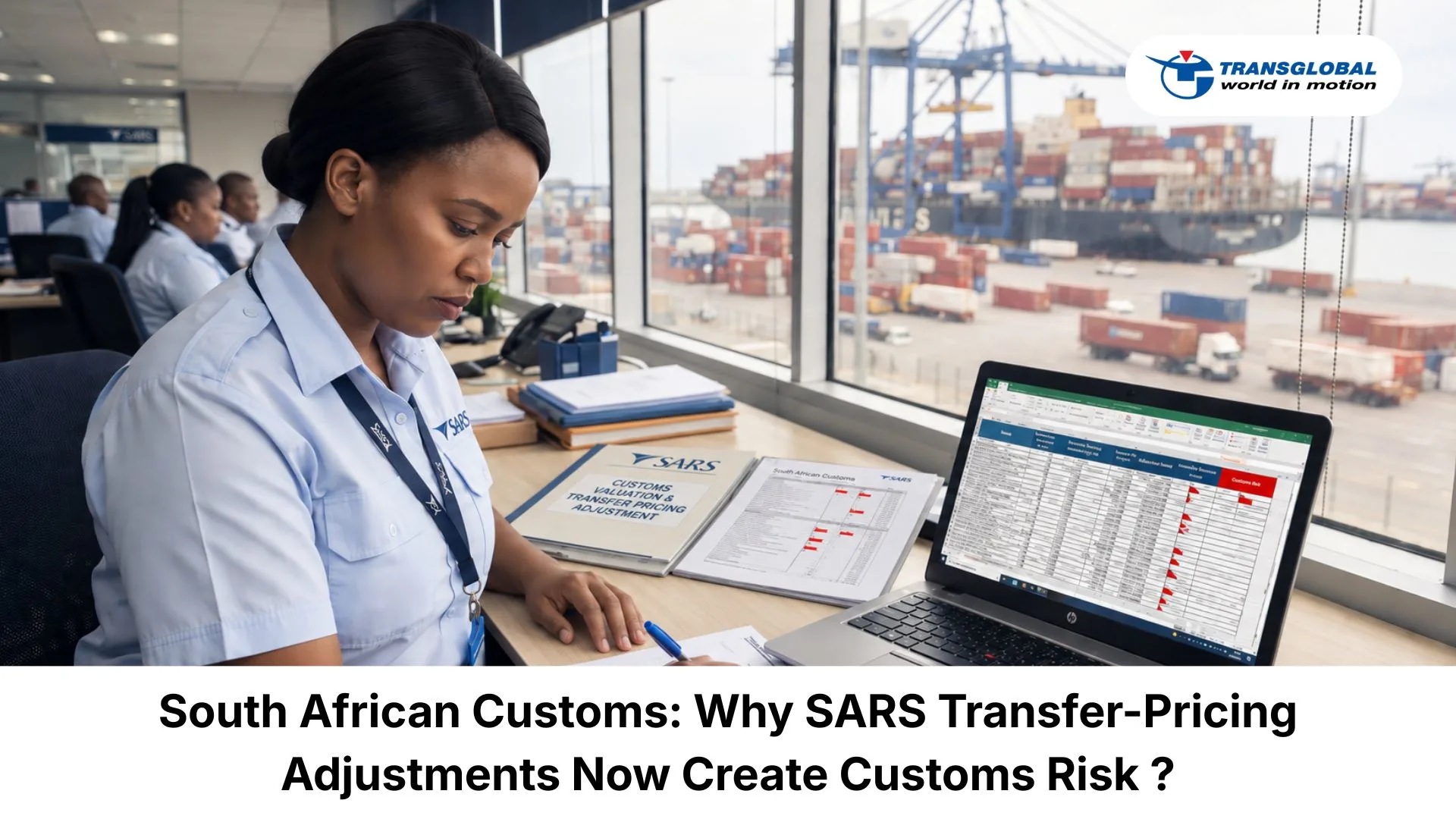
South African importers that buy goods from related overseas parties now face a more detailed customs correction process when transfer-pricing adjustments change the declared value of imported goods.
The new SARS rules, effective from 14 September, prescribe how affected importers must amend bills of entry when a transfer-pricing adjustment changes the customs value originally declared at import.
This is the core of the update.
If a year-end or interim transfer-pricing adjustment changes the price of imported goods, the importer may need to notify SARS, submit amended commercial documents, calculate the customs impact, and correct the affected entries.
That can affect customs duty, VAT, refunds, penalties, and future audit exposure.
This is especially relevant for multinational enterprises importing goods from group companies, related suppliers, or connected overseas entities.
The issue is not only tax accounting.
It is also a customs valuation.
The message is clear.
👉 Importers can no longer treat transfer-pricing adjustments as only a finance matter. They may also create customs compliance obligations.
📄 What has Changed Under the New SARS Rules
The amended Customs and Excise Act rules set out a specific process for importers affected by transfer-pricing adjustments.
When an adjustment changes the declared customs value of imported goods, the importer must notify SARS and submit the relevant amended invoice, debit note, or credit note.
The importer must then obtain the latest data relating to the affected bills of entry from SARS’ Trade Statistics department.
Within 30 calendar days of submitting the notification, the importer must provide SARS with a completed Customs Value Adjustment Calculation spreadsheet, known as the CVAC, together with supporting documents.
This means importers need to identify which import entries are affected, calculate the customs impact, and submit the required information within a defined timeline.
🧾 The CVAC Must Show the Customs Impact
The CVAC is not a general finance summary.
It must show how the transfer-pricing adjustment affects the customs value, duty, and VAT payable on each affected bill of entry.
That level of detail matters.
SARS wants to see the link between the transfer-pricing adjustment and the original import entries.
The required supporting documents include the applicable transfer-pricing policy and calculation, as well as signed annual financial statements.
Depending on the circumstances, SARS may also require purchase and sale agreements, distribution agreements, segmented financial data, and royalty or licence agreements.
For importers, this means customs, finance, tax, procurement, and logistics teams may need to work together more closely.
The customs entry cannot be reviewed in isolation from the commercial and financial documents behind the transaction.
⚖️ Duty, VAT and Refunds Must be Handled Correctly
Where the adjustment results in additional duty and VAT being payable, the importer must settle the amount within 14 days of receiving written confirmation that SARS has accepted the CVAC.
Payment must be made through a Customs and Excise Billing Declaration, or CEB01.
Where the adjustment results in a refund, the importer must submit a voucher of correction for each affected bill of entry.
This makes record accuracy important.
An importer must be able to trace the affected entries, confirm the adjusted values, calculate the customs impact, and complete the correction process correctly.
It also means businesses cannot leave year-end transfer-pricing adjustments sitting only with the finance team.
If those adjustments affect imported goods, the customs position may need to be corrected too.
🚢 Import Documentation Needs Stronger Alignment
Customs valuation is one of the areas where SARS continues to apply closer scrutiny.
The source report notes that customs and trade specialist Clifford Evans linked the new procedure to a wider enforcement focus on customs valuation, tariff classification, and country of origin.
That is important for importers because all three areas can affect duty, VAT, release, audit findings, and penalties.
Accurate customs clearance depends on more than submitting documents at the time of entry.
It also depends on whether the declared value, tariff code, origin, invoice details, and commercial terms remain supportable if SARS reviews the shipment later.
For multinational importers, transfer pricing adds another layer because the value may change after the goods have already entered South Africa.
📦 Warehousing Entries Need Separate Treatment
The amended rules also make an important distinction for warehousing bills of entry.
Bills of entry for warehousing may not be included in the CVAC.
They must be amended through a separate process prescribed under the Act.
This matters because businesses importing goods into bonded or warehousing arrangements cannot assume every entry follows the same correction route.
The correct process depends on the type of bill of entry and the customs treatment applied to the goods.
For importers using storage, bonded movement, or staged release models, the customs process must be checked carefully before any adjustment is submitted.
🔍 SARS Acceptance Does Not Remove Audit Risk
One of the most important points in the update is that SARS acceptance of a CVAC does not protect an importer from later audit findings, fines, or penalties under the Customs and Excise Act.
That means acceptance of the calculation is not the same as full protection from future review.
SARS can still audit the importer and raise questions later.
This is why importers need to keep complete records and ensure that the adjustment is supported by proper commercial, financial, and customs documentation.
The same principle applies across other areas of customs compliance, where incomplete or inconsistent information can create delays, queries, and exposure long after cargo has moved.
🌐 Why This Matters for Importers and Supply Chains
For importers, the new rules create a practical compliance responsibility.
If transfer-pricing adjustments are made during the year or at year-end, businesses need to ask whether the customs values declared on previous import entries are still correct.
This is especially important for multinational enterprises importing from related parties.
A price adjustment may be made for tax, accounting, or group policy reasons, but it can still affect the customs value declared to SARS.
If this is missed, the importer may face unpaid duty and VAT exposure, refund complications, correction delays, audit findings, or penalties.
For supply chains, the lesson is simple.
Customs compliance does not end when the goods are released.
Some obligations continue after import, especially when commercial values are adjusted later.
🚚 Conclusion: Customs Value Must Match the Commercial Reality
The new SARS rules show that customs valuation is becoming a more active compliance area for South African importers.
Transfer-pricing adjustments are not only internal accounting entries.
When they change the value of imported goods, they may also require customs corrections, supporting documents, calculations, payment, refund claims or vouchers of correction.
For importers working with related overseas suppliers, the key is to identify affected entries early and ensure that finance, tax, customs and logistics teams are aligned.
This is where customs knowledge and freight forwarding experience need to work together.
The shipment may have already been cleared, delivered and accounted for, but if the commercial value changes later, the customs position may still need to be corrected.
Working with a specialist freight forwarder helps importers manage customs documentation, shipment records and clearance requirements with stronger operational control.
For importers, the practical lesson is clear.
Customs compliance does not stop when cargo is released.
👉 It continues wherever value, duty, VAT and documentation still need to match.

Comments