

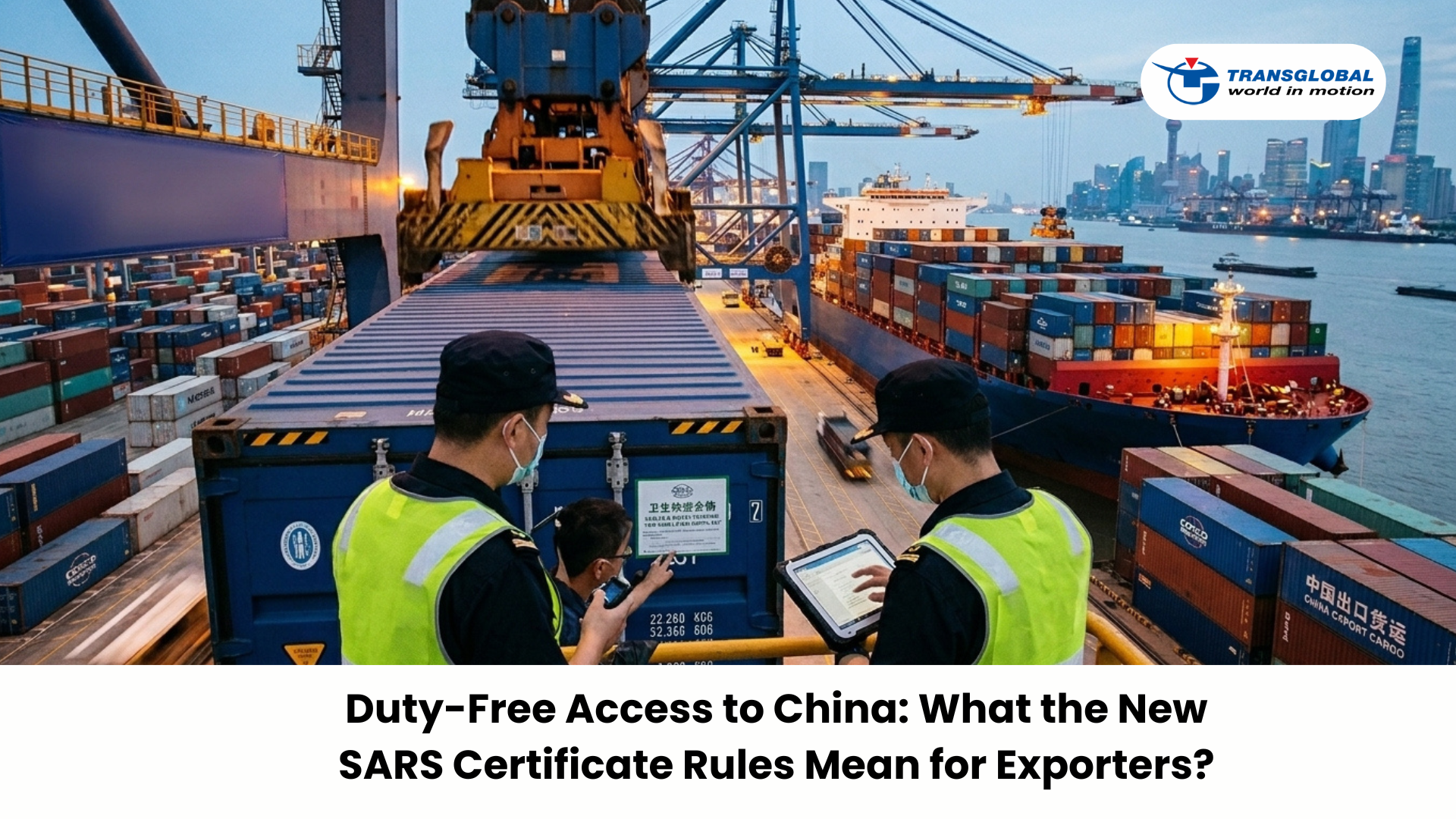
South Africa’s export sector has received a major opportunity, but also a new layer of compliance responsibility.
Following China’s zero-tariff trade framework for selected African countries, the South African Revenue Service (SARS) has now officially clarified how exporters can access the benefits under the new system. With implementation now fully active from 1 June 2026, businesses trading with China are being urged to understand the updated Rules of Origin requirements before shipping cargo.
For exporters, freight forwarders, manufacturers, and logistics providers, this development could significantly reshape trade opportunities between South Africa and China over the next two years.
But while the removal of tariffs creates exciting potential, access to those benefits will depend entirely on one thing:
👉 Proper compliance and documentation.
🌍 Why does this Matter for Global Trade?
China’s temporary zero-tariff framework applies to 20 African countries with diplomatic relations with China and is expected to run until 30 April 2028.
The initiative forms part of China’s broader strategy to strengthen trade relationships with African economies and improve market access for qualifying exports.
For South African exporters, this could create opportunities across industries such as:
🚜 Agriculture and fresh produce
🏭 Manufacturing
🧵 Textiles and industrial products
🪨 Minerals and processed materials
At a time when global trade remains under pressure from geopolitical tensions, supply chain disruptions, and fluctuating freight costs, reduced tariff exposure could provide South African exporters with a stronger competitive position in the Chinese market.
📦 What has Changed from 1 June 2026?
SARS has now finalised the legal and operational framework required to administer the zero-tariff scheme.
The key development is the introduction of a new Rules of Origin certificate system, which exporters must use to qualify for duty-free treatment in China.
From 1 June onwards:
- SARS officially issues Rules of Origin certificates
- China’s customs authorities will recognise the new certificates
- Qualifying exports can receive zero-tariff treatment
Importantly, SARS also confirmed that exporters who have already shipped goods after 1 May 2026 will not lose out.
👉 Certificates can now be issued retrospectively for qualifying cargo already in transit or cleared after May 1.
This retroactive access provides important relief for businesses that moved cargo during the implementation transition period.
⚠️ The Important Catch: Not Every Shipment Qualifies
While the headline around “zero tariffs” has generated excitement, exporters should understand that not all products automatically qualify.
Eligibility depends on:
📋 Meeting Rules of Origin requirements
📄 Providing valid SARS-issued certificates
📦 Correct cargo classification
🏷️ Proper supporting documentation
Some goods remain subject to quotas, conditions, or separate tariff treatment.
This means exporters cannot simply assume cargo will enter China duty-free.
👉 Compliance accuracy will determine whether businesses actually benefit from the scheme.
🚢 Why are Rules of Origin Becoming More Important Globally?
The focus on Rules of Origin reflects a broader shift happening across international trade.
As governments strengthen trade agreements and tariff frameworks, customs authorities worldwide are placing greater emphasis on:
- Product traceability
- Manufacturing origin verification
- Supply chain transparency
- Accurate export documentation
In simple terms, countries increasingly want proof of where goods truly come from before granting trade benefits.
This is especially important in sectors where goods may pass through multiple countries during production or packaging.
For exporters, this means documentation quality is now just as important as the shipment itself.
📊 What Exporters Should do Right Now?
Businesses trading with China should immediately review their export processes to ensure compliance readiness.
Key priorities include:
📄 Confirming whether products qualify under the scheme
🏷️ Reviewing Rules of Origin requirements
📦 Maintaining proper production and sourcing records
🤝 Coordinating closely with freight forwarders and customs teams
📋 Applying for SARS-issued certificates before shipment where possible
Exporters should also communicate directly with their Chinese buyers and partners to confirm import requirements and ensure smooth customs clearance.
Because even under a zero-tariff framework, incomplete documentation can still delay cargo.
🔄 The Bigger Logistics Impact
The announcement also highlights how trade is becoming increasingly compliance-driven and digitally managed.
Modern supply chains now depend heavily on:
- Real-time customs coordination
- Documentation accuracy
- Cross-border compliance visibility
- Faster digital verification systems
For freight forwarders, the role is evolving beyond cargo movement alone.
Today’s logistics partners increasingly need to support businesses with:
- Customs alignment
- Trade regulation awareness
- Documentation management
- Supply chain visibility
- Risk mitigation
As global trade rules continue to evolve, businesses that adapt quickly will gain a major competitive advantage.
🚚 Conclusion: Opportunity Favors the Prepared
China’s zero-tariff framework presents a major opportunity for South African exporters, but only for those who prepare properly.
The businesses that benefit most will not simply be the ones shipping products to China.
They will be the ones who understand compliance, documentation, Rules of Origin, and supply chain coordination from the start.
Working with the best freight forwarder helps ensure that cargo moves efficiently, remains compliant, and qualifies for the trade advantages available under evolving global agreements.
Because in today’s trade environment, opportunity is no longer driven by market access alone.
👉 It is driven by how well businesses navigate the rules behind it.
Comments