

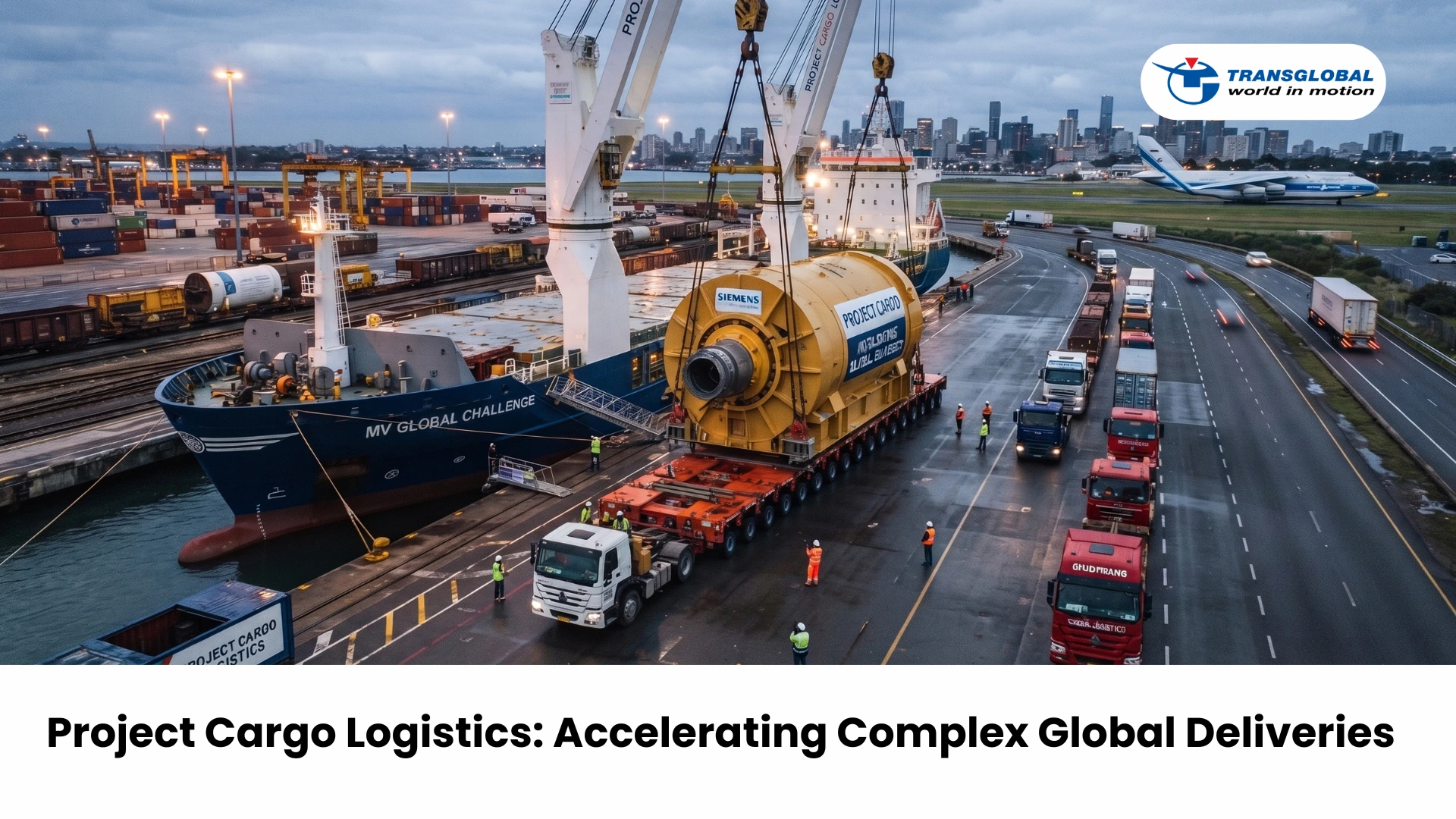
In today’s global trade environment, project cargo logistics has become more critical than ever.
From industrial infrastructure and energy projects to large-scale construction and renewable energy installations, the need to transport oversized, overweight, or high-value cargo efficiently is driving specialized logistics solutions.
Cargo such as turbines, bridge segments, petrochemical equipment, and industrial machinery requires careful planning, precise execution, and expertise in regulatory compliance.
For businesses handling hazardous materials, military shipments, or sensitive cargo, missteps in project cargo management can result in costly delays, operational disruptions, or even financial losses.
🚢 The Strategic Importance of Project Cargo
Project cargo is not just about moving goods; it’s about connecting complex supply chains across regions and industries while ensuring safety, security, and reliability.
Modern industrial projects are highly dependent on the timely delivery of large equipment and specialized components.
Delays in transport can halt production, slow construction, and disrupt entire supply chains. This has made project cargo a strategic priority for both logistics providers and businesses investing in industrial growth.
Key drivers of project cargo demand today include:
- Industrial Expansion: New energy plants, factories, and construction sites require delivery of oversized modules.
- Global Supply Chain Complexity: Shipments often traverse multiple countries, ports, and modes of transport, exposing them to varied regulations and operational risks.
- High-Value and Specialized Cargo: Any delays or mismanagement can result in significant financial and operational losses.
- Safety and Compliance Requirements: Many project cargo items involve hazardous materials or sensitive equipment requiring strict protocols.
🔍 Challenges in Project Cargo Logistics
Despite its importance, project cargo logistics faces multiple hurdles. Oversized and heavy equipment requires specialized trailers, hydraulic cranes, and engineering planning.
Routes are often constrained by infrastructure limitations such as bridges, tunnels, and road capacity. Regulatory compliance, especially for cross-border shipments, can be complex due to varying customs, environmental, and safety laws.
Additionally, time sensitivity adds pressure, as delayed deliveries can halt entire projects, magnifying costs and operational risk.
Multimodal coordination across sea, air, and road transport further increases the complexity, requiring experienced operators who can navigate both logistical and regulatory challenges.
📦 Best Practices for Managing Project Cargo
Specialized logistics providers rely on a combination of planning, technology, and operational expertise to navigate these challenges effectively. Best practices include:
- Conducting comprehensive route surveys to identify infrastructure and weight limitations.
- Implementing engineering-led load planning to ensure safe handling and transport of oversized cargo.
- Optimizing multimodal transport, balancing sea, air, and road routes for cost efficiency, safety, and speed.
- Using predictive analytics to anticipate delays, weather disruptions, and port congestion.
- Maintaining robust insurance and compliance coverage, particularly for hazardous or high-value cargo.
By integrating these practices, project cargo operators reduce risks, protect investment, and maintain timelines.
🌐 Technology Transforming Project Cargo
Digital tools and AI are reshaping how project cargo is planned and executed. Predictive analytics allow logistics providers to optimize routes, manage fleet utilization, and anticipate risks.
Digital documentation simplifies customs compliance, permits, and certifications, reducing delays at ports and borders.
Cargo simulation tools help model load handling and stowage, while real-time tracking ensures visibility across all modes of transport.
Advanced fleet and equipment management further minimizes downtime and enhances operational efficiency. Together, these technologies allow freight forwarders to deliver project cargo faster, safer, and more reliably.
🏗 Key Sectors Driving Project Cargo
Project cargo is integral to several industries:
- Construction & Infrastructure: Bridges, airports, and industrial facilities require oversized modules and heavy components.
- Energy & Renewable Projects: Turbines, solar panels, and hydropower equipment demand multimodal transport solutions.
- Petrochemical & Heavy Industries: Industrial machinery and storage tanks require specialized handling and scheduling.
- Mining & Metallurgy: Extraction and processing equipment are typically out-of-gauge and require careful route planning.
Rising demand in these sectors is fueling growth in project cargo logistics, particularly in regions with limited heavy-lift infrastructure or congested ports.
🚛 Multimodal Transport: Sea, Air, and Road
Successful project cargo logistics requires integration across transport modes.
Sea freight accommodates oversized and heavy items but may be affected by port capacity.
Air freight provides speed for high-value or time-critical cargo, albeit with size limitations. Road freight offers flexibility to reach inland project sites and industrial zones.
Combining these modes in a well-coordinated plan ensures timely, safe, and cost-effective delivery for complex project cargo.
📊 Risks in Project Cargo
The risks inherent in project cargo operations are significant:
- Cargo damage during loading, unloading, or transit
- Regulatory fines for misdeclared hazardous materials
- Delays due to infrastructure or customs bottlenecks
- Security threats for sensitive or military-adjacent shipments
- Insurance gaps for out-of-gauge, hazardous, or oversized items
Proactive risk management and compliance are essential to mitigate these risks and ensure smooth project execution.
🤝 The Role of a Specialized Freight Forwarder
Partnering with an experienced freight forwarder is critical for navigating the complexities of project cargo. Key advantages include:
- Expert route and transport planning across multiple regions
- Regulatory and compliance management for hazardous, military, or oversized cargo
- Risk mitigation to prevent operational, financial, or reputational loss
- Real-time visibility across all stages of the supply chain
Freight forwarders like Transglobal Cargo bridge the gap between military-grade precision and commercial efficiency, ensuring even the most complex cargo moves securely, reliably, and on schedule.
💡 Key Takeaways
Project cargo logistics is a strategic necessity in global trade, driven by industrialization, infrastructure development, and energy projects.
- Planning, multimodal coordination, and technology are essential for success.
- Compliance, safety, and risk management reduce operational delays and financial exposure.
A trusted freight forwarder ensures cargo moves efficiently, safely, and without disruption.

Comments