

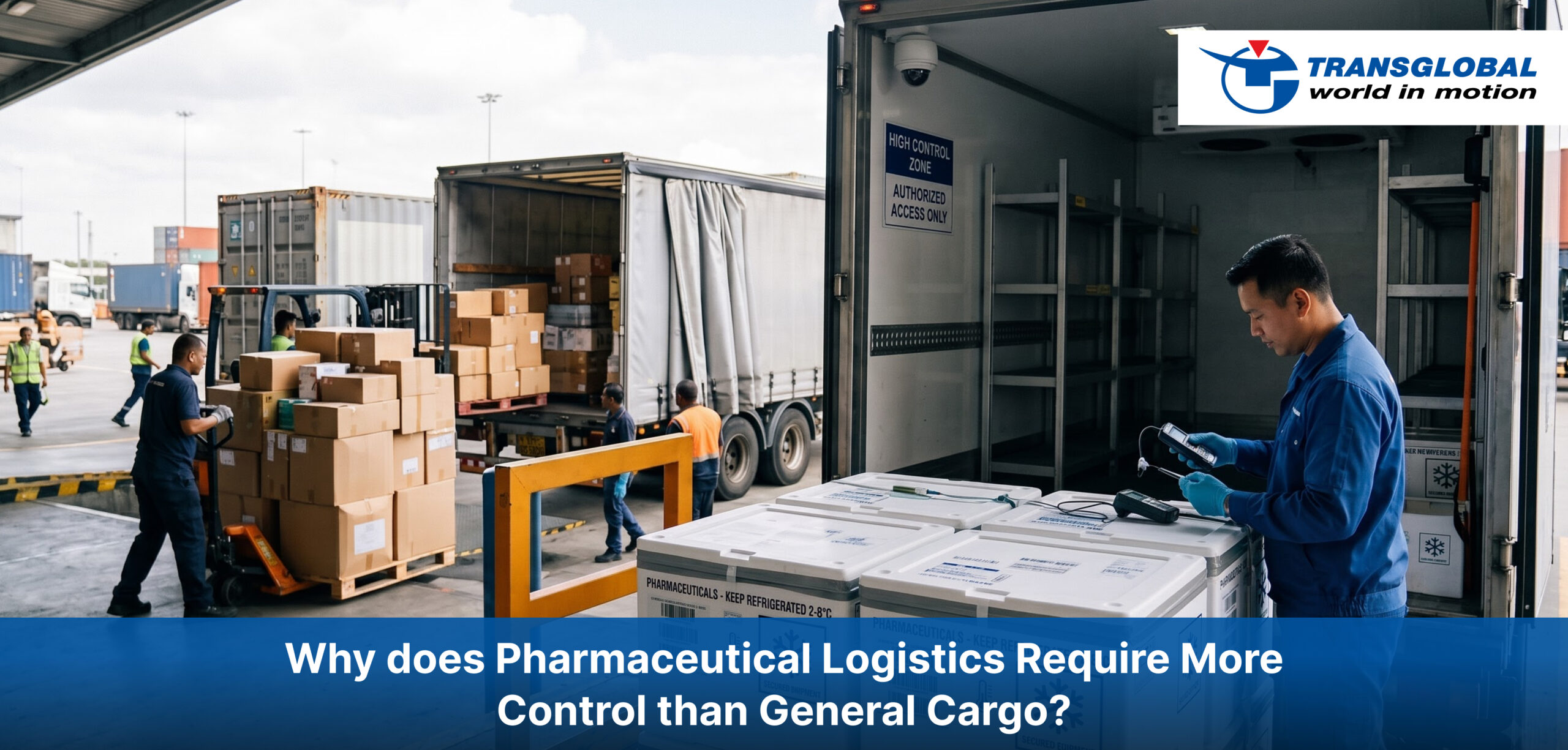
General cargo can often move with standard storage, standard transport, and standard handling instructions.
Pharmaceutical cargo is different.
The shipment may look simple from the outside. Cartons may be packed. Labels may be attached. Documents may be prepared. The delivery schedule may already be shared with the receiver.
But the cargo inside may have strict handling needs.
A pharmaceutical shipment can include medicines, healthcare products, medical supplies, diagnostic items, samples, or products linked to patient care and public health.
If the cargo is stored incorrectly, delayed during clearance, exposed during handling, delivered without the right records, or received by an unprepared site, the impact can go beyond a normal delivery issue.
It can affect product quality, compliance records, distribution plans, healthcare availability, and customer confidence.
This is why pharmaceutical logistics requires more control than general cargo.
It needs careful coordination across storage, handling, documentation, customs clearance, transport, and final delivery.
Why Pharmaceutical Handling Starts Before the Cargo Moves?
Pharmaceutical handling begins before the shipment leaves storage.
The cargo must be checked, recorded, packed, labelled, and prepared according to its product requirements.
General cargo may only need basic protection and dispatch control. Pharmaceutical cargo often needs closer review because the product condition matters throughout the journey.
The team should confirm product type, batch details, expiry dates, package condition, storage instructions, temperature requirements where applicable, delivery priority, and receiver readiness.
Even when pharmaceutical goods do not need cold-chain movement, they may still require clean handling, dry storage, limited exposure, security control, and careful package inspection.
This early control helps prevent problems later.
If damaged cartons, unclear labels, missing batch information, or incorrect handling instructions are not identified before dispatch, the issue may only appear during transport, customs review, or final delivery.
For healthcare cargo that needs organised holding before dispatch, warehousing helps keep pharmaceutical products visible, traceable, and ready for the next stage.
The movement starts better when the cargo is controlled before it is collected.
How Pharmaceutical Storage Protects Product Condition?
Storage plays a major role in pharmaceutical logistics.
Products may need to be kept away from heat, moisture, contamination risk, direct exposure, unauthorised access, or poor stock rotation.
The warehouse process should support product condition as well as stock accuracy.
This means checking how the cargo is received, where it is placed, how long it is stored, how it is picked, and how it is released.
Batch numbers, expiry dates, package counts, product descriptions, and dispatch instructions should be clear before the shipment moves.
For pharmaceutical distribution, poor storage control can affect the full supply chain.
A product may be delayed because the wrong batch was picked. A receiver may raise questions because the carton condition is poor. A shipment may need extra review because product details do not match the documents.
General cargo may tolerate more flexibility in storage and handling.
Pharmaceutical cargo usually cannot.
The products must remain suitable for use, sale, distribution, or further processing when they reach the final receiver.
Good pharmaceutical storage gives the shipment a stronger foundation before transport begins.
Why Documents must be More Accurate for Pharmaceutical Cargo?
Pharmaceutical logistics depends heavily on accurate documents.
The paperwork must explain what the product is, how it is packed, who is sending it, who is receiving it, and what approvals or handling requirements apply.
Common documents may include the commercial invoice, packing list, airway bill or bill of lading, permits, certificates, product information, batch details, import approvals, and safety records where required.
The product description must be specific.
A vague description can create questions during carrier acceptance, customs review, warehouse handling, or receiver inspection.
For pharmaceutical shipments, the package count, batch information, expiry details, HS code, value, origin, destination, and consignee details should match across the documents.
Accurate shipping documents help connect the physical cargo with the records used for clearance, release, audit checks, and final delivery.
This is one reason pharmaceutical logistics needs more control than general cargo.
The shipment cannot depend on paperwork that is incomplete, unclear, or inconsistent.
When the documents match the cargo, each party has a better basis for handling the shipment correctly.
How Customs Clearance Adds More Control to Pharma Supply Chain?
Pharmaceutical cargo may face closer customs and regulatory checks than ordinary goods.
Authorities may need to understand the product type, classification, origin, value, end use, importer details, and supporting approvals.
For some pharmaceutical shipments, permits, product registrations, certificates, or import permissions may be required before the goods can be released.
This makes early customs review important.
For pharmaceutical imports and exports, customs brokerage should be prepared around the product details, regulatory requirements, and supporting documents before the shipment reaches the border.
If customs questions arise after arrival, the delay can affect more than the cargo.
It can affect hospital supply, pharmacy stock, clinical operations, healthcare distribution, or planned product availability.
The pharma supply chain depends on timing and traceability.
A missing document, incorrect classification, unclear product description, or mismatch between invoice and packing list can hold the shipment at the wrong stage.
General cargo may sometimes recover from a short delay with less pressure.
Pharmaceutical cargo often carries tighter time, quality, and compliance expectations.
Why Transport and Final Delivery Need Clear Instructions?
Transport planning is another reason pharmaceutical logistics needs more control.
The cargo may move by air, road, or a combination of both.
The selected mode should match the urgency, product sensitivity, destination, handling requirement, and receiver availability.
For urgent healthcare movements, air freight may help reduce transit time when speed and routing are important.
But the delivery process still needs control after arrival.
The final movement from airport, port, warehouse, depot, or distribution centre to the receiver must be planned carefully.
For local or regional delivery, road freight should consider vehicle suitability, route, timing, cargo instructions, security needs, and proof of delivery.
The receiver should be ready before the cargo arrives.
A hospital, clinic, laboratory, pharmacy, manufacturer, or healthcare distributor may need the shipment at a specific time, with the correct records and authorised personnel available to receive it.
Pharmaceutical distribution does not end when the cargo leaves the warehouse.
It ends when the products are received, checked, recorded, and accepted by the final consignee.
Conclusion: Pharmaceutical Logistics Needs Control at Every Stage
Pharmaceutical logistics requires more control than general cargo because the product condition, documents, compliance requirements, and delivery timing all matter.
The shipment must be stored correctly, handled carefully, documented accurately, cleared properly, transported with the right instructions, and delivered to a prepared receiver.
Each stage affects the next.
If storage is weak, dispatch can begin with risk. If documents are unclear, clearance can slow down. If transport instructions are missing, the cargo may be handled incorrectly. If the receiver is not ready, final delivery can lose control.
For pharmaceutical cargo, logistics is not only about movement.
It is about protecting product quality, traceability, compliance, and delivery confidence from origin to final handover.
Planning a pharmaceutical shipment? Contact us to review storage needs, handling instructions, documents, customs requirements, and delivery planning before dispatch.
Move healthcare cargo with leading freight forwarders who understand pharmaceutical logistics, pharmaceutical handling, pharma supply chain control, and final delivery coordination.
Frequently Asked Questions
Why is pharmaceutical logistics different from general cargo?
Pharmaceutical logistics needs more control because product condition, handling, storage, documents, compliance, and final delivery records are more sensitive.
What should be checked before moving pharmaceutical cargo?
Product type, batch details, expiry dates, storage needs, packaging, documents, permits, customs requirements, transport mode, and receiver readiness should be checked.
Why is storage important in pharmaceutical distribution?
Storage helps protect product condition, stock accuracy, traceability, expiry control, and dispatch readiness before the shipment moves

Comments