

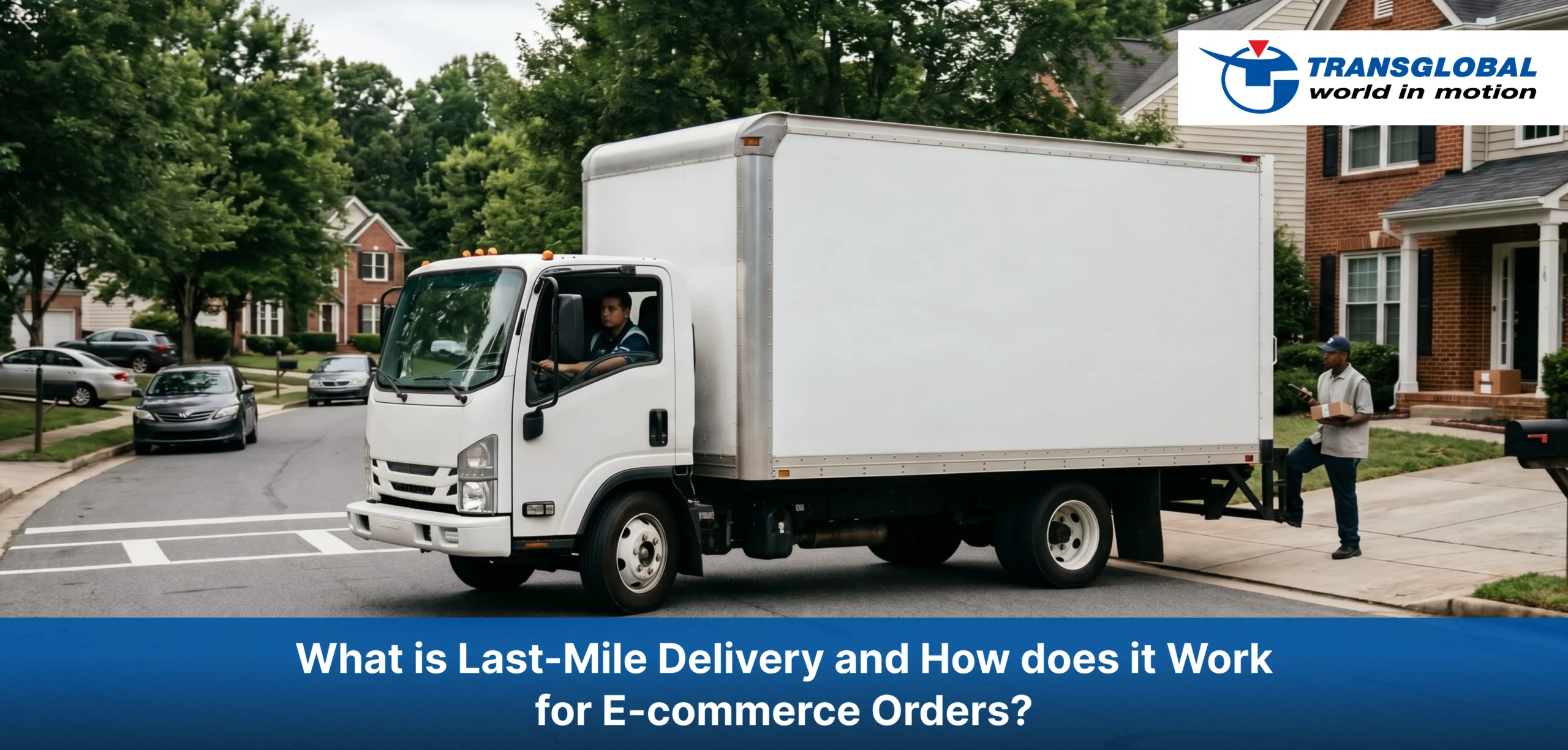
An e-commerce order can move through several stages before the customer ever sees it.
The product is listed online. The order is confirmed. Payment is received. Stock is picked, packed, labelled, and prepared for dispatch.
From the customer’s side, it may look simple.
They placed an order and are waiting for delivery.
But the final movement from the warehouse, fulfillment centre, depot, or local hub to the customer’s address is where the delivery promise is tested.
This stage is called last-mile delivery.
It is the final part of the logistics journey, but it is often the most visible part for the customer.
A delayed order, missed delivery, poor tracking update, damaged parcel, or failed handover can affect the entire shopping experience, even if the earlier supply chain stages worked well.
That is why last-mile delivery matters so much for e-commerce orders.
It connects order fulfillment with customer satisfaction.
What Last-Mile Delivery Means in E-commerce?
Last-mile delivery is the final movement of an order from a distribution point to the customer.
That customer may be a household, retail store, business address, pickup point, locker, clinic, school, office, or remote site.
In e-commerce, the last mile starts after the order has been picked, packed, and released for delivery.
The delivery team then collects the parcel, plans the route, updates the tracking status, attempts delivery, records proof of delivery, and closes the order.
This may sound like a short step.
But it can involve many moving parts.
The order may need address confirmation, route planning, driver allocation, delivery window management, customer communication, returns handling, and proof of delivery.
For businesses trying to improve last-mile delivery, the main goal is not only to move parcels faster. It is to make the final delivery stage more predictable, visible, and reliable.
In e-commerce, the last mile is where logistics becomes part of the customer experience.
How Order Fulfilment Connects to the Last Mile?
Last-mile delivery does not begin when the driver leaves.
It begins earlier, during order fulfilment.
If the wrong product is picked, the parcel is packed poorly, the address is incomplete, or the order is released late, the delivery team starts with a problem.
Good order fulfilment makes the final mile easier.
The warehouse team should confirm stock availability, product condition, order details, packing requirements, customer address, delivery notes, and dispatch timing before the parcel leaves the facility.
For e-commerce businesses, warehousing support helps connect inventory control, picking, packing, dispatch, and delivery readiness.
This is especially important when order volumes change during sales campaigns, festive seasons, product launches, or peak retail periods.
If orders are not prepared correctly at the warehouse stage, last-mile teams may face missed delivery windows, wrong addresses, parcel damage, or customer complaints.
The final mile performs better when the fulfilment process gives it accurate parcels, clear labels, and complete delivery information.
Why Delivery Planning Affects Customer Experience?
E-commerce customers usually judge the delivery by what they can see.
They want to know when the order will arrive, whether it is moving, who will deliver it, and what happens if they are not available.
Delivery planning helps manage these expectations.
The team needs to consider route density, delivery zones, traffic, driver capacity, parcel size, customer availability, address quality, and delivery priority.
Some orders may need same-day or next-day delivery. Others may need scheduled delivery, business-hour delivery, or delivery to a collection point.
For local and regional movement, road freight planning helps connect route selection, vehicle suitability, delivery timing, and final handover.
The delivery address also matters.
Urban deliveries may face traffic, parking restrictions, apartment access, security gates, or customer availability issues. Rural and remote deliveries may face longer travel time, limited route options, or fewer delivery attempts.
Good final mile delivery planning reduces missed deliveries.
It also gives customers clearer updates and helps businesses protect their delivery promise.
How Tracking and Communication Keep Orders Visible?
Visibility is one of the most important parts of last-mile logistics.
Customers do not only want the order delivered.
They want to know what is happening before it arrives.
Tracking updates help reduce uncertainty. They show when the order is packed, dispatched, out for delivery, delayed, delivered, or returned.
For e-commerce businesses, this visibility also helps internal teams respond faster when something changes.
If a delivery fails, the team can review the reason. If a parcel is delayed, customer service can update the buyer. If a route is running late, the delivery team can adjust communication before frustration builds.
Last-mile logistics depends on coordination between warehouse teams, dispatch teams, drivers, customer service, and the receiver.
For businesses building wider fulfilment networks, warehousing can support better stock visibility, faster dispatch, and stronger delivery coordination.
Clear communication is not just a customer service detail.
It is part of keeping e-commerce delivery under control.
Why Returns and Failed Deliveries Need a Clear Process?
Last-mile delivery is not always completed on the first attempt.
The customer may not be available. The address may be incomplete. Access may be restricted. The parcel may be refused. The wrong item may have been ordered. The customer may request a return or exchange.
E-commerce logistics needs a clear process for these situations.
Failed deliveries should be recorded properly. Drivers should capture the reason. Customer service should know the next step. The parcel should either be reattempted, redirected, held, or returned according to the business rules.
Returns are also part of the e-commerce delivery experience.
A smooth return process can protect customer trust, while a confusing one can create frustration.
This is why end-to-end freight forwarding support can help connect inbound cargo, storage, order fulfilment, delivery, proof of delivery, and returns movement.
Last-mile delivery works best when businesses plan for both successful deliveries and exceptions.
The final mile is not only about the perfect order.
It is also about how well the team responds when the delivery does not go exactly as planned.
Conclusion: Last-Mile Delivery Completes the E-commerce Promise
Last-mile delivery is the final stage of the e-commerce logistics journey.
It connects the warehouse, delivery team, customer, and order experience.
A product may be available, packed, and dispatched correctly, but the customer only feels the value when the order arrives safely, on time, and with clear communication.
That is why last-mile delivery needs careful planning.
Order fulfilment, route planning, tracking, customer updates, proof of delivery, failed delivery handling, and returns all affect the final result.
For e-commerce businesses, last-mile delivery is not only a transport function.
It is part of customer satisfaction, brand trust, and repeat sales.
Planning e-commerce deliveries or final-mile distribution? Contact us to review your storage, fulfilment, delivery, and returns requirements.
Move e-commerce orders with specialist freight forwarders who understand last-mile delivery, order fulfilment, warehousing, and final delivery control.
Frequently Asked Questions
What is last-mile delivery?
Last-mile delivery is the final movement of an order from a warehouse, depot, fulfilment centre, or local hub to the customer’s delivery address.
Why is last-mile delivery important for e-commerce?
It directly affects customer satisfaction because it controls delivery timing, tracking updates, handover, proof of delivery, and returns experience.
What affects last-mile delivery performance?
Address accuracy, order fulfilment, route planning, driver capacity, customer availability, parcel size, tracking, and failed delivery processes all affect performance.

Comments