

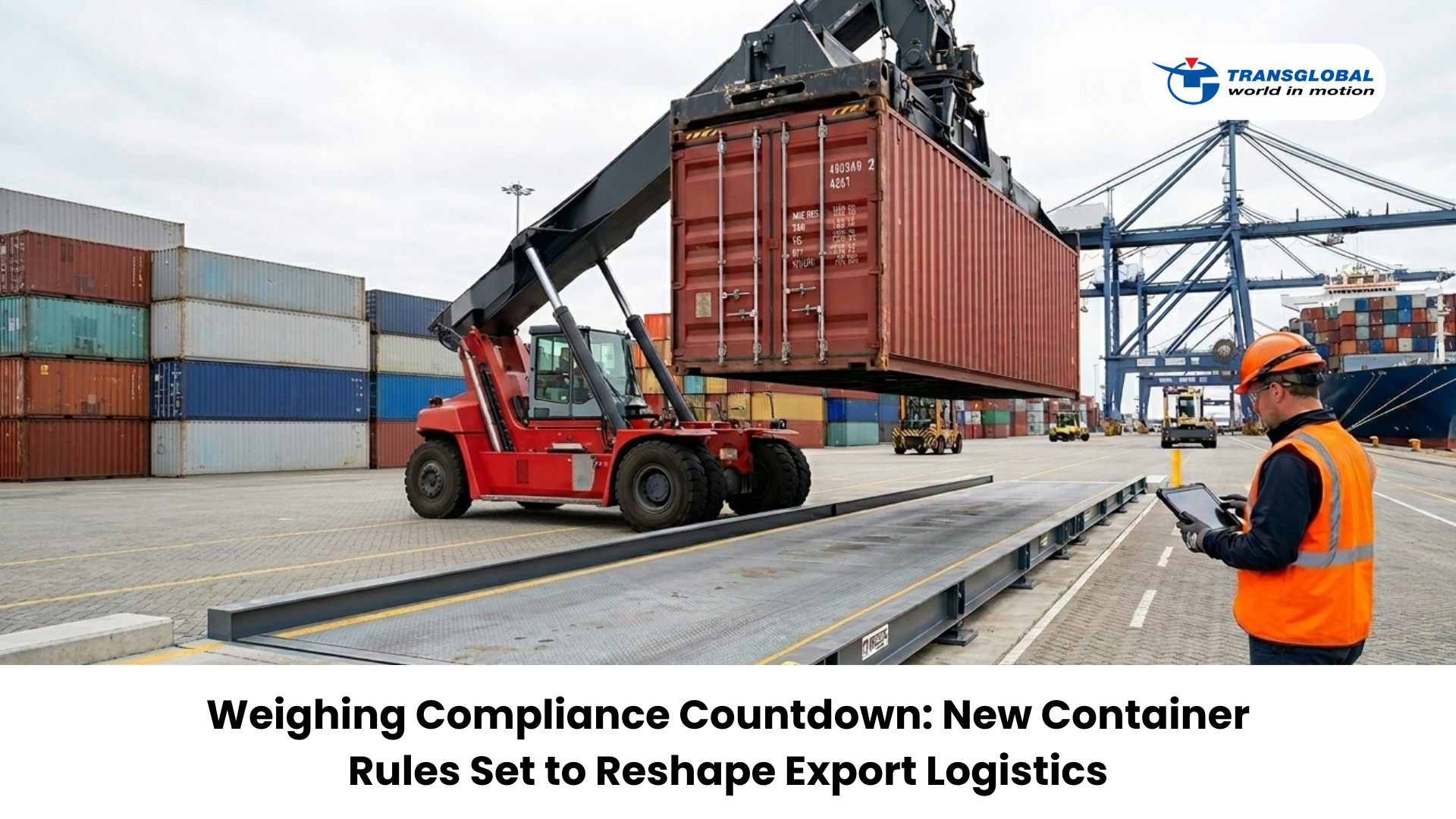
The global logistics industry is becoming more compliance-driven than ever before, and South Africa’s latest container weighing regulations are a clear example of that shift.
From 1 July 2026, export containers presented without a compliant Verified Gross Mass (VGM) declaration will not be loaded onto vessels. What may appear to be a technical regulatory update is, in reality, a major operational deadline that could directly affect exporters, freight forwarders, transporters, depots, and container packing facilities across the supply chain.
The concern is not only about the regulation itself. The bigger issue is that many operators still have not completed the authorization process required under the new rules. As the deadline approaches, the industry is now facing a growing compliance bottleneck.
So the real question becomes:
👉 Will your shipment move smoothly in July, or will it be stopped before it even reaches the vessel?
⚖️ What Exactly is Changing from 1 July 2026?
Under the updated Marine Notice published by the South African Maritime Safety Authority (SAMSA), all facilities using Method 1 to determine container VGM must now be formally authorized before they can be used for export shipments.
This applies to facilities using equipment such as:
- ⚙️ Weighbridges
- 🚛 Reach stackers
- 🏗️ Cranes
- 📡 Mobile weighing systems
The new rules are part of South Africa’s implementation of amendments to the international SOLAS (Safety of Life at Sea ) Convention, which places responsibility for declaring accurate container weight directly on the shipper before loading takes place.
From July onwards, any export container without a compliant VGM declaration will simply not be loaded onto a vessel. In cases where discrepancies are identified, the verified weight will take precedence, and enforcement action may follow.
In practical terms, this means logistics operators must ensure that every facility used for Method 1 weighing holds a valid SAMSA authorization certificate.
🌍 Why this Matters More than Ever in Today’s Logistics Environment?
The timing of these regulations is significant because the global logistics environment is already operating under immense pressure.
Across international shipping, the industry is currently dealing with:
- 🚢 Port congestion and schedule disruptions
- ⚠️ Increased regulatory scrutiny
- 📦 Growing focus on cargo safety and compliance
- 💰 Rising operational costs and shipment delays
Inaccurate container weight declarations have long been viewed as a serious safety risk. Incorrect weight information can affect vessel stability, crane operations, stack planning, and even port infrastructure safety.
That is why regulators are moving towards stricter enforcement and more transparent verification systems.
This is no longer just a documentation exercise.
👉 Compliance is now becoming a core operational requirement in modern logistics.
📊 The Biggest Concern: Many Operators are Still Unprepared
Despite the July deadline being close, industry experts report that many operators have not yet started the authorization process.
This creates a serious risk of system congestion in the coming weeks.
According to SAMSA-accredited assessment entities, operators should allow at least two weeks for the full process, including:
- 📋 Site inspections
- 📄 Documentation preparation
- 🔍 Compliance verification
- ⚖️ SAMSA approval and certification
The challenge is that the same assessment entities are also handling large volumes of Method 2 renewals at the same time, increasing pressure on the approval system.
As more companies rush to comply closer to the deadline, delays in certification processing are likely to increase.
🚢 What Happens if You are Non-Compliant?
The operational consequences of non-compliance could be immediate and costly.
From 1 July, containers linked to unauthorized Method 1 weighing facilities may not be accepted into terminal stacks. Without a valid SAMSA certificate number, export bookings could face rejection within terminal systems such as NAVIS.
For exporters and freight forwarders, this could result in:
- 🚫 Containers refused at terminal gates
- ⚓ Missed vessel departures
- ⏱️ Shipment delays and supply chain disruption
- 💰 Additional transport and weighing costs
- 📄 Invoice disputes and contractual penalties
Where a facility is not authorized, operators may be forced to move containers to alternative approved weighbridges in order to obtain a compliant weight ticket before cargo can proceed.
In a high-volume export environment, these delays can quickly escalate into major operational and financial problems.
⚠️ Enforcement is Expected to be Strict
SAMSA has made it clear that enforcement will not be symbolic.
Compliance checks are expected to include:
- 🔍 Port State Control inspections
- 📋 Audits of shippers and weighing facilities
- ⚖️ Verification of declared container weights
Under South Africa’s Merchant Shipping regulations, incorrect weight declarations are treated as offences.
Potential penalties include:
- 💰 Financial fines
- ⚠️ Operational enforcement actions
- 🚨 Imprisonment of up to 12 months in serious cases
The industry should therefore expect a much more rigorous compliance environment moving forward.
🔄 Why the Industry is Moving Towards Greater Verification?
The July 2026 deadline reflects a much bigger transformation happening across global logistics.
Modern supply chains are increasingly focused on:
- 📡 Real-time shipment visibility
- 📊 Accurate cargo data
- ⚖️ Digital compliance systems
- 🔍 Operational accountability
Ports and terminal systems are becoming more integrated with compliance verification processes. This means cargo movement is now directly connected to data accuracy and certification status.
In the future, non-compliant cargo may not just face delays, it may struggle to enter the logistics system at all.
🧭 What Logistics Operators should do Right Now?
For exporters, freight forwarders, depots, and transport operators, the priority now is preparation.
Immediate action steps should include:
- 📋 Confirming whether current weighing facilities are SAMSA-authorized
- ⚙️ Reviewing all Method 1 weighing processes
- 📄 Starting certification processes without delay
- 🤝 Coordinating with freight forwarders and terminal operators early
Businesses relying on third-party weighing facilities should also verify that those providers are fully compliant before July.
Waiting until the final weeks could create unnecessary operational risk.
🌐 A New Reality for Export Compliance
The upcoming VGM deadline is not just another regulatory update, it is a signal of where the shipping industry is heading.
Global logistics is becoming:
- More compliance-focused
- More digitally monitored
- More operationally accountable
As regulations tighten worldwide, businesses that prepare early will move cargo more efficiently, avoid disruption, and maintain customer confidence.
🚚 Conclusion
In today’s shipping environment, moving cargo successfully requires more than transport coordination. It requires compliance awareness, operational planning, and proactive logistics management.
Working with the best freight forwarder helps ensure that your export cargo remains compliant, properly documented, and ready for evolving regulatory requirements.
Because in modern logistics, success is no longer measured only by how fast cargo moves, it is measured by whether it can move at all.
Comments