

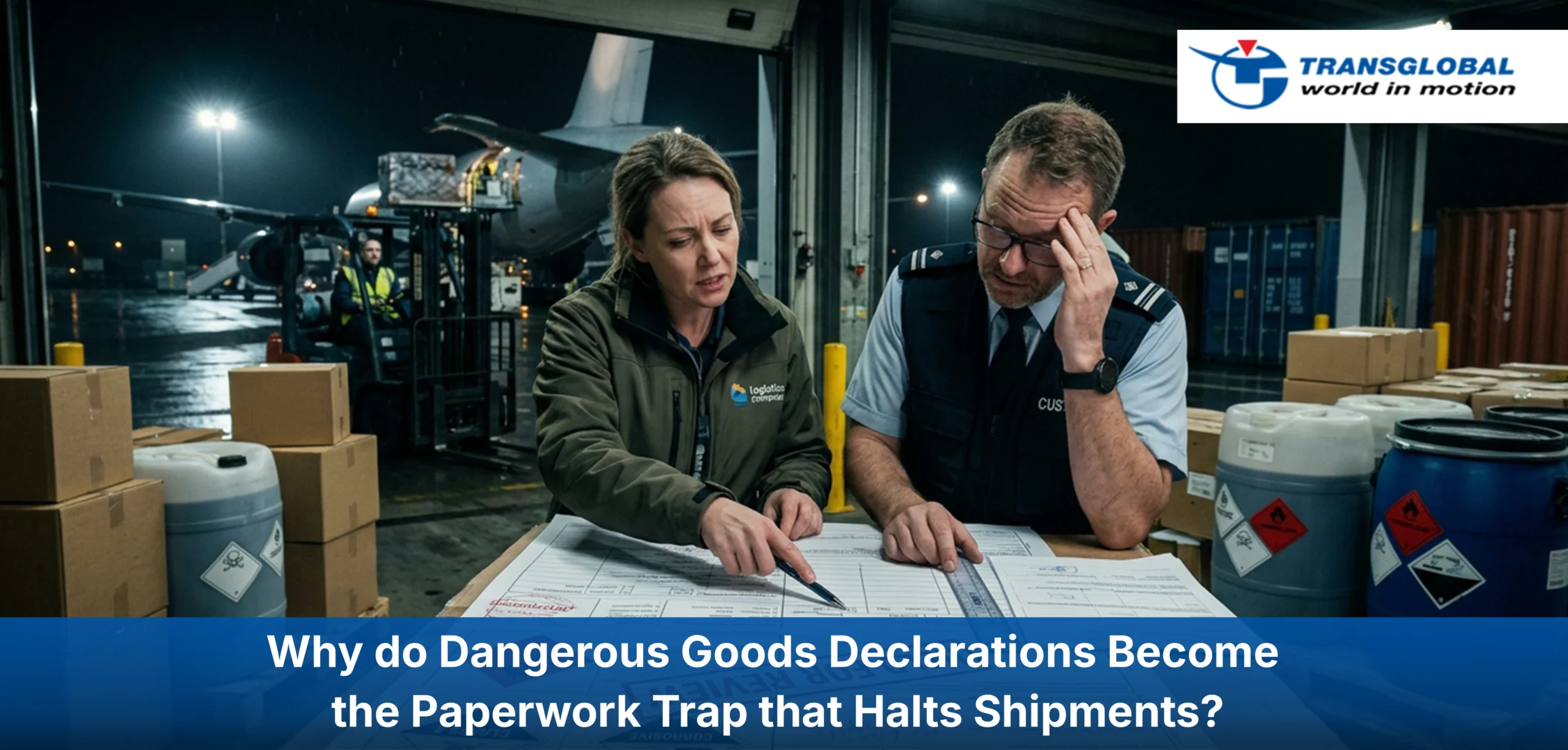
A shipment may be packed perfectly, booked on time, and ready for departure, but one incorrect dangerous goods declaration can stop the entire movement instantly.
No cargo loading. No customs release. No vessel acceptance.
Just delays, inspections, penalties, and operational pressure.
For businesses moving dangerous goods globally, this is one of the most expensive mistakes in modern logistics. And the problem is becoming more common as airlines, shipping lines, ports, and customs authorities tighten compliance checks across international trade.
Today, dangerous goods compliance is no longer treated as routine documentation. It has become a high-risk operational requirement.
For freight forwarders, importers, exporters, mining companies, defence contractors, manufacturers, and hazardous cargo operators, understanding dangerous goods declarations is now essential for keeping cargo moving without disruption.
Why has Dangerous Goods Compliance Become More Strict Globally?
Global logistics has changed significantly over the last few years.
Authorities are increasing scrutiny around dangerous goods shipments due to rising safety concerns, tighter international regulations, and growing pressure on transport operators to reduce operational risk.
At the same time, global supply chains are moving more regulated cargo than ever before, including:
- Lithium batteries
- Industrial chemicals
- Hazardous liquids
- Explosives
- Military equipment
- Defence cargo
- Fuel products
- Specialized industrial materials
This increase in regulated cargo movement means customs authorities, ports, airlines, and shipping lines are relying heavily on dangerous goods declarations to assess shipment safety before cargo even begins transit.
A single error can immediately trigger shipment rejection or operational shutdown.
What is a Dangerous Goods Declaration?
A dangerous goods declaration is an official compliance document confirming that hazardous cargo has been correctly classified, packaged, labeled, and prepared according to international transport regulations.
The declaration provides critical information such as:
- Proper shipping name
- UN number
- Hazard class
- Packing group
- Quantity and packaging details
- Emergency response information
- Handling instructions
This document is required across multiple transport modes, including:
- Sea freight
- Air freight
- Road freight
Depending on the shipment type and destination, declarations must align with international standards such as:
- IMDG Code for sea freight
- IATA Dangerous Goods Regulations for air freight
- ADR and regional transport regulations for road freight
Without accurate declarations, dangerous goods cargo simply does not move legally.
Why Dangerous Goods Paperwork Creates So Many Delays?
Dangerous goods logistics is heavily documentation-driven.
Unlike standard cargo, regulated shipments face multiple compliance checkpoints throughout the supply chain. Shipping lines, airlines, customs authorities, terminal operators, and freight handlers all verify declaration accuracy independently.
This means even small inconsistencies between documents can stop a shipment immediately.
Common problems include:
- Incorrect UN numbers
- Wrong hazard classifications
- Missing emergency contact details
- Packaging mismatches
- Labeling inconsistencies
- Incorrect quantity declarations
- Missing permits or approvals
In many cases, businesses assume the shipment is compliant because the cargo itself is packed correctly. But compliance failures often happen on paper, not physically.
That is why dangerous goods declarations have become one of the biggest hidden operational risks in modern freight forwarding.
How Incorrect Declarations Affect the Entire Supply Chain?
A rejected dangerous goods declaration does not just create paperwork delays.
It impacts the entire logistics operation.
When dangerous goods shipments are stopped, businesses may face:
- Cargo rollovers
- Port storage costs
- Airline rejection fees
- Vessel booking cancellations
- Customs inspections
- Operational downtime
- Production delays
- Financial penalties
For time-sensitive industries such as mining, energy, defence, and industrial manufacturing, these disruptions can become extremely costly.
In some cases, repeated compliance failures may even affect a company’s credibility with carriers and regulators.
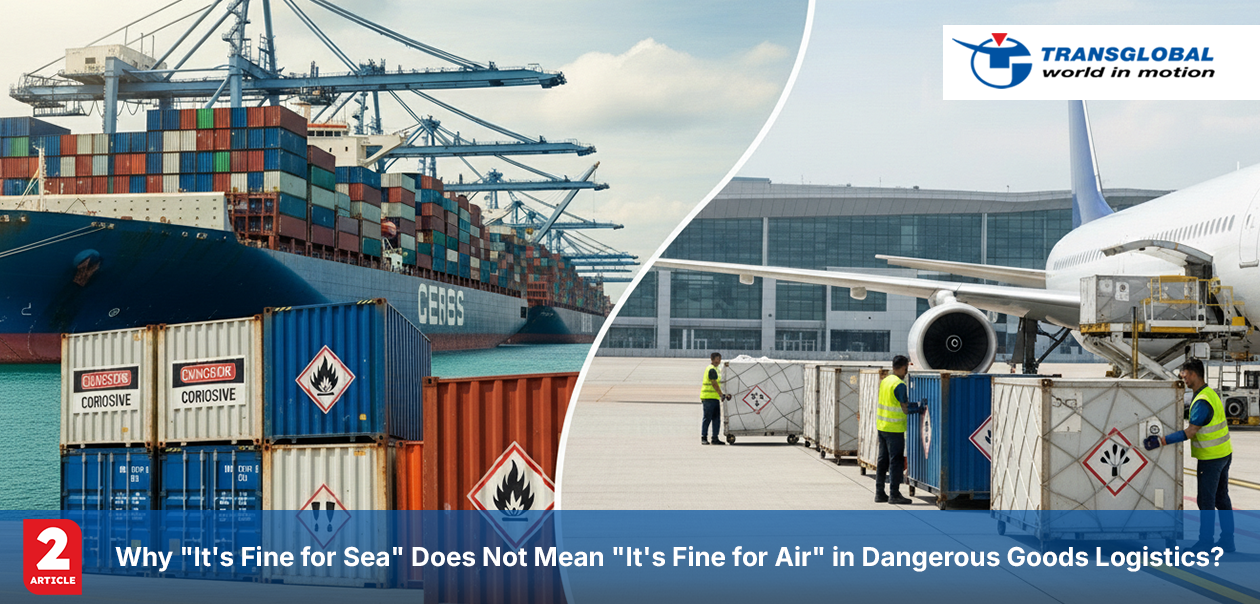
Why is Air Freight Dangerous Goods Compliance Especially Strict?
Air freight dangerous goods compliance is one of the most heavily regulated areas in global logistics.
Aircraft operate under strict safety conditions, meaning declaration accuracy is critical.
Airlines carefully review:
- Packaging specifications
- Net quantity limits
- Labeling requirements
- Emergency procedures
- Cargo compatibility
Certain dangerous goods may require additional approvals or may even be prohibited from passenger aircraft entirely.
This creates significant pressure on exporters handling urgent or high-value dangerous goods shipments through air freight networks.
Why Sea Freight Dangerous Goods Shipments Face Different Challenges?
Sea freight dangerous goods operations involve different operational risks.
Cargo may remain onboard vessels for extended periods while crossing multiple international waters and ports. As a result, shipping lines focus heavily on segregation, stowage planning, and container compatibility.
Incorrect dangerous goods declarations at sea can create:
- Vessel safety risks
- Port handling issues
- Container rejection
- Cargo isolation requirements
- Regulatory penalties
For hazardous materials and explosives logistics, declaration accuracy becomes absolutely critical to maintaining vessel safety and international compliance.
Why Specialized Cargo Requires Advanced Compliance Expertise?
Some dangerous goods shipments involve far greater complexity than standard hazardous cargo.
This includes:
- Explosives logistics
- Military cargo
- Defence equipment
- Armaments transport
- Hazardous industrial materials
- Specialized project cargo
These shipments often require:
- Additional permits
- Security coordination
- Specialized route planning
- Regulatory approvals
- Enhanced documentation control
Managing these operations requires far more than basic freight forwarding capability.
It requires deep compliance expertise combined with operational risk management.
How are Digital Customs and Compliance Systems Increasing Pressure?
Modern customs and cargo systems are becoming increasingly automated.
Today, ports, airlines, and authorities use digital verification systems that compare dangerous goods declarations against invoices, packing lists, container information, and shipment records.
This means declaration inconsistencies are identified faster than ever before.
Businesses can no longer rely on manual corrections after cargo reaches the terminal. Compliance must now be accurate from the beginning.
This is why proactive freight planning and documentation review are becoming essential parts of dangerous goods logistics.
Transglobal’s Role Goes Beyond Moving Dangerous Cargo
At Transglobal, dangerous goods logistics is approached with a strong focus on compliance, operational control, and shipment integrity.
Whether managing sea freight, air freight, or road freight operations, every dangerous goods shipment is carefully coordinated to ensure documentation accuracy and regulatory alignment before cargo movement begins.
The team supports businesses handling:
- Dangerous goods
- Hazardous materials
- Explosives logistics
- Military cargo
- Defence equipment
- Armaments transport
- High-risk project cargo
This includes reviewing dangerous goods declarations thoroughly, coordinating permits and compliance requirements, and ensuring cargo aligns with international transport regulations across every transport mode.
By combining freight expertise with compliance-driven execution, Transglobal helps businesses reduce shipment delays, operational disruption, and unnecessary risk exposure.
Why Compliance-Led Freight Planning Creates Competitive Advantage?
Dangerous goods logistics is no longer just about transportation capacity.
Businesses now compete based on operational reliability, compliance performance, and supply chain continuity.
Companies that invest in accurate dangerous goods management benefit from:
- Faster cargo movement
- Reduced customs disruption
- Lower operational risk
- Better carrier relationships
- Improved shipment reliability
- Stronger global trade performance
In highly regulated industries, compliance efficiency has become a major competitive advantage.
Conclusion
Dangerous goods declarations are no longer simple shipping documents.
They have become one of the most important compliance checkpoints in modern logistics operations.
As authorities increase regulatory scrutiny and digital verification systems become stricter, businesses must ensure dangerous goods paperwork is accurate long before cargo reaches the terminal.
A single declaration error can stop an entire shipment.
If your business handles dangerous goods, hazardous cargo, explosives, military logistics, or defence equipment globally, work with a freight forwarder that understands compliance beyond documentation. Contact us, the partner who delivers secure, compliant, and strategically managed freight solutions across sea, air, and road transport while protecting your cargo from avoidable operational risk.
Frequently Asked Questions
What is a dangerous goods declaration?
A dangerous goods declaration is a compliance document confirming hazardous cargo has been classified, packaged, labeled, and prepared according to transport regulations.
Why do dangerous goods shipments get delayed?
Shipments are commonly delayed due to incorrect UN numbers, missing documentation, packaging errors, or non-compliant declarations.
Are dangerous goods regulations different for air and sea freight?
Yes. Air freight follows IATA regulations, while sea freight follows IMDG regulations, with different handling and compliance requirements.

Comments