

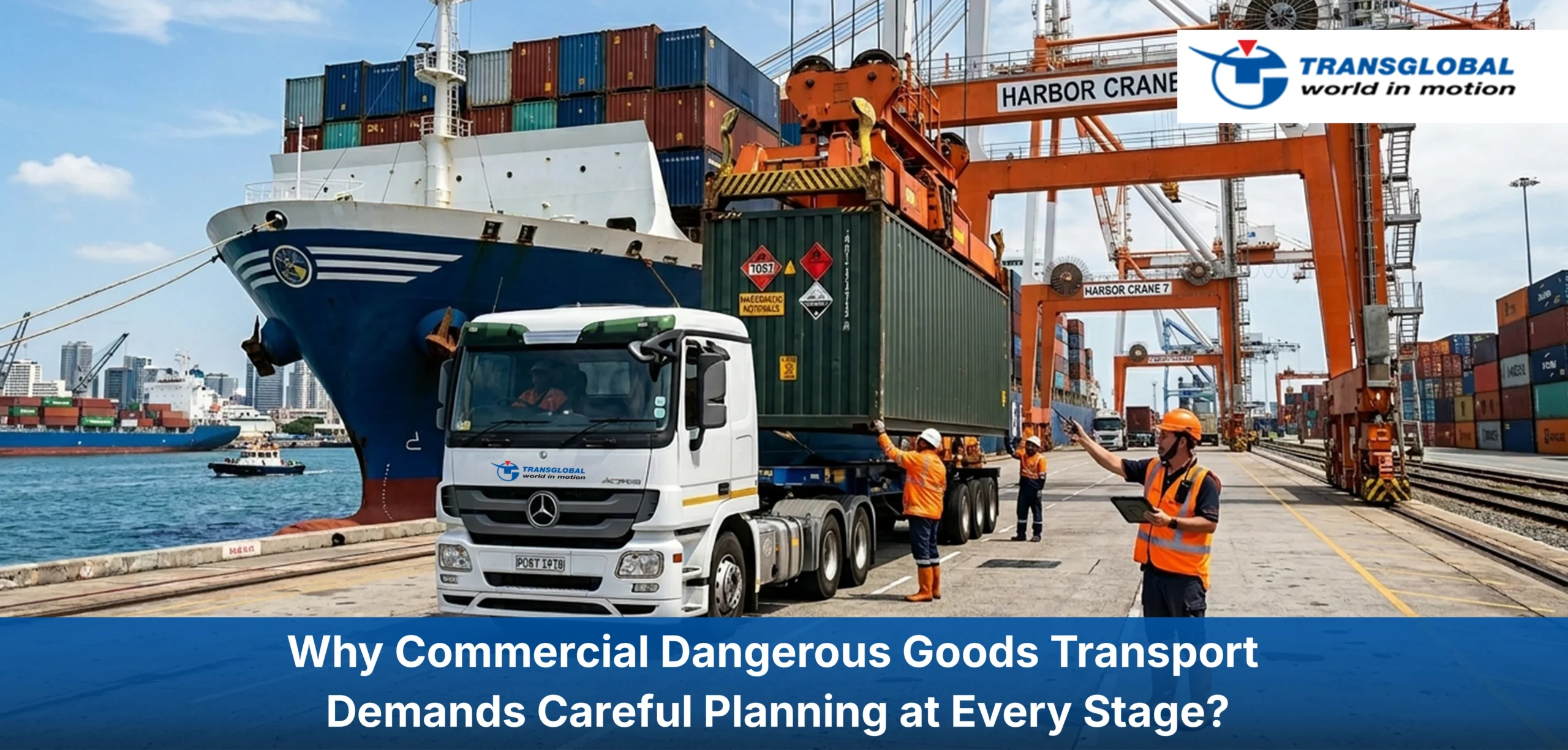
A commercial dangerous goods shipment is rarely just another delivery.
The cargo may include chemicals needed for production, explosives for a mining operation, batteries for an energy project, or regulated materials linked to a customer contract.
A missed collection can affect production. An unavailable vehicle can disrupt a project schedule. A delivery site that is not ready can leave specialized cargo waiting.
This is why commercial dangerous goods transport cannot be managed only around pickup and delivery. It needs careful planning across timing, equipment, people, sites, communication, and the wider business operation connected to the cargo.
Why Commercial Dangerous Goods Transport Affects the Entire Business Operation?
Commercial dangerous goods movements often connect several departments at the same time.
Procurement may be waiting for materials, production may depend on delivery, warehouse teams may need to prepare space, and project managers may already be working against fixed deadlines.
If one team changes the quantity, collection time, delivery location, or required date without informing the others, the entire movement can be affected.
A mining shipment, for example, may require specific equipment, trained personnel, controlled handling, and a fixed delivery window. A late site change can create waiting time or force the movement to be rearranged.
This may interrupt production, delay site activity, increase transport costs, or place pressure on customer commitments.
Careful planning helps every department understand what the shipment requires and gives transport teams enough time to prepare the right resources before the movement becomes urgent.
Why Specialized Capacity and Delivery Timing must be Planned Well in Advance?
Commercial dangerous goods transport cannot always be arranged using the next available truck, container, vessel, or flight.
The cargo may require a suitable vehicle, approved equipment, trained drivers, secure loading, or a carrier willing to accept the commodity.
Capacity becomes even more important when the shipment is recurring or high-volume. A business moving regulated materials every week needs reliable vehicle availability, realistic collection schedules, stable routing, and enough capacity to protect production or customer commitments.
Planning early also gives cargo managers a clearer view of cost and carrier availability.
This is particularly important when arranging road freight for cargo moving to several sites or operating within strict delivery windows.
The right plan matches the cargo with suitable capacity before deadlines become urgent.
Why Collection and Delivery Sites must be Fully Prepared Before the Cargo Moves?
A dangerous goods shipment can be correctly booked and still face problems because the collection or delivery site is not prepared.
The vehicle may arrive while the loading area is occupied, storage is unavailable, the unloading team is absent, or site access is restricted.
The cargo may need controlled access, safe separation, trained personnel, or specific handling conditions. If the site cannot receive it safely, delivery may be postponed.
Both sites should confirm access, handling equipment, responsible personnel, cargo quantity, timing, and suitable storage.
For businesses using specialized warehousing, available space and cargo-handling requirements should also be confirmed before arrival.
When both ends are prepared, specialised cargo can move without unnecessary standing time or repeated handling.
Site readiness may appear to be a small operational detail, but for commercial dangerous goods movements, it can decide whether the delivery is completed as planned.
How Last-Minute Changes can Disrupt the Entire Dangerous Goods Movement?
Commercial operations rarely remain unchanged from booking to delivery.
Production may run late. The cargo quantity may be revised. A carrier may cancel space. A road may close. A consignee may change the delivery slot.
For commercial dangerous goods transport, one change can affect the vehicle, route, handling team, storage plan, delivery approval, or customer schedule.
A revised quantity may no longer fit the booked equipment. A delayed collection may miss a terminal cut-off. A missed delivery window may leave the transporter with nowhere suitable to hold the cargo.
This is why contingency planning matters.
Cargo managers need to know who should be contacted, what alternatives are available, and how quickly decisions can be made. A backup plan may involve another collection slot, an alternative vehicle, temporary storage, or a revised route.
A strong plan does not assume everything will go perfectly. It prepares the operation to respond without losing control of the cargo or the schedule.
Why Operational Visibility is Essential from Collection Through to Final Delivery?
Businesses need to know whether the cargo was collected, whether each handover was completed, whether the route remains on schedule, and whether the delivery site is still ready.
Without clear visibility, small disruptions can become larger problems before the right team is informed.
A delayed collection, missed connection, or route disruption can change the delivery and receiving plan.
Regular updates allow procurement, production, warehouse, project, and customer service teams to adjust their own plans.
This is where an experienced freight forwarding partner adds value by connecting the carrier, transporter, site teams, and consignee.
Operational visibility is not only about tracking a shipment. It is about knowing what a change means, who it affects, and what decision is required next.
When communication remains clear throughout the movement, businesses can respond earlier and reduce the commercial impact of disruption.
Conclusion: Careful Planning Protects the Cargo, the Schedule, and the Wider Business Operation
Commercial dangerous goods transport supports more than the shipment itself. It can affect production schedules, project timelines, site operations, customer commitments, and overall cost control.
That is why planning should begin before the cargo is booked. Capacity, site readiness, delivery timing, communication, and backup arrangements all need to work together.
At Transglobal Cargo, commercial dangerous goods movements are planned around the wider operational needs of the business, with support across specialised handling, route coordination, multimodal transport, site communication, and shipment visibility.
Businesses preparing an upcoming movement can Contact Us to review the cargo requirements, timing, and operational risks before dispatch.
Keep every stage of the movement under control with a specialist freight forwarder experienced in commercial dangerous goods transport.
Frequently Asked Questions
Why does commercial dangerous goods transport need more planning than standard freight?
It may require specialized capacity, prepared sites, trained personnel, controlled handling, and coordination across several business teams.
What should be checked before a dangerous goods vehicle arrives?
Confirm site access, handling equipment, responsible personnel, storage readiness, cargo quantity, and the agreed collection or delivery time.
Why is shipment visibility important for dangerous goods movements?
It helps teams respond early to delays, route changes, missed handovers, or delivery issues before they affect the wider operation.
Comments