

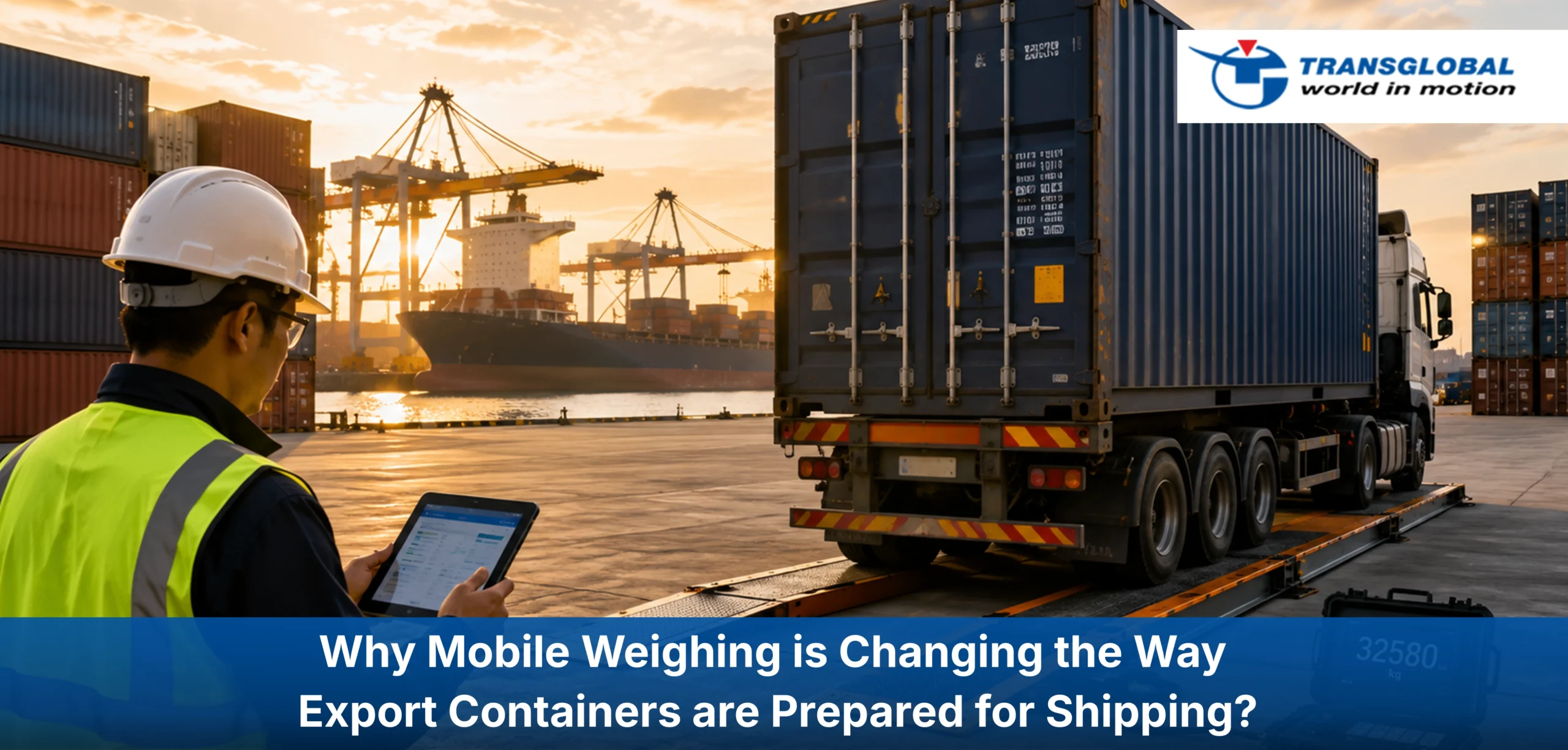
An export container can be packed, sealed, and ready to move.
The cargo is loaded. The truck is booked. The vessel cut-off is already marked on the export schedule.
Then one important requirement still has to be completed.
The packed container must be weighed, verified, and declared before it can be accepted for shipping.
For exporters, this step can create more pressure than expected. If the container needs to travel to a separate weighbridge before port delivery, the movement becomes longer, more expensive, and harder to control.
This is where SAMSA-authorised mobile container weighing is changing the way export containers are prepared for shipping.
Instead of sending the container away for weighing, the weighing process can come to the cargo site. That simple change helps reduce extra trips, avoid unnecessary delays, and give exporters more control before the container moves towards the port.
Why Container Weighing is No Longer a Last-Minute Export Task?
Container weighing is not just an operational formality.
The Verified Gross Mass, or VGM, confirms the total weight of the packed container, including the cargo, pallets, securing materials, dunnage, and container tare weight.
Without a valid VGM, the container cannot move through the export shipping process as planned.
For exporters, this means that weighing should not be treated as the final task before port delivery.
If the weight is confirmed too late, one issue can affect the entire export plan. The container may need to be redirected. The truck may lose time. The documentation team may need to update shipping details under pressure.
This is why weighing now forms part of proper sea freight preparation.
When the weight is verified earlier, exporters get a clearer view of the shipment before it enters the port flow.
How Mobile Weighing Reduces Extra Trips Before Port Delivery?
Traditional container weighing often adds another stop to the export journey.
The container may be packed at the shipper’s premises, moved to a weighbridge, weighed, and then moved again towards the port or depot.
That extra trip may look simple.
In reality, it can add transport time, fuel cost, driver hours, queue delays, and more coordination between the shipper, transporter, and export team.
Mobile weighing changes this process.
The packed container can be weighed at the cargo location using authorised mobile equipment. This helps exporters avoid sending the container to a separate weighing point only to complete the VGM requirement.
For businesses moving multiple export containers, the difference can be significant.
Fewer trips mean less time on the road, fewer handovers, and a cleaner movement from packing site to port delivery.
That control matters when export teams are working against shipping cut-offs and customer commitments.
Why On-Site Weighing Helps Exporters Find Problems Earlier?
A container may look ready after packing.
But the final weight may tell a different story.
The packed container may be heavier than expected. The declared cargo weight may not match the actual packed weight. The weight may need to be checked before the container can move safely and correctly.
If this is discovered at a distant weighbridge, the exporter has fewer options.
The container may need to be returned to the packing site. The booking may need to be reviewed. The delivery schedule may be delayed.
On-site mobile weighing helps exporters identify weight-related issues before the container leaves the premises.
That gives the team more time to correct the problem where the cargo was packed.
It also supports better shipping documentation and compliance, because the verified weight can be aligned with the export documents before the container moves further.
For exporters working close to vessel cut-offs, that earlier visibility can make a real difference.
Why Mobile Weighing Supports Better VGM Compliance?
VGM compliance is about more than producing a weight figure.
The weight must be obtained through an approved method, recorded correctly, and shared with the right parties in the export process.
This is where mobile weighing becomes valuable.
When weighing is carried out through an authorised mobile service, exporters can verify the packed container weight without moving the container away from the cargo site.
That keeps the weighing activity closer to the packing operation.
It also supports better record control because the container number, seal number, date, time, weight details, and shipment information can be checked while the container is still within the exporter’s operating environment.
For export teams, this creates a smoother link between packing, weighing, documentation, and shipping instructions.
The benefit is not only speed.
It provides better control over the information used for export compliance and customs clearance.
Why Mobile Weighing Improves the Exporter’s Planning Window?
Export shipping depends on timing.
There are booking deadlines, document deadlines, terminal cut-offs, transport schedules, and customer delivery expectations.
When weighing becomes a separate movement, the exporter has one more activity that can affect the timeline.
A delay at the weighbridge can affect port delivery. A truck waiting for weighing can miss the next planned movement. A late VGM update can create pressure on the export documentation team.
Mobile weighing helps reduce that pressure by bringing the weighing activity into the export preparation window.
The container can be packed, sealed, weighed, and prepared for the next movement without unnecessary back-and-forth transport.
This is especially useful for exporters handling high-volume cargo, time-sensitive shipments, project cargo, or containers packed at sites where access to a suitable weighbridge is not convenient.
An experienced freight forwarding partner can also help connect the weighing process with the wider export plan.
When exporters know the verified weight earlier, they can plan transport, update documents, and prepare for port delivery with fewer last-minute surprises.
Conclusion: Mobile Weighing Gives Exporters More Control Before the Port
Export container preparation does not end when the cargo is packed.
The container must still be weighed, verified, documented, and moved towards the port within the required shipping timeline.
Mobile weighing is changing this stage because it removes unnecessary movement from the process.
Instead of taking the container to the weighbridge, exporters can bring the weighing process closer to the cargo. That helps reduce extra trips, improve VGM readiness, identify weight issues earlier, and keep export planning under better control.
For businesses preparing export containers, this is not only about convenience. It is about saving time, reducing transport exposure, and keeping the shipment moving with fewer interruptions.
To discuss on-site weighing requirements for an upcoming export shipment, contact us before the container moves.
Prepare export containers with specialist freight forwarders who understand mobile weighing, VGM compliance, and the practical timing behind port-ready cargo.
Frequently Asked Questions
What is mobile weighing for export containers?
Mobile weighing is the on-site weighing of a packed export container using authorised equipment to support a VGM declaration.
Why is VGM important before shipping?
VGM confirms the packed container’s verified gross mass before it is accepted for export shipping and vessel loading.
How does mobile weighing help exporters?
It reduces extra trips, saves time, supports VGM compliance, and helps identify weight issues before port delivery.

Comments