

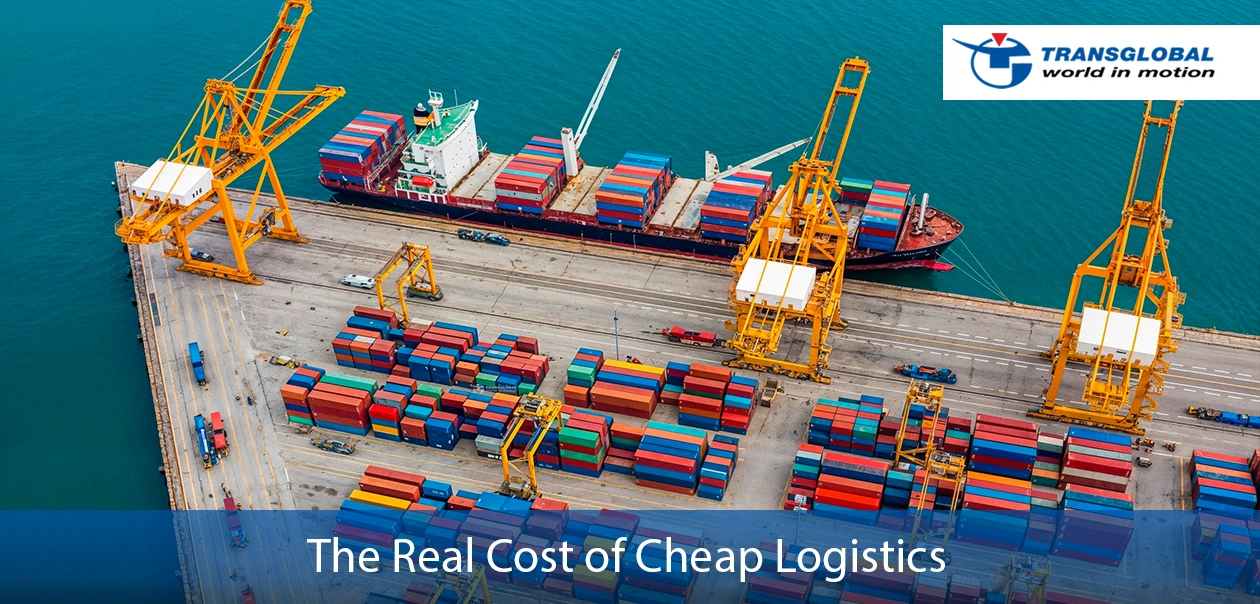
Many procurement teams and logistics managers still evaluate freight partners based solely on price. While controlling budgets is important, a low-cost logistics provider often hides inefficiencies, non-compliance, and long-term costs that far exceed the initial savings.
In regions like Africa, where cross-border regulations, infrastructure challenges, and high-risk cargo are the norm, not the exception, cutting corners can backfire quickly.
🛑 The cheapest option is rarely the safest, most compliant, or truly cost-effective one.
In this blog, let’s unpack why “cheap” logistics often end up being the most expensive route and how to approach freight decisions more strategically.
1. The Price Trap: When Low Rates Lead to High Penalties
A lower transport rate may seem like a quick win. But behind that attractive number are hidden trade-offs that hit harder down the line.
Many low-cost transporters lack the resources and infrastructure needed for smooth delivery. Here’s what often goes wrong:
- Delays caused by uncoordinated scheduling
- Missed port appointments and customs clearance slots
- Drivers lacking the necessary route permits or safety training
- Inadequate visibility tools or real-time tracking systems
- Missed free-time windows at terminals, leading to extra charges
The outcome? You pay more in demurrage, detention, storage, and rehandling than you saved in freight. Always evaluate logistics quotes based on total landed cost, not just the transport rate.
2. Compliance Failures: The Risk That Comes Back to You
In countries like South Africa, compliance isn’t a pleasant thing to have, it’s a legal necessity. But low-cost providers often skip steps to keep their pricing competitive, exposing shippers to serious consequences.
Risks of non-compliant providers include:
- Overloaded or unsafe vehicles
- Bypassed routing protocols or weighbridge checks
- Missing permits (e.g., RTMS, SQAS, ISO)
- Mishandling of Class 1 (explosives), hazardous, or restricted cargo
While some companies assume customs compliance failures are the transporter’s problem, liability ultimately flows back to the cargo owner.
Penalties can include:
- Criminal or civil fines
- Supply chain disruptions
- Insurance invalidation
- Reputational damage
- Blacklisting from customs authorities or export partners
3. Customs Brokerage: Why Cheap Clearances Backfire
Many companies try to reduce costs by using low-fee customs brokers. But this can become a costly mistake, especially during audits or shipment reviews.
What cheap brokerage often lacks:
- HS code classification expertise
- Clear knowledge of valuation and origin rules
- Experience with SARS post-clearance audit processes
- Familiarity with Africa-specific customs regulations
The results can be serious:
- Undervaluation fines
- Delayed cargo release
- Regulatory re-assessment
- AEO certification issues
Best practice: Always work with a knowledgeable, AEO-accredited customs partner who ensures long-term compliance, not just fast clearance.
4. Misusing Incoterms: Where Financial Misunderstandings Begin
It’s surprising how many logistics professionals know Incoterm names, but don’t understand their financial or legal implications.
Misunderstanding Incoterms leads to disputes over:
- Who pays for terminal handling charges (THC)?
- Who is liable for container cleaning, return, or damage?
- Who must insure the cargo?
- Where risk transfers if goods are damaged or delayed?
This results in unexpected costs, delayed shipments, or legal conflicts with clients and suppliers. Also, it leads to training your team to interpret and apply Incoterms accurately in every quote or trade agreement.
5. Marine Insurance Gaps: The Hidden Exposure
Insurance is often ignored when cutting costs, but that leaves businesses dangerously exposed.
Most CIF-based shipments include only basic insurance (if any), often:
- With exclusions for theft, mishandling, or delay
- Not covering general average or salvage
- Limited to port-to-port, excluding inland legs
When something goes wrong, such as vessel fire, piracy, or abandonment, the shipper may still be liable for the cargo and its costs.
It’s better to work with a freight forwarder who helps structure proper insurance that protects your full cargo value and journey route.
6. Undefined Roles & Liabilities: The Root of Costly Disputes
Vague service contracts are another hallmark of low-cost logistics.
If your agreements do not clearly define:
- Which party is responsible for the cargo condition, documents, and delivery?
- What happens in case of delay, damage, or inspection?
- Who carries risk at each leg of the journey?
- Required documentation and escalation procedures
Then disputes become inevitable, and responsibility becomes a grey area.
You may find yourself covering losses you didn’t cause, all because your contract lacked clarity. A well-defined logistics SLA protects your company far more than a cheap rate ever will.
7. Why “Cheap” is the Most Expensive in the Long Run?
A low freight quote often fails to account for:
- Downtime due to missed handoffs or poor routing
- Regulatory fines and customs delays
- Safety incidents from poorly trained drivers
- Compliance violations leading to cargo seizure
- Bad customer service and missed delivery SLAs
In competitive markets, these issues damage your brand, erode trust, and slow your supply chain performance.
Choosing a competent, compliant freight partner prevents losses before they happen.
How to Choose the Right Logistics Partner? (Not Just the Cheapest)
Instead of focusing only on rate, compare providers based on:
✅ Regulatory and compliance certifications (RTMS, ISO, SQAS, NCACC)
✅ AEO customs expertise
✅ Proven track record with complex or DG cargo
✅ Real-time visibility and tracking tools
✅ Defined contract terms and risk ownership
✅ Marine insurance support and trade finance guidance
Conclusion
Logistics is a high-stakes part of your business. Every shipment represents revenue, reputation, and customer satisfaction.
When you treat freight as a price-only function, you lose visibility, control, and often, money.
At Transglobal Cargo, we partner with you to ensure every shipment, no matter how complex, is safe, compliant, and delivered with care.
We work across the globe, specializing in high-risk cargo, project logistics, customs management, and DG transport. With us, you don’t just move freight, you protect your business future.
Schedule a demo today and let’s redefine what cost-effective logistics really means.
Frequently Asked Questions
Isn’t it cheaper to switch to the lowest bidder for every shipment?
Not always. The administrative, legal, and operational costs of managing fragmented, non-compliant logistics providers usually outweigh any short-term savings.
What is the total landed cost?
It’s the full cost of moving a shipment, including freight, customs, storage, insurance, and penalties. It reflects the real price, not just the transport rate.
How do I know if my logistics partner is compliant?
Ask for their certifications, permits (RTMS, SQAS, AEO, DG handling, etc.), audit reports, and insurance documentation. A credible partner will share this openly.
Comments